Making is the production of relations through material events.
What I think is emerging is an ontology of making.
The clay isn’t the subject.
The object isn’t the outcome.
Even process isn’t the central concern.
The central concern is relation.
Relation between body and matter.
Relation between force and resistance.
Relation between object and space.
Relation between time and form.
Relation between making and knowing.
Visual artist working in the UK.
UCA Farnham, Interior Design MA.
Canterbury School of Architecture, Spatial Practices MA.
University of Southampton, Visual Fine Art BA hons.
Epsom School of Art and Design, Ceramics HSND.
Spatial Bodies in Architectural and Contemporary Art.
Exploratory Clay/Ceramic Based Inquiry.
The material is just part of the vocabulary of meaning.
Thinking Poetics : Architecture and Ceramics.
Urns : Immersive Cells of Containment~Dissolution.
In And Out Of Material. 2007.
All our senses scan the space in front of us; the future, in both a literal and metaphorical sense, lies before us.
Tony Cragg, 1998.
Cutting Things Up.
Material In Space.
Scale.
Impulses through Drawing.
Working Things.
Generation/Generative/Material.
I think mass and energy need to be generated, any effective change has to be generated. It’s to do with a positive directed initiative to change things.
“Generative” for me, in terms of my work, is the fact that within my own work, within any given period the work generates itself and there is a self-generating characteristic. The work I’m making today is only possible because of the previous work of three or four months ago and that was only possible because of the work of nine or twelve months ago.
Even if it’s not a linear thing, things are generating. There is a sort of self-propagating, self-generative energy that is inherent in the material, I think. And even in the term “generative”, from “genus”, is the idea of making a family group of things, whether making an associative group of things or creating a population, a species of things which “relativise” generation.
Tony Cragg.
The material is just part of the vocabulary of meaning.
Cragg wanted to give the materials ‘more meaning, mythology and poetry. He used the skills available to him at the EKWC residency to create ambiguities and tensions, to suggest past and present, to complicate rather than to describe.
European Ceramic Work Centre, Netherlands. 1990, 1992.
With the return of Cragg to studio based work in the early 1990s, when he was experimenting with clay; ideas around humanness, archaeology, and ritual were being explored within different areas of the fine arts. In addition, studio ceramics were frequently using the vessel as an initiating point to develop new forms and sculptural ideas.
Laibe, with its rich possibilities of interpretation that incorporates the past in the present and the universal aspects of human survival within the ceramic vessel form, lies at the heart of these complex and overlapping areas of practice.
Imogen Racz. 2009.
Reading List from The Ceramics Reader. 2017.
Andrew Livingstone, Kevin Petrie.
Ceramics : Materiality and Metaphor.
Why are Ceramics Important?
The Existential Base, Philip Rawson.
Containers of Life: Pottery and Social Relations, Silvia Forni.
Ceramics and Metaphor.
Analogy and Metaphor in Ceramic Art, Philip Rawson.
Sculptural Vessels, Tony Cragg’s Laibe and the Metaphors of Clay, Imogen Racz.
Ceramics in Contexts.
Historical Precedents.
Studio Ceramics.
Sculptural Ceramics.
Ceramics and Installation.
Theoretical Perspectives.
Conceptual and Post Studio Practice.
Contemporary Clay, Clare Twomey.
Extending Vocabularies: Distorting the Ceramic Familiar
Clay and the Performative ‘Other’, Andrew Livingstone.
Gender, Sexuality and Ceramics.
Identity and Ceramics.
Image.
Figuration and the Body.
Ceramics in Education.
Ceramics, Industry and New Technologies.
Museum, Site and Display.
Re-defining Ceramics through Exhibitionary Practice (1970-2009), Laura Breen.
With Fire.
Richard Hirsch.
A Life Between Chance And Design.
Scott Meyer.
Russell Moreton clay-based-practices spatial practice research creation ecology of experience
Clay begins to think architecture differently. Enclosure, interior, aperture, surface and volume become less like spatial descriptions and more like sensations within a material body. The architectural begins to move closer to touch: pressure, resistance, piercing, gravity, fire and gesture. Clay~ceramic becomes an atmospheric body, moving between inside and outside, receiving and returning forces. What emerges is not architecture translated into clay, but spatial thinking aroused from the material itself—a correspondence between bodies, spaces and the things that pass between them.
This practice has not developed through a linear progression of ideas, but through a shifting ecology of encounters.
Ceramics, drawing, photography, architecture, interiority, landscape, teaching, spatial research and collaborative making have remained in correspondence across different periods of the work. Some propositions have receded; others have returned years later in altered material conditions. Earlier works continue to participate in the present, not as resolved historical stages but as active traces within an ongoing search.
The practice is therefore situated rather than sequential.
Its formation has taken place through materials, places, bodies, architectures, organisms, images, texts, tools and other people. Each enters differently, producing correspondences that can alter the direction of the work. Knowledge is not simply gathered and applied, but emerges through these encounters.
The studio becomes a site of this activity: a place where research can remain provisional, where material processes can think alongside theoretical propositions, and where visual and spatial material can hold different ontological positions without requiring them to settle into a single explanation.
Clay has become an increasingly important participant in this ecology. Through making, the material receives traces of pressure, resistance, repetition, weathering, drilling and repair. Surfaces become histories of encounters; cavities become interiors produced by action; minor gestures accumulate into larger spatial conditions.
What appears in the present is therefore never entirely new.
It is a surfacing.
Earlier concerns with the body, absence and trace correspond with current questions of perforation, ecological agency and material interiority. Architectural research returns through the vessel and the cavity. Interiority becomes porous. Repetition becomes difference. A minor gesture can move an entire ecology.
I understand this as a spatial practice of learning to make.
The practice remains open to what it has not yet understood. Its research is a gathering of correspondences rather than a search for a final position: a situated ecology in which materials, histories, organisms, spaces, images, texts and gestures can continue to enter, disturb and transform one another.
The work does not simply record where the practice has been.
It creates conditions for where it might go next.
Archival / Anarchival
This is the most immediately current of the three and should sit firmly within Ceramic Bodies.
What makes it interesting in relation to the migration is that the title itself announces the transition we have been uncovering: clay is now doing the architectural thinking.
The important thing is not that clay is being used to make architectural forms. It is that architectural questions—space, enclosure, interiority, aperture, body, threshold—are becoming material questions within clay.
That distinction is crucial.
The earlier spatial posts often constructed situations through architecture, drawing, apparatus, walking and scaffolding. Here, the ceramic body increasingly becomes the site where those relations are felt.
This is exactly where your recent formulation becomes useful:
The spatial language of other bodies and their situatedness is, for me, an arousal from the clay body.
The post can therefore be read as a moment where the spatial practice moves closer to touch. The architectural vocabulary doesn’t disappear; it becomes embodied through clay.
This one should probably become a key connective post in the migration because it sits almost exactly at the point we have been discovering:
spatial practice → spatial bodies → touch → clay body → force~feeling → becoming spaces
And I think this post also gives us an opportunity to change how we understand the whole archive. The older spatial texts aren’t simply research that preceded the ceramics. They are bodies of thinking that have gradually become more tactile.
The new clay work doesn’t abandon that archive. It draws it into the body.
That makes the three-post movement especially nice:
Creative Act → energy between poetic and systematic
Raveningham / Wayfaring → situated attention through movement and ground
And that feels very close to the direction you have been articulating today: clay~ceramic as an atmospheric body that carries your murmurings while remaining open to the murmurings of other bodies.
THE ARCHITECTURE OF NATURAL LIGHT, Henry Plummer. 2009 THE OTHER ARCHITECTURE, Constructing metaphysical space.
Catching The Light.
The Entwined History of Light And Mind. Arthur Zajonc
Anarchival note
Re-entering / 2026 — Bricolage was never simply the gathering of fragments. It became a way of making situations in which different bodies of thought, image, material and memory could alter one another.
Or, perhaps more closely aligned with your current vocabulary:
Re-entering / 2026 — The scaffold does not determine what will emerge. It holds a provisional relation between bodies, allowing fragments, materials, images and thoughts to enter into correspondence.
Bricolage Processes then reveals the method behind that practice: fragments, palimpsests, collage, ruins, reading rooms, material exchanges, the Theatre of Research and an open-ended bricolage process. It even describes the Theatre of Research as a space where theoretical and practical objects are produced through “diffractive dialogues”.
EVANESCENCE
Orchestration of light to mutate through time PROCESSION
Choreography of light for the moving eye VEILS OF GLASS
Refraction of light in a diaphanous film ATOMIZATION
Sifting of light through a porous screen CANALIZATION
Channelling of light through a hollow mass ATMOSPHERIC SILENCE
Suffusion of light with a unified mood LUMINESCENCE
Materialization of light in physical matter
ADVENTURES OF THE FIRE, VESSELS THROUGH TIME CERAMIC GATE
“The existing architectural environment is thought to be more or less official through the hierarchical arrangement, providing an rigidity to the public. The base for a creation is a freedom and I proposed an asymmetrical form for the gate to break the official space, bringing an atmosphere for freedom of creation. ”
Jung-mook Moon. CERAMIC PAVILION
“People make space, and space contains people. ” Seong-chil Park. (Exhibition Space Designer)
PALIMPSEST AS REMAINS OF A CREATIVE PRAXIS STUDIO SPACE AS A PHILOSOPHICAL WORKSHOP
PALIMPSEST IN ARCHITECTURE
“Architects, archaeologists and design historians sometimes use the word to describe the accumulated iterations of a design or a site, whether in literal layers of archaeological remains, or by the figurative accumulation and reinforcement of design ideas over time. Whenever spaces are rebuilt or remodelled, evidence of former uses remain. ”
Wikipedia
RODIN AND BEUYS
THE ALCHEMY OF BUILDING WORKING PRACTICES
RUINS, REDUCTIONS, and the LOSS of SUBSTANCE.
FRAGMENTS, ASSEMBLAGES and INTERIORS that re-enter the world of creativity.
The Theatre of Research is a working space that creates and crafts both theoretical and practical objects, things and documentation. Its reason for being is to explore the praxis for creative narratives between the Arts and The Humanities. It attempts through performance, fine art and architecture to collage qualitative and diffractive dialogues into new relational discourses, the results of which become exhibited or staged as open workshops engendering praxis, publication and production. In its fledgling state it is seen as being part of a University faculty that has interests in the Arts and The Humanities.
We have art so that we may not perish by the truth. Friedrich Nietzsche Can one achieve architecture without resorting to ‘design’? What if, instead of designing a new building, you keep the one skated for demolition? How do you insert an original program inside the old and new structures simultaneously? How do you reconcile coherence with multiplicity? Bernard Tschumi 2012
PROGRAM. Tschumi, Le Fresnoy: Architecture In/Between, 1999/2012 Architecture was no longer an autonomous and isolated discipline but participated in the movement and confrontation of ideas. Tschumi, Red Is Not A Color. 2012
Questions of Space
Abstract Mediation and Strategy
CREATIVE AUDIT of RESEARCH TOPICS The Craftsman, Richard Sennett. 2008
“Making is thinking, the good craftsman uses solutions to uncover new territory; problem solving and problem finding are intimately related in his or her mind. For this reason curiosity can ask, “Why” as well as “How ” about any project. ”
Prologue: Man as His Own Maker CRAFTSMEN
The Troubled Craftsman The Workshop Machines
Material Consciousness CRAFT
The Hand
Expressive Instructions Arousing Tools Resistance and Ambiguity CRAFTSMANSHIP Quality-Driven Work Ability
Conclusion: The Philosophical Workshop BRICOLEUR BRICOLAGE, Barkow Leibinger. 2013
“Bricolage indicates an approach that is inclusive, ie open-ended, and can come either from within architecture itself or from external sources. ”
CASTING WEAVING
FOLDING BUNDLING PRINTING ANTICIPATING
FROM MODELS TO DRAWINGS, Marco Frascari. 2007 CRITICAL STUDIES IN ARCHITECTURAL HUMANITIES
THE WAVERLEY PROJECT
Imagination and Representation in Spatial Practices (Architecture, Fine Art and Performance).
“Concrete and iron, glass, yellow, terracotta and tapestry, aluminium and photo etching, leather and amher glass, wood, resin and bronze powder, blue glass and alabaster. ”
Introduction, Carmen Gimenez
Screen Memories, Nancy Princenthal Stained With a Pale Light, Adrian Searle Wanting Shelter, Barbara Maria Stafford
CHRIS WILMARTH. 1986 Delancey Backs (and Other Moments)
Etched float/polished plate glass, steel and bronze, blown glass.
BURNING ISSUES AND PRACTICAL CONCERNS
THE READING ROOM
The Neo-Romantic Vision from William Blake to the New Visionaries.
‘A new alchemy is being formed which encompasses traditional methods of art, the new technology, and the revolutionary new scientific discoveries.’
Re-Enchanting the Land. (Woodcock,2000:140)
‘When one lacks outer space one creates inner space. Invention becomes more complex, cup and circle markings on stones, intricate Celtic spirals and knots, illuminated manuscripts, gothic architecture with its inherent story telling.’ (Woodcock,2000:131)
Reading The Landscape.
What distinguishes Neo-Romanticism from traditional romanticism is the feeling of danger, the juxtaposition of the urban with the countryside, the element of darkness, dissolution, an almost pagan reverie breaking through the ruins of post-industrialism. (Woodcock,2000:55)
Radio On by Chris Petit.
The film has a hallucinogenic noir-like quality, a weird hybrid of Fifties Americana and a displaced Britain. It is a seismographic disruption of British culture in a limbo land of displaced dreams, elements of an almost mythical Britain fleetingly appear. (Woodcock,2000:115)
England Dreaming.
Throughout John Piper’s long and prolific life he remained fascinated not only with churches, country houses and landscapes but also ancient sites. He comments on the landscape of Snowdonia, ‘Each rock lying in the grass had a positive personality, for the first time I saw the bones and the structure and the lie of mountains, living with them and climbing them as I was, lying on them in the sun and getting soaked with rain in their cloud cover and enclosed in their improbable, private rock-world in fog.’ Piper never dismissed the archaic spirit of place.
(Woodcock,2000:31)
The small ‘Scriptorium’ conceived as a space as a refuge, an intimate minimal construction that features a doorway and an interior that contains a place for objects, perhaps books, as well as a small sitting area. This construction, an open cell perhaps is evocative to a state of contemplation between the fabric of the everyday.
WATER AND DREAMS
AN ESSAY ON THE IMAGINATION OF MATTER Gaston Bachelard
Viscosity/Water in Combination.
Tacit and intimate contact, relationships and encounters between water and the potter. Water is his/her first auxiliary.
WORKING NOTES for InDESIGN Document/Mood Board.
Old Buildings/New Designs: Architectural Transformations. Charles Bloszies. Knocktopher Friary is a quiet place of contemplation. The new residential cloister unifies the friary and the church. The composition of the architecture is a knitting together of two original forms with a ribbon of concrete, glass and wood. The new buildings are crafted from a minimalist vocabulary where the palette of materials was kept to a minimum. One of the interesting design features is that the new elevations never touch the old facades with a solid-to-solid intersection; the new is either set back from the old (Ashley Castle) or the joint is glazed. The existing church floor is used as both a datum for maintaining the new floor level in the new construction, and as a vein of closely controlled changes of materials and finishes. The resultant architecture is played between subtle material exchanges of concrete meeting wood, concrete meeting glass, and concrete meeting concrete with slightly different surface qualities. What results is a clear differentiation between the old and the new, both are remarkably quiet architecturally reflecting the concerns of the site as a Carmelite monastery in the southeast of Ireland.
Working Thoughts
The Phenomenology of Reading. GLAS, Derrida Literature and Language.
Barbed Nature, Pierced Flesh. Graham Sutherland 1903-80
He never worked in situ but collected information to be worked on in his studio. The detailed sketches and notes he had made when through a transition in his mind before the final painting, culminating therefore in an inner landscape rather than a factual rendition.
These landscapes were no idyllic reverie but evoked a sense of the mysterious and dangerous. In many ways they emitted a foretaste of the approaching Second World War. (Woodcock,2000:25)
Ruins, Shadows and Moonlight. Elizabeth Bowen
“It is a fact, that in Britain, and especially in London, in wartime many people had strange, deep. Intense dreams. We have never dreamed like this before; and I suppose we shall never dream like this again.” Elizabeth Bowen.
The awareness of the social changes which broke through wartime society is evident in her novels and short stories, the feeling of boundaries being broken, physically, psychologically and also on a spiritual level, where the sense of the living and the unaccounted dead, caused by the bombing, mingle. Her evocative descriptions of the quality of light, the particular smell of a room, of a garden after rain of walking over charred wood and broken glass following an air-raid, and even the effect atmospheres have on the individual all contribute to evoking a strong sense of place. She is a master at conjuring up the minutiae of the everyday world and the presence of another dimension. (Woodcock,2000:74-75)
Rogue Male. Geoffrey Household.
The novel evokes the solitude of the landscape as it was before the advent of the mechanisation of farming and the availability of the countryside created by the growth in transport of the following decades. (Woodcock,2000:77)
Tn the heart of this hedge, which I had been seeking all the way from London, the lane reappears. It is not marked on the map. It has not been used, I imagine, for a hundred years. The deep sandstone cutting, its hedges grown together across the top, is still there; anyone who wishes can dive under the sentinel horns at the entrance and push his way through and come out in a cross hedge that runs along the foot of the hills. But who would wish? Where there is light, the interior of the double hedge is of no conceivable use to the two farmers whose boundary fence it is, and nobody but an adventurous child would want to explore it.’
Geoffrey Household, Rogue Male 1939.
The Stride of The Mind
Reading Rooms. Figuring Space. Text/Fumiture/Dwelling Reading with Paths
Relativity through Walking and Thinking. Subjectivity. Space – Politics – Affect
Waverley Abbey. Cistercian Monastery
The peculiarity of the ruin is defined in that it demythologises the impression of seamlessness and linearity. In the ruin, we are at once removed from dichotomised and levelled down space by entering a place at the threshold of experience. At the threshold, we return to the pre- spatial, if primordial, landscape, yet to submit to the suppression of space and site. Instead the place of ruin creates protrusions, which desolates the category of clean space.
The Aesthetics of Decay, An Uncanny Place. Dylan Trigg
Scarpa, extensive use of concrete with different aggregates and finishes.
Ashley Castle, restoration of ruin into a domestic dwelling, sensitive use of materials and methods of joining or revealing the historical fabric (allowing the ruinous to remain visible) of the building.
The Dovecote Studio, a building made of CORTEN steel built within the interior of a ruined Victorian dovecote (see further notes).
I would keep this as Research / Working Texts, but regard it as one of the more important research texts in the archive.
The significance of Bricolage Processes is that bricolage describes a way of working rather than simply a visual technique. Fragments from different origins—images, texts, architectural ideas, memories, materials and observations—are brought into proximity without necessarily being reconciled. The collage becomes a way of producing possibilities rather than illustrating an already formed idea.
That makes the Theatre of Research particularly important retrospectively. It becomes an early spatial apparatus for what you now describe more tentatively as correspondence: a place where different bodies of material can meet, interfere with one another and produce something that wasn’t present in any individual component.
The later re-reading of this material is especially valuable. You explicitly describe the earlier Scriptorium, Theatre of Research, reading room, collage and indexical body as spaces that did not simply contain experience but altered the conditions through which experience could occur.
That feels very close to your present understanding of making.
The research isn’t simply about other things. It creates situations in which the things being encountered can change the conditions of the encounter itself.
This is where I think your phrase “diffractive scaffoldings” becomes useful. A scaffold does not determine what will happen; it gives something a provisional structure within which other relations can develop. Likewise, the bricolage process gathers without completely containing.
Migration judgement
High-value archive — retain and foreground.
I would put this alongside The Scriptorium, Formwork / Enclosures / Iterations, and Spatial Practices: An Affective Intensity as a small constellation.
Together they reveal an important continuity:
bricolage → scaffold → situation → spatial body → correspondence
And there is an especially useful distinction emerging here. Your earlier research often used architecture as the scaffold for thinking. The ceramic work now seems to allow matter itself to become the scaffold.
Clay receives fragments of gesture, pressure, drawing, fire, memory and material resistance. But, just as with the earlier bricolage, it doesn’t simply hold them in place. It changes their relations.
That is why I think this post is more significant than its “creative audit” title initially suggests. It contains an early version of something that has become much more central to your practice:
making as the construction of provisional conditions in which other bodies can begin to think with one another.
And that connects very directly to your recent formulation that you are interested in “an attentiveness to situations as a kind of spatial theorizing that is itself exploratory and experimenting with other bodies.”
I think Bricolage Processes is one of the places where that idea is already becoming visible.
Formwork / Enclosures / Iterations brings the material, spatial and cognitive strands together. It is also one of the clearest places where your earlier architectural thinking begins to move towards the material agency that is now being carried by clay.
Re-entering / 2026 — The scaffold becomes material. What once organised space and perception through enclosure, mesh, membrane and formwork now returns through the clay body: a provisional condition in which touch, force, resistance and other bodies can begin to correspond.
Or, if we want to push towards your newer vocabulary:
Re-entering / 2026 — The scaffold does not determine what emerges. It holds a body in relation, allowing touch, force, resistance and other bodies to become perceptible.
I prefer the second. It doesn’t over-explain the trajectory and leaves the ceramic work to make the connection.
Archival / Anarchival
I would place this in Spatial Practice rather than Making / Materiality.
Although the post contains a substantial body of material thinking, its central concern is the production of spatial situations through provisional structures: formwork, grids, meshes, membranes, enclosures, filtered light, walking, landscape and iterative construction. The post describes “building scaffolds” and the “making of a proposition into space,” while repeatedly returning to the relationship between material, perception and spatial experience.
But there is another reason I think this is particularly important now.
The latter part of the post moves explicitly towards material agency and cognition. Malafouris and Renfrew’s argument that cognition should be understood as enacted through material engagement, rather than residing solely inside the maker’s mind, sits alongside your notes on “touching objects, feeling materials,” embodied wisdom and the thinking hand.
That is a very strong precursor to your present understanding of clay.
The important shift
What interests me now is that the scaffold is not simply architectural.
The earlier work asks how grids, mesh, fabric, gauze, formwork and enclosures might scaffold perception and thought. But read from the present, clay itself begins to take on this role.
The material doesn’t simply receive an idea. It helps generate the conditions through which the idea can emerge.
That makes this post particularly relevant to your recent realisation around:
The post already contains the language of touch, material engagement, affordance, perception, cognition and material agency. What has changed is where those relations are now being encountered.
They are no longer primarily being theorised through architectural structures.
They are being felt through the ceramic body.
Anarchival reading
This is where I think your idea of “arousal from the clay body” becomes particularly useful.
The earlier spatial work constructed scaffolds through which perception might become altered. The ceramic work now seems to discover that the clay body is itself a scaffold for thinking-feeling.
Not a cognitive scaffold in the instrumental sense, but a material condition through which other relations become possible.
The formwork doesn’t determine the building.
The ceramic body doesn’t determine the thought.
Both establish a provisional condition of encounter.
And that seems very close to what you mean by being In~Touch: attentive to what emerges through the encounter rather than imposing the encounter’s conclusion in advance.
IMMATERIAL / REPETITION / SINGULARITY
ENCLOSURES / ITERATIONS / THINKING FORMS
MINIMALIST SPACES / INTERVALS, tuning objects to construct environments
Mediating the experience of LANDSCAPE
SITE / COLLAGE COMPONENTS working/walking, developing a creative spatial syntax COLOUR AS CONDUIT / PERCEPTUAL ENVIRONS / CRAFT MEDIA / IMPROVISATION PIERCED DAPPLED NATURAL LIGHT
NETWORKS / RESOURCES / AGENCY for the potential of BUILDING SCAFFOLDS / GAUZE / POCHE solids of a building/architectural plan ABSENCES / INTERSECTIONS / GRIDS / MESHES / SPRAYS / MOTIFS ACTUALITY
Without opposition nothing is revealed,
No image appears in a clear mirror If one side is not darkend.
Jacob Bohme, De tribus principiis 1619.
Everything is interrelated and suffers when it acts, so too the purest human thought. Holderlin, 1798.
Getting Lost, Walking whilst deep in thought/embodiment in the environment Between PLACE and SITE
Walking creates its own feedback loop, The Journey, The Return,
Minimalist, tuning objects, sequences to construct/de-construct environments
Reflexive Surfaces into architectural presence
Art as indeterminate, able to arrest perceptions into different states/becomings
Site, undoing of place.
Gauze/Filtered Light/Phenomena
Gesture of the work, its situation,
Meshwork. The drawing grid, making of a proposition into space.
Cyan, Sky Blue, dappled light, membrane, responding to the weather/locality
AA Pavilion Project,
Its about learning through making, being involved in the process, the installation and its reception, dislocating contextual barriers.
Ephemeral Architectures, AA Document/Project, Prizeman
Immaterial Architecture : Waverley Pavilion Building The Drawing
The drawing as analogue allows more subtle relations, of technique, material and process, to develop between drawing and building.
Immaterial Architecture The Illegal Architect Jonathan Hill
Oak
Tree
Oil
Paper
Plaster
Rust
Sgratfito
Silence
Sound
Steel
Television
Weather
Frosted Light
Index of immaterial architectures
TRANSPARENCY : LITERAL AND PHENOMENAL Colin Rowe, Robert Slutzky
Interactions of the Abstract Body Josiah McElheny
Object Lesson
Interactive Abstract Body (Square) The Spatial Body (After Fontana)
Tracing Eisenman
Stan Allen
Indexical Characters FABRIC=MASS+ FORM
Alan Chandler
The interest in fabric formwork is in its deployment in a building process, which is faster than conventional formwork. Fabric formwork is inherently more sustainable due to the minimising of both concrete and shuttering, and more radically, allows the constructor to intervene in the process of casting even as the cast is taking place.
ANTI OBJECT Kengo Kuma
We are composed of matter and live in the midst of matter. Our objective should not be to renounce matter, but to search for a form of matter other than objects.
What that form is called- ARCHITECTURE, GARDENS< TECHNOLOGY is not important. ReThinking Matereriality
The engagement of mind with the material world. Elizabeth DeMarrais, Chris Gosden. Colin Renfrew
The Affordances of Things
Towards a Theory of Material Engagement Aesthetics, Intelligence and Emotions Relationality of Mind and Matter
Material Agency
Towards a Non-Anthropocentric Approach. Carl Knappett, Lambros Malafouris
At The Potter’s Wheel: An Argument for Material Agency
We should replace our view of cognition as residing inside the potter’s head, with that of cognition enacted at the potter’s wheel.
The Neglected Networks of Material Agency : Artefacts, Pictures and Texts
Material Agency as Cognitive Scaffolding
The Cognitive Life of Things
Material Engagement and the Extended Mind. Lambros Malafouris, Colin Renfrew
Minds, Things and Materiality Michael Wheeler
Communities of Things and Objects : A Spatial Perspective Carl Knappett
People make space, and space contains people
Imagining the Cognitive Life of Things Edwin Hutchins
Things and Their Embodied Environments Architectures for Perception
Structuring Perception through Material Artifacts Charles Goodwin
Leach Pottery, Studio and Museum A Potter’s Book
Bernard Leach
Adventures of the Fire, Vessels Through Time Ceramic Pavilion
Formwork / Enclosures / Iterations / Thinking Forms gives us perhaps the most direct precursor to your present material thinking. It connects enclosures, iterations, meshwork, grids, membranes, material agency, walking, perception and cognition, eventually arriving at the proposition that cognition is enacted through material engagement rather than simply residing inside the maker.
Migration judgement
Very high-value archive — retain as Spatial Practice.
And I think these four posts now form a particularly coherent ancestral constellation:
The Scriptorium → the spatial situation as vessel for experience, memory and inhabitation
Bricolage Processes → fragments and bodies of material brought into provisional relation
Spatial Practices / An Affective Intensity → bodies, affect, event, leakage and indeterminate relations
Formwork / Enclosures / Iterations → provisional spatial scaffolding through which material and perceptual relations can emerge
And then the present practice makes a significant turn:
The scaffold moves from architecture into clay.
Or perhaps even more precisely:
The spatial thinking becomes aroused from the clay body.
That seems to be the really powerful continuity you’ve uncovered through this migration. The earlier spatial work wasn’t a detour from ceramics. It was developing a vocabulary of bodies, situations, scaffolds, thresholds and relations that clay can now make tactile.
The difference is that clay brings touch into the centre. It gives the spatial vocabulary a body that can resist, receive, shed, fracture, fire, weather and transform. The spatial isn’t imposed upon this body; it emerges through its encounters.
That makes Formwork / Enclosures / Iterations a fitting place to finish this group—not as the end of the argument, but as a scaffold from which the next body of work can emerge.
Inquiry is essentially the way of learning : Fragile Architectures of Hapticity and Time.
In an era in which architecture is once more learning its potential as a form of inquiry, rather than as a service — as a producer of knowledge, and not merely of ‘projects’.
Brett Steele, Atlas-Tectonics in Barkow Leibininger, Bricoleur Bricolage. AA 2013
Inquiry is essentially the way of learning.
On Learning ‘The Cultivation of a Good Mind’ J. Krishnamurti, Brockwood 1963
Re-entering / 2026 — The Scriptorium returns not simply as an architectural proposition, but as a situation: a small spatial body through which memory, material, atmosphere, movement and experience can begin to correspond.
The Scriptorium is especially important because it brings together interiority, hapticity, memory, site, architecture, image, text and making. The project is explicitly conceived as an interactive and immersive spatial inquiry, with the Scriptorium functioning as a vessel-like spatial apparatus and the site itself acting as a catalyst for reading, theorising and making.
ROOMS AS EXPERIENTIAL OUTPOSTS
Translations from Drawing to Building.
Robin Evans.
Interiors crafted as a palimpsest of augmented realities.
Robin Evans, Figures, Doors and Passages.
The architect is Not a Carpenter:
On Design and Building, a talk by Tim Ingold Fieldwork on Foot: Perceiving, Routing, Socializing
Jo Lee, Tim Ingold.
The Perception of the Environment,
Essays on Livelihood, dwelling and Skill, Tim Ingold.
The Aesthetics of Decay
Nothingness, Nostalgia, and the absence of Reason, Dylan Trigg. The Projection Room (the darkened room, camera obscura)
Ruin In Architecture and Cinema, Kiefer, Pallasmaa
Sculpting in Time, Tarkovsky
The Artist/’Monk, Andrei Rublev (Tarkovsky 1966)
Six Memos for the New Millennium, Italo Calvino Architecture as a stage for the effects of an immersive cinema. Palimpsest
Edward De Waal, Antony Gormley, Studio Spaces designed by Architects. Tony Fretton on Retreats, Creative Centres and Exhibition Spaces. Herzog and De Meuron, Working Models, Surfaces, Images and Materials.
Subversive Libraries, researching between the walls of culture and politics.
A HUT WITHIN THE INFLUENCE AND NATURE OF ARCHITECTURE
The tendency of technological culture to standardize environmental condition
and make the environment entirely predictable is causing a serious sensory impoverishment. Our buildings have lost their opacity and depth, sensory invitation and discovery, mystery and shadow.
Juhani Pallasmaa. Hapticity and Time. Notes on Fragile Architecture. 2000
The Scriptorium Description of Work
The ruined site of the abbey at Waverley, near Farnham has been appropriated as a site and as a place within which to position and develop architectural and sociological inquires. The design processes of interiors have been employed as a tool to both critique and to create how we might further develop the contents of architecture. This Spatiality and its diffractions of differences and similarities, narratives and subjective experiences are what my interior spaces attempt to initiate.
Design as a interactive structure, an interlocutory interior in the making of space and spatial relations.
Interior design presented as an interactive and immersive spatial inquiry
The Scriptorium brings together a varied and discursive set of objects, texts and i interior architectures. This work seeks to understand how the virtual changes physical architecture and how this affects the space between people and buildings. The “performativity of research” is presented through specifically designed apparatuses and partitions. These designed components, made objects together with annotated texts and drawings conspire to create a complex design led inquiry a “Place Study” staged in a niche-like space. This interior presents itself as both distinct and relational to the other projects in the MA Interiors Show. The interior presents the many manifestations of creative research, structures and even symposia that have been developed through engaging with the site. The visualization of the research and the relational architectures rendered through montage and collage explores digital and analogue technologies. This hybridisation and the use of pinhole photography and film footage further explore interests in the field of performance as an immaterial architecture drawn in the presence of place.
The realisation of my interiors project consists of two separate but relational elements that are presented into a built environment. The small ‘Scriptorium’ conceived as a space as a refuge, an intimate minimal construction that features a doorway and an interior that contains a place for objects, perhaps books, as well as a small sitting area. This construction, an open cell perhaps is evocative to a state of contemplation between the fabric of the everyday. The rather hybrid design appropriates a merging of minimalism, modernism and the plastic architecture of a ruined Cistercian Abbey. The construction comes into close contact with its occupant, it is a restricted spatial apparatus that attempts to promote through its awkwardness distinctive experiences. In particular the apparatus of the Scriptorium and its materiality is attempting to promote a sensory intensification that is further underpinned by the cognitive processes of reading and perhaps other social dialogues. The sensory intensification of a hut like space promotes a haptic sensibility, allowing the nearness and intimacies of both the built space and the imaginative, virtual realm to become entangled. Ultimately the Scriptorium is trying to build on unique human subjectivities that are manifested through a kinaesthetic repertoire or script that helps to enact further spatial experiences. It might be useful to think of this constructed space as itself still under construction, a site that acts as its own vessel within the multiplicities of human perception itself. The influence of the Cistercian Order, the site of Waverly Abbey and its pastoral landscape, have all contributed to a sense of the design process, The Scriptorium like the ruins themselves is open to the elements. Waverley Abbey remains as a sensory site between the remains of architecture and its society and the effects of our own global culture in the information age.
In troubled times they all sought to experience life away from social definitions of success or failure. From there, these primitive huts marked personal, original inquires into the ever-mysterious nature of human existence.
Anne Cline. A Hut of One’s Own
Life Outside The Circle Of Architecture.
The Scriptorium began through a research of both architectural themed texts and documentation of the site, and creative practice involving photography (digital, analogue and film) art practices of collage and drawing. The many visits promoted my own subjectivities to the site and these were also frequently subjected to change by the intervention of others in unexpected ways, these social intrusions by other revealed the very boundaries that the historic site engenders, some playful other malicious. These extremities within the social order of the visitors became problematic in designing for the site itself. An earlier proposal to host a Symposium centred on the Arts and The Humanities, that would use the Abbey and its surrounding ground appeared to be a project of vast diversities and logistics better suited to a cultural project through arts management and funding. As the project developed certain creative methodologies around particularities of the site itself began to appear, the notion of palimpsest being one of them. This promoted the idea of a reading room, as an ephemeral interior space that gathers up the experiential values of ‘ruins’ and re-enacts them as a site to explore the architectures of images. It became apparent that ‘palimpsest’ could be both a visual surface of erasures, earlier markings partially over written by newer ones ‘annotations’ and it could be a scaffold of developing ideas clearly visible merging as adaptations into the very usage of the site.
These re-imaginations through the notion of palimpsest seemed filmic and as such they would able to display a vast amount of diversities and subject matter, a library of recourses that would require users or an audience or both. The referencing of the reading room to the library, and the symposium to the cinema or theatre allowed me to realise that I was dealing with a number of spatial arrangements that needed to develop together, but which could be employed separately. The theatre of research became the vehicle in which to see if this collaboration might be possible.
The use of the image and text in my architectural collages allowed me to visualize associations, to create the possibilities of interior spaces that might be manifested into the built environment. The use of the collage in Architecture is widely acknowledged, architects from the likes of Mies van der Rohe, Daniel Libeskind and Rem Koolhaas. The ability of the collage process to juxtaposition fragments, images and texts from irreconcilable origins into an experience, that is visual, tactile and time-based makes it an interesting tool into the realms of architectural design. Collage begins to visualise not only the structure of spaces but also there content and circulation. The theatre of research is interested in how to promote collage and its use as a cognitive and perceptive tool in architecture.
Collage and montage are quintessentially techniques in modern and contemporary art and filmmaking. Collage combines pictorial motifs and fragments from disconnected origins into a new synthetic entity, which casts new roles and meanings to the parts. It suggests new narratives, dialogues, juxtapositions and temporal durations. Its elements lead double-lives; the collaged ingredients are suspended between their originary essences and the new roles assigned to them by the poetic ensemble.
Juhani Pallasmaa. The World is a Collage
Jennifer A. H. Shields. Collage and Architecture
Both the Scriptorium and The Theatre Of Research exist only in the form of the exhibition presentation. What they singularly of together propose can only be imagined through their manifested form as static objects placed within a built structure that loosely references architectural concerns and materials. They appear diminished and assigned to the voyeuristic gaze of the visitor that is equally curios and dismissive. These objects and the interior spaces they promoted seem stilled and stalled, as much they appear beyond reach as if the authenticity of their materials and construction have some how been subsumed by their stature and scale. The issues and qualities of which they are attempting to speak of seem reduced by the hegemony of vision, there is little hapicity and time to encounter, only it seems by investing narratives can we begin to re-enact the spatial encounter.
How might the performativity of research be staged, and into what contexts might it be appropriated?
As Hans Ulrich Gumbrecht notes, we live in a culture of meaning, not in a culture of presence. We constantly produce effects of meaning and multiply them with mass media. This applies not only to the humanities but also to a large degree to our wholly normal everyday lives. And in this respect, our experience of presence is getting drastically lost.
Art works may never completely be explained by theory or meaning. The sensual, material makeup of the work in its presence is not the cinders, slag, and ashes, the undigested remains of theory, but remains of an intensified moment
Peter Lodermeyer.Time, Symposium Amsterdam 2007.
Personal Structures, Time, Space, Existence.
The question I ask is do these objects and their interior spaces cause me to think beyond mere representation and recognition, or rather do they create enough of an encounter to force me to engage with them, even if I or the viewer are un-certain as to their meaning or possible outcome. Deleuze comments that something forces us to think. This something is not an object of recognition, but a fundamental encounter. Something that challenges us. Have these miniature architectures of objects become relational, do we start to use them in perhaps a heuristic manner, a hands-on approach to learning or inquiring, something that we can discover for ourselves. This heuristic finding-out could be made informative through collective collaborations and exhibition through the theatre of research. Is design stripping us of our qualitative spaces as the digital tooling removes the makers trace.
The model object has served as a thinking place in the development of the idea of the Scriptorium. The materials used and their proportions echo interests in Minimalist Sculpture, the intervals between things in the work of Donald Judd and the architectural languages of memory and tectonics of the craftsman turned architect Peter Zumthor. This open sided hut seems cut away almost anatomical as if we were looking into the internal workings of an environment and resident. The structure would have to be made relational to its surroundings if it were to be placed in the landscape. Adaptations to weather the structure, to make it serviceable for use. The Scriptorium has analogues to the notion of a fire-place and its chimney stack. It is a the heart of a building the place of warmth, of dialogues and under the influence through fire of the imagination. The incompleteness that surrounds the scriptorium creatively asks for further design proposals that are even more site specific. The Solar Pavilion built by the Smithsons utilised the old fire place and chimney from the demolished cottage. Around this central element they developed the beginnings of their Modernist (Brutalism) pavilion, an architecture clad with glass, wood and zinc and contained by a walled garden and situated in the pastoral landscape of Wiltshire. Furthering the themes of being in the landscape the Scriptorium could become an observatory, as place from both to look out from and also to look in. The mobility or need to be re-assembled from site to site could promote innovative design solutions as well as interesting detailing or use of materials and surfaces that would facilitate interactions between visitors.
The notion of the Scriptorium becoming clad by an exterior skin, an ephemeral membrane which would then render the differences between the interior and the exterior into the realms of an almost immaterial architectural experience; in as much as the usual distinction between the unpredictable forces of nature outside and the predictable domestic spaces inside. This prompt further investigation into an architecture that blurs the boundaries of both architecture and nature, this could be further explored through the notion of quixotic gestures, art and performance that can capture the experience and the experiential engagement with the natural elements. The Scriptorium becomes the centred structure of remnant that is surrounded by an architecture that can create imprecise boundaries through inconsistent materials. This spatial arrangement will create its own qualitative responses, dialogues and subsequent movements. Architecture in this context becomes purely a sensorial response.
The body as the vector for active mediation with the world of the spirit. The body is the instrument of a qualitative evaluation, the measure of intensity, which alone is capable of giving space extension and modifying it Space is no objective parameter; it must be ‘excavated’ related to the mobile living parametrics of the body.
Frederic Migayrou. Architectures of the Intensive Body. Yves Klein. Guggenheim. 2005
Mark Prizeman. Intensity. Ephemeral, Portable Architecture.
Time, space and existence are amongst the greatest of themes-so great that we could never be so presumptuous to think we could do them justice, and too close that we could ever escape them, whether with our thoughts or actions, in life or in art.
Peter Lodermeyer. Personal Structures Time. Space. Existence. 2009
My design project has attempted to produce spaces and their interiors together with the apparatus of the Scriptorium that qualitatively seek to inquiry into the world we inhabit. The Theatre of Research attempts to establish some sense of a community that can do field work that invigorates the perception of the environment. My own interests are centred through experientially and mindfully exploring voids, cavities, and spaces between things, together with use of clay, glass and other vernacular materials. As an interior designer/artist I have become experiential to the agency of spaces. The theatre of research becomes a meeting place for furthering my programme initially proposed as a symposium at Waverley Abbey.
Through experiencing familiar images, smells, sounds, and textures, but also through making certain familiar movements and gestures, we achieve a certain symbolic stability. Disrupt that familiar world, and our psychic equilibrium is disturbed. From this we can surmise that home, and the operations performed at home, are linked intimately with human identity. Architecture, it would seem, plays a vital role in the forging of personal identities.
Neil Leach. Camouflage
Analysing the desire to blend-in with our surroundings
Beyond the limits of academic levels of discourse and learning
Building/Working with Theoretical Objects in Architecture
The Scriptorium would need to collect up and question considerable more qualitative data. Some sort of portable shelter, lightweight and offering some protection from the elements; would have allowed longer periods of stay and the possibility of experiencing different times of day. The activity of walking to the site, of having to incorporate it into a journey would help to create a stronger sense of place and routine. I am interested in the ‘thingness’ of this place, its influence and how its influence might be transposed into a methodology of reading, theorising and making. I am reminded of the Peter Brook who deliberately demolished his avant-garde theatre building Bouffes du Nord in Paris so as he could create a more emotionally responsive space for theatre. It is this under the influence of the Abbey, which I wish to explore as a creative catalyst, a tool that picks up on its differences as qualitative readings. The ruin by its very nature has re-defined its own architecture from one of form into that of experience, this sense of liminality or immateriality that constitutes itself as the architectural experience.
A good space cannot be neutral, for an impersonal sterility gives no food to the imagination. The Bouffes has the magic and poetry of a ruin, and anyone who allowed themselves to be invaded by the atmosphere of a ruin knows strongly how the imagination is let loose.
Peter Brook. The Open Circle
Andrew Todd. Peter Brook’s Theatre Environments. 2003
Archival / Anarchival
This is a high-value ancestral post.
The Scriptorium is already working with many of the things that have subsequently become central to your practice: interiority, chambers, thresholds, bodies, spatial experience, material presence, sensory encounter and the relationship between an interior and its surrounding environment.
What feels particularly important now is the way the project is described as something still under construction—a spatial apparatus that becomes a vessel for multiple perceptions and experiences. The Scriptorium is not simply an architectural object; it is a situation through which reading, looking, inhabiting, memory and material experience become entangled.
The later sections become especially interesting in relation to your current practice. You describe an interest in voids, cavities and spaces between things, alongside clay, glass and vernacular materials, and describe the ruin as moving architecture away from form and towards experience.
That is a very useful precursor to your present understanding of the ceramic body.
The Scriptorium therefore shouldn’t be retrospectively presented as though it was already about ceramics. It wasn’t. Its importance is that it established a way of thinking through spatial situations experimentally, allowing other bodies—architectural, human, material, atmospheric, remembered—to enter into relation.
Migration judgement
Definitely retain.
And I think this one should sit quite close to Formwork / Enclosures / Iterations and Spatial Practices / An Affective Intensity, rather than being isolated as an old architectural project.
Together they demonstrate something important in your archive: before the ceramic body became central, you were already making situations in which bodies of things could encounter one another.
That makes these posts valuable not because they predict the current work, but because they reveal the conditions from which the current work has emerged.
The Scriptorium is especially important because it brings together interiority, hapticity, memory, site, architecture, image, text and making. The project is explicitly conceived as an interactive and immersive spatial inquiry, with the Scriptorium functioning as a vessel-like spatial apparatus and the site itself acting as a catalyst for reading, theorising and making.
Bricolage Processes then reveals the method behind that practice: fragments, palimpsests, collage, ruins, reading rooms, material exchanges, the Theatre of Research and an open-ended bricolage process. It even describes the Theatre of Research as a space where theoretical and practical objects are produced through “diffractive dialogues”.
Spatial Practices / An Affective Intensity pushes this further towards bodies and relations: spatial and human bodies, assemblages, movement, event, abjection, leakage and indeterminacy. The important thing here is that the spatial situation isn’t merely represented—it becomes something that produces potentials and affects relations between bodies.
And Formwork / Enclosures / Iterations / Thinking Forms gives us perhaps the most direct precursor to your present material thinking. It connects enclosures, iterations, meshwork, grids, membranes, material agency, walking, perception and cognition, eventually arriving at the proposition that cognition is enacted through material engagement rather than simply residing inside the maker.
So I would not treat these as four miscellaneous Research / Working Texts posts. They form a little constellation around the development of your spatial practice.
The juxtaposing volatility of abjecting spatial and human bodies.
Re-entering / 2026 — What was once explored through the instability between human and spatial bodies now returns materially through the permeable ceramic body: surface, aperture, interior and exterior becoming conditions of relation.
Or, more open:
Re-entering / 2026 — The provisional situation becomes a body: porous, relational and open to forces, events and other bodies entering through it.
I prefer the second because it doesn’t explain the historical relationship too explicitly. It allows the reader to discover it through the work.
Spatial Practices / An Affective Intensity pushes this further towards bodies and relations: spatial and human bodies, assemblages, movement, event, abjection, leakage and indeterminacy. The important thing here is that the spatial situation isn’t merely represented—it becomes something that produces potentials and affects relations between bodies.
This one is important, and I would treat it somewhat differently from Bricolage Processes. It is a much more concentrated record of the theoretical development of your spatial bodies and, importantly, of your attempt to think spatial practice through indeterminacy, event, movement and relations between bodies.
Archival / Anarchival
Spatial Practice.
This is one of the clearer documents of your earlier spatial thinking, but I don’t think its value lies simply in its theoretical references. What is important is the methodological proposition running through it.
The post begins with the volatility of “spatial and human bodies” and immediately understands spatial agency as something in constant relational movement. It then moves through assemblages, event, space and movement towards an architecture that is deliberately provisional and indeterminate.
The phrase “A Provisional/Speculative Framework” is particularly important. The framework isn’t there to establish a final architectural proposition. It establishes conditions within which an event can introduce “a deviation” or “slippage” from the planned outcome. Architecture consequently becomes something that can become otherwise.
That connects very strongly with your current thinking about diffractive scaffoldings.
The scaffold is not a programme that determines the result. It is a provisional structure through which other bodies, forces and events can enter and alter the situation.
The important transition
There is also a particularly significant passage here around abject(ion).
The post describes abjection as something that “dilutes boundaries between bodies” and stresses that its volatile and leaky nature inevitably encompasses more than one body.
I think this is an important predecessor to your present language of permeability.
But I would not simply translate abjection into permeability. They are not the same thing.
Rather, the older work was asking:
How might boundaries between bodies become unstable?
The current ceramic work is asking something more material:
How might a body become a threshold through which relations occur?
That is a genuine development rather than a repetition.
The ceramic aperture, perforation, chamber and surface now give a physical material condition to questions that were previously explored through architectural propositions, installations and theoretical situations.
Spatial Agency/Assemblages in constant relational movement.
Abstracted-Diagrammatic-Inhabitations.
Expulsions from/for relational bodies.
A Provisional/Speculative Framework.
Tuschimi’s Equation : A framework that sets out a logical outcome, but where the insertion of event introduces a deviation, a slippage from the planned/programmed outcome. Such that the ‘architecture’ is indeterminate.
Event=Space-Movement.
Creating Disjunction, superimposing assemblages of event/space/movement over(entangling) one another.
A Becoming Architecture.
To provoke potentials to occur.
Contracts (Architectural Transcripts), scripting spatial relations that utilise fictional scenarios in real spaces, are used as a way of working with temporal events.
Here architecture is pushed towards and over its limits to the point where it is no longer ‘architecture’ as we know it. But rather an architecture, an anticipation of an architecture (social construct) to come.
Immediate Architectural Intraventions.
Spatial Practice.
Thinking Matter : Between Human/Spatial Relations
WSA 2007-Outpost 2024
Real Space + Fictional ‘Event’
The architectural origin of each ‘episode’ is found within a specific reality, and not in an abstract geometrical figure.
Tschumi.
Minoritarian Architecture/Deleuze.
They produce a type of labyrinth, with a momentary impossibility of escape.
They are architectures in a constant state of change, perpetually agitating the discipline’s established norms.
Abject (ion) facilitates an affective intensity.
Art works (workings) made from an expelling human body in relations with spatial bodies.
Waiting Rooms
Soul Cages.
Black Books
Installations
Ceramic/Architectural Propositions
Zuzana Kovar.
Abject(ion) is a discussion of bodies of assemblages.
Abject events render a particular indeterminacy. There is an aim here through abject(ion) to re-purpose architectural methodologies in order to contemplate abject(ion) and specifically contemplate its dilution of boundaries between bodies. It is critical to reiterate that abject(ion) through its volatile and leaky nature inevitably comes to encompass more than one body.
Material Markings/Inhabitation.
Life Drawings/Frottage/Graphite/Charcoal/Concrete.
Winchester Weeke Centre 2006.
Migration judgement
Very high-value archive.
I would put this in a particularly strong four-post constellation:
The Scriptorium → creates an experimental spatial situation
Bricolage Processes → develops the method of gathering and juxtaposing bodies of material
Spatial Practices / An Affective Intensity → theorises bodies, events, movement and indeterminate relations
Formwork / Enclosures / Iterations → develops provisional material scaffoldings through which those relations can occur
And this is where I think your phrase “an attentiveness to situations as a kind of spatial theorizing that is itself exploratory and experimenting with other bodies” becomes really useful.
That is not just a description of these four posts. It identifies the continuity running through them.
The older spatial practice was already experimenting with situations rather than producing fixed spatial answers. What has changed is that clay increasingly becomes the situation’s material body.
That gives you a very convincing trajectory:
architecture → spatial situation → scaffold → body → ceramic body → permeable chamber
And importantly, it isn’t a story of abandoning architecture for ceramics. It is more like architecture becoming materially redistributed through clay.
This text revisits an earlier body of spatial inquiry through a vocabulary that has emerged subsequently through working with clay, ceramic bodies, reading, drawing and material encounters. Rather than correcting or replacing the earlier propositions, the text allows them to be encountered again as spatial conditions: bodies, traces, interiors, thresholds, gestures and atmospheres beginning to gather differently.
The five gatherings act as operative spaces rather than sequential arguments. Each gathers an earlier proposition and allows it to move into another relation, where thought becomes spatial and spatial experience becomes affective. The movement is therefore less towards knowledge than towards force~feeling: sensed intensities through which bodies, materials, memories and ideas come into correspondence.
Within this transition, the earlier text begins to reveal a developing concern with permeability. The body is not understood as a fixed container, nor space as a passive environment, but as a condition through which bodies may enter, alter and be altered. Traces become chambers; holes become sensing organs; surfaces become sites of encounter; and interiority becomes something generated between bodies rather than contained within one.
The gatherings therefore offer a future reading of an earlier practice. They do not claim to know what the work was before it was made, but allow its latent propositions to resurface through another vocabulary. What was once approached through spatial inquiry can now be felt as a gathering of material, affective and temporal relations. Earlier interiorities are not left behind; they are carried forward into matter, where they may be altered, forgotten, transformed and encountered again.
The text remains deliberately tentative. Its propositions are not conclusions but places from which further correspondence might begin. The gathering becomes both a spatial verb and a mode of becoming: an opening through which what has already been encountered may continue to move towards bodies, materials and possibilities not yet known.
Keywords
Spatial Practice · Gatherings · Material Reciprocity · Force~Feeling · Permeability · Interiority · Affect · Correspondence · Ceramic Bodies · Spatial Atmosphere · Thresholds · Embodied Practice · Hapticity · Kairos · Productive Unknowing · Material Becoming
A Hut within Matter(s) of Space~Surfacing 2026
A HUT WITHIN THE INFLUENCE AND NATURE OF ARCHITECTURE 2015 The tendency of technological culture to standardize environmental conditions and make the environment entirely predictable is causing a serious sensory impoverishment. Our buildings have lost their opacity and depth, sensory invitation and discovery, mystery and shadow. Juhani Pallasmaa, “Hapticity and Time: Notes on Fragile Architecture,” 2000
The Scriptorium~The Waverley Project
Description of Working Site.
The ruined site of the abbey at Waverley, near Farnham, has been appropriated as a site and as a place within which to position and develop architectural and sociological inquiries. The design processes of interiors have been employed as tools both to critique and to explore how we might further develop the contents of architecture. This spatiality, and its diffractions of differences and similarities, narratives and subjective experiences, are what my interior spaces attempt to initiate.
Design becomes an interactive structure, an interlocutory interior in the making of space and spatial relations.
Interior design presented as an interactive and immersive spatial inquiry.
The Scriptorium brings together a varied and discursive set of objects, texts and interior architectures.
This work seeks to understand how the virtual changes physical architecture and how this affects the space between people and buildings.
The “performativity of research” is presented through specifically designed apparatuses and partitions. These designed components and made objects, together with annotated texts and drawings, conspire to create a complex design-led inquiry: a “Place Study” staged in a niche-like space.
This interior presents itself as both distinct from and relational to the other projects in the MA Interiors Show.
The interior presents the many manifestations of creative research, structures and even symposia that have been developed through engaging with the site. The visualization of the research and the relational architectures rendered through montage and collage explores digital and analogue technologies. This hybridisation, together with the use of pinhole photography and film footage, further explores interests in the field of performance as an immaterial architecture drawn in the presence of place. The realisation of my interiors project consists of two separate but relational elements that are presented within a built environment. The small ‘Scriptorium’ is conceived as a space of refuge: an intimate, minimal construction that features a doorway and an interior containing a place for objects, perhaps books, as well as a small sitting area.
This construction, an open cell perhaps, is evocative of a state of contemplation within the fabric of the everyday. The rather hybrid design appropriates a merging of minimalism, modernism and the plastic architecture of a ruined Cistercian Abbey.
The construction comes into close contact with its occupant. It is a restricted spatial apparatus that attempts to promote, through its awkwardness, distinctive experiences. In particular, the apparatus of the Scriptorium and its materiality attempts to promote a sensory intensification that is further underpinned by the cognitive processes of reading and perhaps other social dialogues.
The sensory intensification of a hut-like space promotes a haptic sensibility, allowing the nearness and intimacies of both the built space and the imaginative, virtual realm to become entangled.
Ultimately, the Scriptorium is trying to build on unique human subjectivities that are manifested through a kinaesthetic repertoire, or script, that helps to enact further spatial experiences. It might be useful to think of this constructed space as itself still under construction: a site that acts as its own vessel within the multiplicities of human perception itself.
The influence of the Cistercian Order, the site of Waverley Abbey and its pastoral landscape have all contributed to a sense of the design process. The Scriptorium, like the ruins themselves, is open to the elements.
Waverley Abbey remains as a sensory site between the remains of architecture and its society and the effects of our own global culture in the information age.
Architectural Transposition : Anti-Object
Kengo Kuma’s Transparent and temporary shelter transposed to Waverley Abbey. Analogue/Digital Hybrid.
In troubled times they all sought to experience life away from social definitions of success or failure. From there, these primitive huts marked personal, original inquiries into the ever-mysterious nature of human existence.
Anne Cline, A Hut of One’s Own: Life Outside the Circle of Architecture.
The Scriptorium began through research into both architecturally themed texts and documentation of the site, alongside creative practice involving photography—digital, analogue and film—and the art practices of collage and drawing.
The many visits promoted my own subjectivities to the site, and these were also frequently subjected to change by the intervention of others in unexpected ways. These social intrusions by others revealed the very boundaries that the historic site engenders, some playful, others malicious. These extremities within the social order of the visitors became problematic in designing for the site itself. An earlier proposal to host a symposium centred on the Arts and the Humanities, using the Abbey and its surrounding grounds, appeared to be a project of vast diversity and logistics, better suited to a cultural project through arts management and funding.
As the project developed, certain creative methodologies around particularities of the site itself began to appear, the notion of the palimpsest being one of them. This promoted the idea of a reading room: an ephemeral interior space that gathers up the experiential values of ‘ruins’ and re-enacts them as a site to explore the architectures of images.
It became apparent that ‘palimpsest’ could be both a visual surface of erasures, earlier markings partially overwritten by newer ones, ‘annotations’, and a scaffold of developing ideas, clearly visible as they merge and adapt into the very usage of the site.
These re-imaginings through the notion of palimpsest seemed filmic and, as such, would be able to display a vast amount of diversity and subject matter: a library of resources that would require users, an audience, or both.
The referencing of the reading room to the library, and the symposium to the cinema or theatre, allowed me to realise that I was dealing with a number of spatial arrangements that needed to develop together, but which could be employed separately.
In an era in which architecture is once more learning its potential as a form of inquiry, rather than as a service—as a producer of knowledge, and not merely of ‘projects’. Brett Steele, “Atlas-Tectonics in Barkow Leibinger,” Bricoleur Bricolage, AA, 2013.
Inquiry is essentially the way of learning. J. Krishnamurti, The Cultivation of a Good Mind, Brockwood, 1963.
The Theatre of Research became the vehicle through which to see if this collaboration might be possible.
The use of image and text in my architectural collages allowed me to visualise associations and to create possibilities for interior spaces that might be manifested within the built environment. The use of collage in architecture is widely acknowledged by architects such as Mies van der Rohe, Daniel Libeskind and Rem Koolhaas.
The ability of the collage process to juxtapose fragments, images and texts from irreconcilable origins into an experience that is visual, tactile and time-based makes it an interesting tool within the realms of architectural design.
Collage begins to visualise not only the structure of spaces but also their content and circulation. The Theatre of Research is interested in how to promote collage and its use as a cognitive and perceptive tool in architecture.
Collage and montage are quintessentially techniques in modern and contemporary art and filmmaking.
Collage combines pictorial motifs and fragments from disconnected origins into a new synthetic entity, which casts new roles and meanings to the parts. It suggests new narratives, dialogues, juxtapositions and temporal durations. Its elements lead double-lives; the collaged ingredients are suspended between their originary essences and the new roles assigned to them by the poetic ensemble. Juhani Pallasmaa, “The World is a Collage” / Jennifer A. H. Shields, Collage and Architecture.
Reflective Analysis.
Both the Scriptorium and the Theatre of Research exist only in the form of the exhibition presentation. What they singularly or together propose can only be imagined through their manifested form as static objects placed within a built structure that loosely references architectural concerns and materials.
They appear diminished and assigned to the voyeuristic gaze of the visitor, who is equally curious and dismissive. These objects and the interior spaces they promote seem stilled and stalled. As much as they appear beyond reach, it is as if the authenticity of their materials and construction has somehow been subsumed by their stature and scale.
The issues and qualities of which they are attempting to speak seem reduced by the hegemony of vision. There is little hapticity and time to encounter, only, it seems, through investing narratives can we begin to re-enact the spatial encounter.
The question I ask is: do these objects and their interior spaces cause me to think beyond mere representation and recognition, or rather do they create enough of an encounter to force me to engage with them, even if I or the viewer are uncertain as to their meaning or possible outcome? Deleuze comments that something forces us to think. This something is not an object of recognition, but a fundamental encounter: something that challenges us.
Have these miniature architectures of objects become relational? Do we start to use them in perhaps a heuristic manner, a hands-on approach to learning or inquiry, something that we can discover for ourselves?
This heuristic finding-out could be made informative through collective collaborations and exhibition through the Theatre of Research.
Is design stripping us of our qualitative spaces as digital tooling removes the maker’s trace?
The model object has served as a thinking place in the development of the idea of the Scriptorium.
The materials used and their proportions echo interests in Minimalist Sculpture, the intervals between things in the work of Donald Judd, and the architectural languages of memory and tectonics of the craftsman-turned-architect Peter Zumthor.
This open-sided hut seems cut away, almost anatomical, as if we were looking into the internal workings of an environment and resident. The structure would have to be made relational to its surroundings if it were to be placed in the landscape: adaptations to weather and the structure would be necessary to make it serviceable for use.
The Scriptorium has analogues to the notion of a fireplace and its chimney stack. It is at the heart of a building: the place of warmth, of dialogue, and, through fire, of the imagination. The incompleteness that surrounds the Scriptorium creatively asks for further design proposals that are even more site-specific.
The Solar Pavilion built by the Smithsons utilised the old fireplace and chimney from the demolished cottage. Around this central element they developed the beginnings of their Modernist (Brutalist) pavilion, an architecture clad with glass, wood and zinc, contained by a walled garden and situated in the pastoral landscape of Wiltshire.
Furthering the themes of being in the landscape, the Scriptorium could become an observatory, a place both to look out from and also to look in. The mobility, or need to be reassembled from site to site, could promote innovative design solutions, as well as interesting detailing or use of materials and surfaces that would facilitate interactions between visitors.
The notion of the Scriptorium becoming clad by an exterior skin, an ephemeral membrane which would then render the differences between the interior and the exterior into the realms of an almost immaterial architectural experience, further develops the distinction between the unpredictable forces of nature outside and the predictable domestic spaces inside.
This prompts further investigation into an architecture that blurs the boundaries between architecture and nature. This could be further explored through the notion of quixotic gestures, art and performance that can capture the experience and experiential engagement with the natural elements. The Scriptorium becomes the centred structure of remnant, surrounded by an architecture that can create imprecise boundaries through inconsistent materials.
This spatial arrangement will create its own qualitative responses, dialogues and subsequent movements.
Architecture in this context becomes purely a sensorial response.
The body as the vector for active mediation with the world of the spirit. The body is the instrument of a qualitative evaluation, the measure of intensity, which alone is capable of giving space extension and modifying it. Space is no objective parameter; it must be ‘excavated’ in relation to the mobile living parametrics of the body. Frédéric Migayrou, “Architectures of the Intensive Body,” Yves Klein, Guggenheim, 2005.
Mark Prizeman, Intensity: Ephemeral, Portable Architecture.
Time, space and existence are amongst the greatest of themes—so great that we could never be so presumptuous as to think we could do them justice, and too close for us ever to escape them, whether with our thoughts or actions, in life or in art. Peter Lodermeyer, “Personal Structures: Time. Space. Existence,” 2009.
My design project has attempted to produce spaces and their interiors, together with the apparatus of the Scriptorium, that qualitatively seek to inquire into the world we inhabit. The Theatre of Research attempts to establish some sense of a community that can do fieldwork that invigorates the perception of the environment.
My own interests are centred on experientially and mindfully exploring voids, cavities and spaces between things, together with the use of clay, glass and other vernacular materials. As an interior designer/artist, I have become experiential to the agency of spaces. The Theatre of Research becomes a meeting place for furthering my programme, initially proposed as a symposium at Waverley Abbey.
Reflective Critique / Appraisal.
How might I start again?
The Scriptorium would need to collect and question considerably more qualitative data. Some sort of portable shelter, lightweight and offering some protection from the elements, would have allowed longer periods of stay and the possibility of experiencing different times of day. The activity of walking to the site, of having to incorporate it into a journey, would help to create a stronger sense of place and routine.
I am interested in the ‘thingness’ of this place, its influence, and how its influence might be transposed into a methodology of reading, theorising and making.
I am reminded of Peter Brook, who deliberately demolished his avant-garde theatre building, Bouffes du Nord in Paris, so that he could create a more emotionally responsive space for theatre. It is this influence of the Abbey that I wish to explore as a creative catalyst, a tool that picks up on its differences as qualitative readings.
The ruin, by its very nature, has redefined its own architecture from one of form into one of experience: a sense of liminality or immateriality that constitutes itself as architectural experience. A good space cannot be neutral, for an impersonal sterility gives no food to the imagination. The Bouffes has the magic and poetry of a ruin, and anyone who allowed themselves to be invaded by the atmosphere of a ruin knows strongly how the imagination is let loose. Peter Brook, The Open Circle / Andrew Todd, Peter Brook’s Theatre Environments, 2003.
How might the performativity of research be staged, and into what contexts might it be appropriated?
As Hans Ulrich Gumbrecht notes, we live in a culture of meaning, not in a culture of presence. We constantly produce effects of meaning and multiply them with mass media. This applies not only to the humanities but also, to a large degree, to our wholly normal everyday lives. And in this respect, our experience of presence is getting drastically lost.
Artworks may never completely be explained by theory or meaning. The sensual, material makeup of the work in its presence is not the cinders, slag and ashes, the undigested remains of theory, but remains of an intensified moment.
SENSORY THEATRE
EX MACHINA — Robert Lepage
While Lepage continues to pioneer the use of technology, his work is imbued with an intimacy and humanity that few can match. Edinburgh Festival, 2015.
ABBATOIR FERME — Jan Fabre (Troubleyn, Performing Arts)
A SOMATIC ARCHIVE, of subjectivities whose perceptions and environments are going to change forever; like the particularities of the analogue trace in photography that is now becoming a distant experiential condition, an orphan, extinct from the subjectivities of its originating culture/organism.
The Waverley Inquiry
A Theoretical and Somatic Search amongst Ruins and Archetypes
Flesh and Stone — Richard Sennett Flesh and the Logic of Sensation — Deleuze / Bacon
Contemporary Spatial Practices
Feminist Geographies The Posthuman
Posthuman thought inscribes the contemporary subject in the conditions of its own historicity.
Rosi Braidotti, Posthuman Subjectivity
LIGHT into SOMATIC SPACES
Continuum and Chora Light and the shadow of chora
Life expresses itself in a multiplicity of empirical acts: there is nothing to say, but everything to do. Life, simply by being life, expresses itself by actualizing flows of energies, through codes of vital information across complex somatic, cultural and technologically networked systems.
Braidotti, 2013:190
Architecture / Body / Space
De Architectura — Vitruvius
Architecture consists of order, arrangement, proportion or eurythmy, symmetry and décor, and distribution.
Arrangement as an “Idea” refers to the Aristotelian notion of “image-representation” as phantasia, a precondition to drawing, effectively occupying and revealing a space between Being and becoming.
Contents List from a Folder in the Theatre of Research
Chora, Body and Building
Space as Membrane
Chora — Exhibition, 1999
Lessons of a Dream — Karsten Harries
Concrete Blonde — Joanna Merwood A probe into the negative spaces where mysteries are created.
Surrealist Paris — Dagmar Motycka Watson The non-perspectival space of the lived city.
Body and Building — George Dodds Essays on the changing relation of body and architecture.
Sphere and Cross — Karsten Harries Vitruvian reflections on the Pantheon Type.
Body and Building — Marcia F. Feuerstein Inside the Bauhaus’s Darker Side.
Desiring Landscapes / Landscapes of Desire — George Dodds
A Tradition of Architectural Figures — Marco Frascari
Intertwining Metamorphoses — Germano Celant On the work of Giuseppe Penone.
Space as a Membrane — Siegfried Ebeling.
The Feeling of Things
Architectural Plan
Collage
Text Inclusions
Diagrams
Derrida for Architects
Spatial Apparatus/Architectural Practices
Unlike a library, the Theatre of Research is a working space that creates and crafts both theoretical and practical objects, things and documentation.
Its reason for being is to explore the praxis for creative narratives between the Arts and the Humanities. It attempts, through performance, fine art and architecture, to collage qualitative and diffractive dialogues into new relational discourses, the results of which become exhibited or staged as open workshops, engendering praxis, publication and production.
In its fledgling state, it is seen as being part of a University faculty that has interests in the Arts and the Humanities. The possible linking with other establishments could be investigated.
The working space becomes operational as a studio or laboratory that is engaged with full-time research-led activities. Separate yet collaborative spaces and activities promote an environment for inquiry and personal development.
The Theatre of Research becomes a space that allows for the post-production of ideas into new forms of social interaction.
The theoretical merging with the practical into a relational narrative or methodology enriches the practices of others, forming both new creative environments that can contain innovative ecologies and question global perspectives.
Moreton’s earlier writing can be encountered as the beginning of a spatial practice whose concerns have continued to move between bodies, materials, places and forms of attention. The Scriptorium, the Theatre of Research, the reading room, collage and the indexical body were initially articulated through questions of architecture, interiority, hapticity and experience. Yet within these early propositions there is already an interest in spaces that do not simply contain experience, but alter the conditions through which experience might occur.
What has changed is perhaps less the subject of the inquiry than the material through which it is now encountered.
The earlier language of research, methodology and spatial inquiry has gradually become more tentative, affective and reciprocal. Reading is no longer necessarily a means of gathering information, but a way of becoming susceptible to other bodies of thought. Architecture is not simply represented, but entered through sensation, memory, atmosphere and the body. Clay subsequently intensifies this condition: it receives pressure, gesture, resistance and touch, but does not return them unchanged.
In this movement, Moreton’s practice becomes less concerned with positioning itself within an established ecology than with entering an ecology sufficiently to be altered by it. This permeability introduces a different understanding of making and learning. Encounters may be gathered without being fully retained; they may disappear into material processes and resurface later as sensation, form, atmosphere or force. What is forgotten is not necessarily lost. It may become available to another body, another material condition, another atmosphere.
The earlier concepts of chamber, threshold, palimpsest, void and interiority can therefore be understood as having continued to travel. They have moved from architectural propositions into material conditions. The chamber becomes permeable; the palimpsest becomes material becoming; the void becomes a hole; the threshold becomes a sensing organ; the surface becomes a site of correspondence.
This movement also gives a different significance to asperity. Friction is not only resistance between separate things, but a condition through which bodies meet, catch, interrupt and sometimes slip into one another. The asperity is the point at which correspondence becomes sensible: a reading can slip into an image, an image into a gesture, a gesture into clay, clay into ceramic, and ceramic into atmosphere.
Matter(s) of space~surfacing describes the movement through which material encounters become spatial intensities. What is gathered through clay does not remain contained within the ceramic body. It migrates through surface, aperture, interior, shadow, light, proximity and atmosphere, becoming perceptible in the encounter between bodies. Surfacing does not mean revealing something hidden beneath a surface. It describes a becoming: an intensity finding another spatial condition through which it can be sensed. A pressure may surface as contour; resistance as aperture; repetition as rhythm; absence as interiority; a remembered gesture as atmosphere.
The resulting practice remains deliberately unfinished. It does not claim to resolve the relations it gathers. Instead, it creates provisional chambers in which thought, material and sensation can remain in correspondence. Kairos accompanies this condition of unknowingness: the moment in which an encounter becomes capable of producing something not yet fully conceivable.
From this perspective, the five propositions that follow are not stages in a development, but thresholds through which an existing spatial practice continues to become otherwise.
Recovering Research Bodies.
Spatial Propositions.
Correspondences across both Moretons.
The interior was already not really an interior
An earlier Moreton describes the Scriptorium as an “open cell”, a refuge that remains open to the elements, and later imagines an exterior membrane that destabilises the distinction between inside and outside.
This is remarkably close to Moreton’s current permeable chamber.
The body was already the measure of spatial intensity
The passage on the “intensive body” is not simply an architectural reference. Moreton’s text immediately moves towards voids, cavities and spaces between things, and towards clay and vernacular materials.
This now reads as an early formulation of Moreton’s sensing body.
The palimpsest already anticipates material memory
An earlier Moreton described the palimpsest as both a surface of erasure and a scaffold where earlier and newer markings remain partially visible.
This is close to what Moreton now encounters through clay as an ecology of accumulated encounters, productive forgetting and resurfacing.
An earlier Moreton was already dissatisfied with representation
The most important question may actually be this:
“do these objects and their interior spaces cause me to think beyond mere representation and recognition…”
That question can now be understood as a philosophical precursor to Moreton’s concern with force~feeling. The emphasis has shifted from what an object represents towards what happens between bodies when an encounter takes place.
The Theatre of Research already contains the germ of Moreton’s current spatial practice
The final proposition describes a space that brings theoretical and practical objects together, through performance, fine art and architecture, producing “qualitative and diffractive dialogues” and new relational discourses.
Today, Moreton might call this less a Theatre of Research and more a chamber of correspondence.
Perhaps the most interesting thing about revisiting this material is that Moreton does not need to retrospectively make the old text say what he is now saying.
The earlier work already contains the beginnings.
The later ceramic practice seems to have entered the old architectural inquiry rather than abandoned it. The hut becomes chamber; the chamber becomes body; the body becomes permeable; the void becomes hole; the palimpsest becomes material memory; the theatre becomes atmosphere; and research itself begins to loosen into affective inquiry, sensing, gathering and becoming.
The older architectural work can therefore be read not as an abandoned stage of the practice, but as another chamber within it. Its propositions remain active, not as origins to which the later work must return, but as material and conceptual bodies capable of being re-entered.
The Scriptorium.
The hut.
The ruin.
The reading room.
The Theatre of Research.
The collage.
The indexical body.
The hole.
The ceramic chamber.
The wrapped and tensioned body.
Tensions and Correlations : Wrapped~Tensioned and Bandaged Bodies
The wrapped and tensioned body extends the earlier concern with vulnerability, protection and spatial relation into the material conditions of ceramic making. What was once encountered through membrane, enclosure, skin and threshold now becomes materially present through layering, wrapping, scoring, binding and tension.
The white refractory layer operates almost as a bandage: a protective skin applied in anticipation of fire. It covers, protects and partially obscures the ceramic body, while remaining visibly contingent upon the forces it is intended to withstand. Protection therefore becomes another form of correspondence between body, material and force.
The scorings across the white surface introduce another register. They mark, divide and traverse the body, establishing lines along which tensions can be sensed. These marks are not simply graphic additions to an already completed surface; they register a field of forces across it.
The bandage protects, but also records vulnerability.
The wrapping holds, but also produces tension.
The refractory layer protects the body so that it can enter the fire.
What appears as surface treatment therefore becomes a spatial and material proposition. The surface begins to behave less as a skin that simply encloses the body and more as a field through which pressures, protections, interruptions and relations become perceptible.
Wrapped~tensioned and bandaged bodies extend the practice’s earlier concern with the interior and the membrane into a ceramic condition. The body is held, but not sealed; protected, but not isolated; marked, but not fully determined.
The ceramic body is therefore not simply held together. It is held in relation.
These are not separate subjects.
They are different bodies of the same spatial inquiry.
What changes is not simply the subject of the inquiry, but the material through which the inquiry becomes sensible.
Architecture provided the first chambers.
The body entered them.
The archive gathered them.
The collage allowed them to circulate.
Clay absorbed them.
Ceramic transformed them.
Atmosphere returned them.
And other bodies continue the process.
This makes the practice neither simply architectural nor ceramic, neither research-led nor object-led.
It is perhaps more tentatively understood as a practice of correspondence:
a way of becoming sufficiently permeable to matter, bodies, readings, places and forces that they can alter one another.
The work does not seek closure.
It makes chambers in which something might happen.
It gathers without completely containing.
It remembers by forgetting.
It withdraws while remaining available to encounter.
And the spatial practice continues in the interval between what has surfaced and what has yet to become.
The trace looks backwards.
The proposition leans forwards.
The chamber holds the interval between them.
And the next body has not yet arrived.
The original text approached these propositions as thresholds: spatial conditions marking passages between body, image, memory, architecture, material and thought. In revisiting them, however, the threshold has begun to operate differently. It no longer describes a boundary between one condition and another, but a place where different bodies begin to affect one another.
The threshold has therefore become operative.
What was once understood as a passage can now be understood as a gathering: an active spatial condition in which bodies, materials, readings, memories, gestures and atmospheres accumulate without necessarily resolving into a singular meaning. Gathering does not imply completion. It allows something to assemble provisionally, to remain porous, and to become capable of further correspondence.
In this sense, the five propositions can be read as a kind of spatial Five Memos: not principles to be applied, but movements through which the practice continues to think, make and become. Each gathering carries something forward from the original text while allowing it to encounter the vocabulary that has subsequently emerged through clay, ceramic, permeability, material reciprocity, affect and spatial practice.
The movement is therefore not:
threshold → passage → arrival
but:
gathering → correspondence → transformation → further gathering.
The five propositions remain open in this movement. They are not stages of a method, nor a hierarchy of ideas, but spatial operations through which one body can enter the company of another.
The body is not simply the subject of the work but its first spatial condition. To enter the body is to encounter a mutable interiority: flesh, memory, sensation, movement and imagination gathered together without becoming fully knowable.
The body becomes a spatial proposition rather than a fixed figure. It is already permeable, already exchanging with the world; its interiority is produced through these exchanges.
The trace records an encounter without preserving the encounter itself.
An imprint, gesture, drawing or mark carries something forward while allowing something else to disappear. The trace is therefore neither evidence nor representation alone. It is a material remainder through which another body may encounter what is no longer present. Its incompleteness is part of its capacity to correspond.
The indexical body begins here to move from living body towards ceramic body.
The chamber gathers rather than contains. Its interior is not simply a bounded inside, but a condition produced through relations between bodies, materials, light, shadow, memory and atmosphere.
Architecture is encountered as a collection of collective parts: surfaces, openings, enclosures, passages, bodies, light, shadow and atmosphere. The chamber becomes a space for inhabiting experience, a lived abstraction and a lived-in abstraction.
Here spatial practice begins to move beyond the production of objects towards the production of conditions in which something might happen between bodies.
The chamber remains deliberately incomplete.
The hole becomes a particular spatial distinction.
It is an excavation within the body, but also an opening through which another body, another atmosphere or another future may enter. In the earlier work, the human scale of the hole gives this apparently minor gesture considerable existential force: the centre of the body is present as absence.
Later, smaller borings and perforations multiply this condition. The single hole becomes a field of openings; the exceptional threshold becomes porosity.
The ceramic body does not merely occupy space. It develops organs through which space can be sensed, gathered and made otherwise.
The hole is therefore not simply an absence within matter. It is a threshold-organ, an exploratory and speculative organ through which the ceramic body enters correspondence with other bodies.
What enters the material does not necessarily remain recognisable.
Clay receives gesture, pressure, reading, memory, resistance and force, but through drying, alteration and firing these encounters undergo transformation. Something is forgotten; something persists; something else surfaces.
This is productive forgetting.
The ceramic does not return the encounter unchanged. It returns it as another body: surface, atmosphere, aperture, shadow, tension, weight, presence.
What was gathered within clay may therefore surface later as something not yet known: not as the recovery of an original meaning, but as another material condition through which an encounter can begin again.
The trace looks backwards.
The proposition leans forwards.
The ceramic occupies the interval between them.
The five gatherings do not conclude the inquiry, but leave it open to further correspondence. Each gathers something from the previous text while allowing it to move elsewhere: from body to material, from trace to chamber, from reading to sensation, from interiority to atmosphere. They are not stages to be completed, but spatial propositions through which the practice can continue to sense, alter and be altered. What emerges remains tentative—held between what has been encountered and what has yet to become perceptible. In this sense, gathering is also a beginning: a way of becoming sufficiently permeable for what follows, for what cannot yet be known, but may be encountered as matter(s) of space~surfacing.
Drawing(s) on the sensate perceived and interiorities~affect of other bodies.
I am interested in the sensate nature and social interiorities that are surfacing through drawing.
Exploring Indexical Bodies in Sensate Art This title highlights the focus on indexicality and sensate experience in drawing, attracting readers interested in contemporary art analyses.
The Process of Drawing: Between Body and Clay Focusing on the interplay between drawing and materiality, this title appeals to audiences interested in sculpture and tactile art forms.
Art as Process: Understanding Shivering Openings Emphasizing the dynamic nature of art-making, this title captures attention from those curious about the evolving interpretations of contemporary art.
Shivering Openings : The image is not an object but a process. Changefulness. The Sympathy of Painted Light. 2025 Ceramic 170mmW and 270mmW x 260mmH x 80mmD.
The Exhausted.
For Deleuze the point is the image doesn’t define itself through the sublimeness of its content, but through its form, its internal tension or through the force it gathers to make the void or to bore holes. To loosen the grip of words, to dry-up the oozing of voices so as to disengage itself from memory and reason.
A little alogical image, amnesic, almost aphasic, now standing in the void, now shivering in the open.
The Tentative Trace ~ From Living Body to Ceramic Body
Moreton’s Indexical Bodies as Spatial Research.
In Moreton’s later ceramics, the gathered interiority of reading and spatial collage begins to become unstable. The opening emerges not simply as an aperture within an object but as a force~middle: a material event through which accumulated relations can escape their enclosure. In Shivering Openings: The image is not an object but a process, the ceramic is understood through changefulness, painted light and the force gathered to make voids and bore holes.
Here the image is no longer understood as a representation of a ceramic object but as another stage of its becoming. The photographed ceramic enters a further process of reading, where surface, light, opening, withdrawal and spatial tension produce another body of correspondence. “Shivering” names the instability of this threshold: an opening between interior and exterior, image and object, memory and forgetting, language and its exhaustion.
The ceramic consequently gathers and releases at once. It is a chamber, but also a perforation; an interior, but also an escape; an alluring body that simultaneously withdraws from possession. What has been gathered through years of reading, collage and spatial research does not finally become a unified form. It becomes a material force capable of generating further openings.
And perhaps the most concise proposition emerging from this particular work is:
Moreton gathers bodies until the material needs to open.
That feels very close to what we have been circling around.
The force~middle isn’t simply where things meet.
It is where what has gathered becomes too alive to remain contained.
The opening shivers.
The image becomes process.
The ceramic withdraws.
And the research, rather wonderfully, escapes again.
Different chambers of the same spatial research.
How can a spatial condition gather bodies sufficiently for something to happen between them, while allowing what happens to remain partially unknown?
That question seems to be present in the 2010 chamber, the spatial collages, the Scriptorium, the reading archive, the ceramic chambers and now your institutional propositions.
And perhaps this gives us an even stronger definition of Moreton’s interiority:
Moreton’s interiority is the space generated when a body enters an apparatus of correspondence and leaves something behind that another body can encounter.
The trace, the collage, the ceramic, the archive and the institution are therefore not different subjects.
They are different chambers of the same spatial research.
Drawing/Poetry/Images.
Sensing/Drawing Energy.
Water/Clay/Fire.
The mental energy of engagement in drawing and how ‘markers’ of an action translate the murmurings of the mind.
Empirical evidence carries emotional connections, through a synthesis/reciprocity of reverberations of matter and its mental movement.
Gaston Bachelard illustrates how images bridge the sensate perceived world and the interior affective life.
Bachelard’s seminal philosophical and phenomenological interests are always connected to matter. To what he calls the psychology of the familiar, the rapprochement with real objects, and the friendship of things.
Matter sparks inner images which in turn imbue matter with memory and values. He creates an ever renewing reciprocity of the reverberations between inner and outer qualities, which obliterates any absolute separation between objective and subjective experience, a perspective recognized by modern physics. Bachelard explodes the potential imprisoned in an image. It is the quality of the ‘livingness’ of the flame that triggers Bachelard’s musings of correspondences.
Joanne H. Stroud.
The Flame of a Candle.
Student Work.
Charcoal on paper.
Drawing Course, Michael Grimshaw.
Winchester School of Art. 2003.
Drawing The Line.
Affirmations from a Primal Site.
Corollaries between being and becoming.
The Mirrored Self.
Coded Imprints.
Invented Bodies.
Chronicling Space.
The Moment/Instants of Engagement.
The conditions of making where the image was not a priori to its making.
The Simultaneity of Effects.
A ‘Graphism’ In A Corporeal Field.
I am concerned with the movement and process of articulation, of marking and sensing of things across the works surface/duration. I would definitely identify drawing with the infinite space of sensation, both the sensations of the body and the sensations of the mind.
So what is it that one actually makes in such circumstances?
For Newman, it seems to me that the thing made becomes like a temporal spatial/sensate matrix, composed of a continuous repetition and elaboration of individual, but similar inscriptions, and that the series of thoughts and judgements connected to those separate acts, are only subsequently reflected on the image. Marking the image, these marks suggest an endless repetition and while also existing as a series of relations. The marks suggest the thing could fall apart at any moment.
Acts Of Inscription.
Drawing on Bodily Impulses.
Images from the mind.
The Psychic Gaps In Drawing.
Primary Forces : Marks of no particular visibility.
Drawing on the sensation of seeing and sensing that always seems to register the endless repetition of remaking, as such drawing constitutes the space of anxieties.
I understand the page to be a mobile space in the physical presence of its weightless surface and as such it is a place of time and movement. The evokes the consciousness of that limitless space that is embodied in the reality of the white page. Which I would say is a place of fragmentation that has since Modernity been an interminable potentiality, symbolically the dreadful place of boundlessness.
In a drawing the page keeps open the gaps between the marks. It refuses closure and is an active participant in conjunction with the mark. It is part of a negotiated reality of void and presence. The limitlessness white space of the page disperses the notion of its body as substance, its body is phantasmic and intangible space/surface.
The notion of the white page as being boundless, also alludes to that space of our inner reality, where the immaterial world of dreams/imagination and the mental impressions that run through us and evaporate into other thoughts. They dissipate in the fragmented world of our senses and defy any totalizing.
Avis Newman
Mark Making : On the fascination and the fear of the white page.
For Avis Newman, the paper is an undifferentiated space in that it references the primitive undifferentiated space of the infantile body that has to be claimed by the self.
Drawing is a site in which one enacts differentiation, as soon as a mark or sign is made, it changes the non-ness and establishes a place of action, as soon as that act occurs the paper becomes something, it moves towards, moves with its potentiality into language.
Could we state that one aspect of drawing tends to be more linked to the bodily impulse and the other to the mind?
Catherine de Zegher
The image that Antonin Artaud conjures when he says ‘There is a mind in the flesh, a mind as quick as lightning,’ situates it well for me. I have the impression that the act of inscribing opens a fissure through which some staged psychic event, operations of consciousness, take existence. They are primary forces with no particular visibility.
Avis Newman.
Marks both coded and uncoded originate in an urge from a space of uncertainty to participate in language. The potentiality of even a blank page is in itself the unbounded space of language. Drawing is both a system and a method of a sensing inquiry. To draw is often a paradoxical act in which two extremes of practice can exist in the same space.
When we come to look at another’s markings in the world. We see an extraordinary event. We see attempts at articulating the unbounded space that momentarily binds that aspect of us that is eternally fragmented. Essentially in the very act of drawing we have a wish to externalize thought and communicate existence.
Avis Newman.
From Life : Extending The Speculative Drawing Process.
Bodily Boundaries : Transactions between body-intimate and the social body image.
Organism-Person-Environment.
Body-Fragmented-Memory-Architecture.
Propulsions/Propositions into and through the visual.
In drawing some marks escape their visibility, because there is no dynamism to underpin the possibility of internal cohesion. There is no pressure from the outside inwards; in drawing, it is all pressure from the inside outwards.
Conduits of perpetual potentiality.
The articulation of marking thoughts, which by definition are open-ended, in a state of flux in which things can pass through and are suggestive of a perpetual potentiality.
Some marks are seeing, some are feeling, some are for thinking, some are from memory, others from a blindness when seeing.
Gestures and Acts.
Conversation/Correspondences.
Drawing is thus not to do with perceptual illusionism, but with the infinite space as mental possibility. Is the drawing itself, the ground, a space of transience?
In drawing, the space is open-ended and unframed, while the marks are articulated over time and in time. Can you elaborate on this different notion of boundary?
Catherine de Zegher.
The physical structure of a drawing is always conditional to the boundary we project onto the work. When one looks for example at the drawing by John Latham, One-Second Drawing (17′ ‘ 2002) (Time Signature 5: 1) the work itself defies any possibility of framing because the action is embedded in the pure sensation of time. We are left with only the effect. So the idea of framing as a way of ‘confirming’ the space, this is not part of drawing’s language. The condition of boundaries is that they are dissolvable.
Avis Newman.
In Drawing : One is not so much looking at the thing itself, as at its suggestion, at the possibility of a formation that has yet to occur. In that sense, drawing is both fugitive and embodies a lack, it is implying qualities of incompleteness and that which conjures to be only a trace of a thing.
Drawing/Corresponding to a mobile field of properties that only during the process of marking is a cohesion found, a somewhat precarious frame constructed, almost as a byproduct of the articulation of marking thoughts.
Drawings are beyond the conceptual anxiety found in connection to the frame of painting.
In drawing the surface maintains its separate existence. There is an ambivalence of status between the mark and its support, consequently the lack of integration has always been more complex, corresponding as it does to a mobile field of properties.
Drawing as a site, a meditation of a self regarding consciousness. Where consciousness is understood/expressed as a process that ‘figures/thinks’ a state of existence. Drawing and the drawn become a site of inquiry, response and invention, and in that sensing space it becomes a philosophical activity.
Drawing, even in the most fragmented of forms there is a recognition of our sense of self and our history as we mark. It is not only the functioning of perception that interests me, but also the activity of sensation. The fractured, open-ended, and incomplete that are inherent characteristics of drawing practice seem very pertinent as materializations of our present experience of the world.
It is that space of anxiety and fragmentation in contemporary practice that offers a potential of infinite diversity. Drawing is a record of the working of thought, that we see embedded in the drawn.
Hans Coper and the Egyptian Vessel/Wallace Stevens ‘Anecdote of the Jar’.
Studio As A Becoming Apparatus~Threshold
THRESHOLD / 2026 This text has become less an argument than a gathering. Earlier and present bodies of research enter one another without resolving their differences. Coper remains Coper; the vessel remains a vessel; innerness remains an earlier proposition. Yet through their correspondence another ceramic condition begins to surface: one in which interiority is not possessed, withdrawal is not closure, and unknowingness becomes propulsion. The research does not move beyond these earlier bodies. It moves with them. old text ~ new ceramic ~ other body ~ future proposition That would give the reader a place to breathe inside the overflow without shutting it down. And then I would let the rest remain comparatively unruly. Because I think something important has happened here. The text has ceased to be merely a document containing research. It is becoming an apparatus through which research bodies can meet.
Clay~Fire~Ceramic.
Sensual Object~Allure Withdrawel
The ceramic inhabits the liminal territory not by mediating certainty, but by becoming an intercessor between what can be sensed and what remains unknowable.
Other Bodies : Investigating the transition from responsive weather~world clay to fired ceramic as a radical ontological, spatial and material threshold.
Re-reading ~ 2026
The ceramic remembers the relations that made it, but does not belong to them.
The fired ceramic allows an interiority of making to be read in two temporal directions. Its surfaces, cavities, folds and asperities carry traces backwards towards the plastic field from which they emerged, while its autonomy simultaneously projects forwards into propositions that cannot yet be known. The ceramic becomes a temporal intercessor: memory and propulsion held within the same sensate body.
Clay ~ making ~ ceramic ~ withdrawal ~ propulsion
What remains unknowable is not empty. It is a force-field of possible correspondence.
The older Moreton is still there, but the present research has passed through him and returned him to us differently. Your original proposition about the vessel as an interior space is now encountered through withdrawal, propulsion, surfacing and intercession. The earlier writing becomes a different body through which the present can think.
The ceramic becomes a quiet source of propulsion, activating the wondrous wayfaring through which we encounter the withdrawn art-object. It draws us towards its sensual presence while withholding the real object from complete access. We move through its surfaces, apertures, chambers, shadows and spatial relations, and in doing so the encounter becomes reciprocal. We are not simply looking at the ceramic; we are becoming with it. The ceramic body remains withdrawn, yet its withdrawal is not closure. It generates a field of movement in which perception, memory, bodily attention and spatial imagination can begin to correspond. Its allure lies in this strange reciprocity: the object remains other, but its otherness becomes a condition through which we ourselves are altered. The work therefore becomes neither a fixed form nor a message to be decoded, but a quiet propulsion into correspondence—a body with which we can become, without ever fully knowing what it is.
Russell Moreton.
Sensing Outposts with Totem. 2025
Studio Spaces : Whitewashed with Breathing Forces. 2025
Held Together an exhibition of 70 small works to celebrate ncas 70th anniversary.
Anteros Art Foundation, Norwich. 2026
Yes. I think the recent works have changed how the older text can be read. The 2015 writing was already approaching the vessel through innerness, defined air, surface, material memory and tacit correspondence; the new ceramics seem to let those questions become less representational and more ontologically unsettled. What you are describing as reading backwards and future-forward simultaneously feels particularly important. The fired ceramic becomes a temporal intercessor. It can be read backwards: ceramic ~ clay ~ gesture ~ pressure ~ hole ~ fold ~ body ~ making The surface, cavity and asperity retain traces of what happened. They allow us to sense a history of becoming. But it can also be read forward: ceramic ~ proposition ~ spatial body ~ encounter ~ correspondence ~ future The object is not simply the residue of those previous actions. It becomes a propulsive body, capable of entering relations that did not exist at the moment of making. That seems to deepen your earlier sentence: The ceramic remembers the relations that made it, but does not belong to them. It remembers backwards, but it also projects forwards. And this is where the Coper correspondence becomes especially useful. The “energy” you sensed in the earlier work does not need to be understood as a symbolic energy residing inside the vessel. It can be approached more tentatively as a felt surplus: something about the fired thing that remains active after its making, something that seems to radiate into space without being reducible to its history. Your older text already describes Coper’s vessels as carrying an intimate “minute quantum of energy” and spatialising their surroundings through complex inner spaces. The newer ceramic seems to intensify this through withdrawal. The interior is there, but not fully accessible. The making is there, but not fully recoverable. The future proposition is there, but not yet formulable. So perhaps: The ceramic holds an interiority of making that can be read backwards as trace and forwards as propulsion. That is a very strong proposition. And I think propulsion may be the missing counterpart to memory. Memory tends backwards; propulsion pushes forward. The ceramic can hold both simultaneously.
Innerness and Interior : Surface Pleasures
In the future will we be able to extract the Platonic values that Hans Coper writes about with regard to the Egyptian vessel?
Theory and Analysis. Russell Moreton
Crafts Study Centre, UCA Farnham. 2015
This essay is an attempt to get to understand my current concerns centred around the interior spaces of things and places. This sense of the interior is itself held in place by the notion of some kind of vessel or material whether it is a pot or an architectural structure. It is this vessel and its materiality together with its form and its formlessness that I want to explore more closely.
In architecture an interior can become a ‘sensing space’ with its own particular characteristics it becomes a host space, an extension of our own existential space; it can promote memories, sensations and can act as a reflective refuge from our post modern lives. Do these vessels and spaces re-enact the particulars of traditions and livelihoods, of other lives; are they in fact built expressions on the basic needs of a civilisation whether they be pots or architecture?
Do we in some way attempt to reconcile and balance opposites, the outside with the inside; and as a result the practicality of a space depends on a larger degree to issues regarding its actual emptiness? I am interested in both the interior of a vessel, and the interior sensations of being in a space. The Poetics of Space by Gaston Bachelard is also interested in this dialectic between ‘inside’ and ‘outside’.
In her essay The Essential Vessel, Natasha Daintry (Daintry, 2007:9) cites The Tao Te Ching ‘we turn clay to make a vessel, but it is on the space where there is nothing that the usefulness of the vessel depends.’ It follows then that this might be where the vessel starts to embody ‘something and nothing and becomes an effortless three dimensional manifestation of both form and formlessness.’ (Daintry,2007, :8) It is interesting to note that the potter is dealing simultaneously with both form and its attendant space as he hollows out the clay to create what might be termed an ‘essay to abstraction, a clothing of emptiness.’(Daintry,2007:8) This defined air is the ‘most transcendently human of all made things; volume, inner space, an interior, the carved out air that connects the morning teacup with the domes and spandrels of San Maco. There’s nothing there but clay and air, then there’s defined air.’(Gopnik, 2014:6) Adam Gopnik essay on the pots of Edmund de Waal speaks of an ‘innerness’ and De Waal speaks of ‘a breath held inward’. My own experience of De Waals work in the Architects House at Roche Court, Salisbury, is that of a multitude of similar porcelain pots that were all uniquely able to hold just a single thought or a memory. The installed pots and their simple wooden support became a permeable wall for remembered silences.
This sentiment and its sensitivity to describing visible aspects of the world that are conjoining the concrete with emptiness becomes a poetic on the permeability of spaces and their vessels. The philosopher, Lucretius who was interested in infinitesimal entities comments in his poetic work ‘On the Nature of Things’ records how ‘knowledge of the world tends to dissolve the solidity of the world.’(Daintry, 2007:8) This lightness and its associative attendances can be found in ‘Hans Coper’s only extant piece of writing.’(DeWaal, 2004:34)
A pre-dynastic Egyptian pot, roughly egg-shaped, the size of my hand made thousands of years ago, possibly by a slave, it has survived in more than one sense. A humble, passive, somehow absurd object – yet potent, mysterious, sensuous. It conveys no comment, no self expression, but it seems to contain and reflect its maker and the human world it inhabits, to contribute its minute quantum of energy – and homage. Hans Coper, 1969.
Does Hans Coper’s text reflect through this archaic pot the human sense of innerness that this vessel still dwells with? ‘Theories of relativity and uncertainty have shown that all matter, even the airy oxygenated void inside a vessel is energy, and that it is composed of the same building blocks generated from exploded stars.’ (Daintry, 2007:8) Hans Coper’s Egyptian pot certainly as he observes, is still contributing its minute quantum of energy from thousands of years ago; an innerness put into being by the human hand. The sensing, doing and being that is caught, even marooned in this vessel talks of existential states, rituals, of things that shift and move as you inhabit the interlockingness of skin, volume and displacement.
There is a material memory at work here, an artefact from another epoch, another mindset, but our corporality and the physical traces left in the clay concur its humanity. Pottery is given a priority in its ability to reveal cultures of the past.
‘The special historical value of pottery is due to its stillness underground. Almost uniquely, it does not corrode or disintegrate when exposed to earth and water, and so it forms the most important part of the physical record of the past. Like an invisible architecture, inverted and buried out of sight, they are our most reliable evidence of human endeavour.’ (Adamson, 2009:36)
Gaston Bachelard writes in his Poetics of Space that ‘We absorb a mixture of being and nothingness.’ He is interested in the dialectic of ‘outside’ and ‘inside’. He asks is outside vast and fluid and inside concrete and small? He surmises that perhaps there is some membrane or intermediate surface that could separate the two states or rather a duality of ‘outside’ and ‘inside’. But these are concepts and abstractions, ‘the real experience is more kinetic, more fluid and interchangeable.’ (Daintry,2007:11) Can it be that as Bachelard argues that the mind and its imagination actually blurs the duality of inside and outside. He comments ’everything, even size, is a human value, even the miniature can accumulate size.’ In this way he explains further ‘being does not see itself, it does not stand out, it is not bordered by nothingness: one is never sure of finding it, or of finding a solid when one approaches a centre of being. We absorb a mixture of being and nothingness.’(Bachelard,1994:53)
Bachelard seems to be in accord with the poetics of Lucretius as described by Italo Calvino in his Six Memos for the Next Millennium as ‘the poet of physical concreteness, viewed in its permanent and immutable substance, but the first thing he tells us is that emptiness is just as concrete as solid bodies.’(Calvino,1996: 61) There is a lightness and an exactitude in this ‘interior space’ that exists between its states of form and its formlessness. The vessel seems to have the ability to inhabit, mediate and transpose spaces between the ‘rich liminal territory of uncertainty and abstraction.’ (Daintry,2007:12)
The transformative power of the vessel on changing spaces and our perceptions through its existential condition is illustrated in the poem “Anecdote of the Jar by Wallace Stevens” cited by Edmund De Waal. The jar or rather its vessel qualities becomes a spatial metaphor as it ‘practices’ the landscape around it by taking dominion as it were over the unmade. Perhaps Wallace Stevens’s ‘Jar’ promotes an architecture for the soul, an intimate yet social interior illuminated through the imagination?
Natasha Daintry asks are we now using objects to lead us back to ourselves, objects that before were used as a way of feeling our way into the world? (Daintry,2007:13) She remarks on the strong resonance that clay in particular has to human civilisation and as a material that can socially inform us.
I am interested in exploring further these notions of material and spaces, of form and formlessness through the social contexts and professional practices of Hans Coper and Edmund de Waal. I am particularly interested in the making process ‘throwing’ as it promotes the situation of attending to the physicality of things which has the effect of locating you in the world and connecting you to your own physicality. Daintry comments ‘it represents a way of existence of felt experience, of being known, and knowing the world through the corporeal.’ (Daintry,2007:13)
Pottery Making, Inner Spaces, Installation Art and the Post modern.
‘When potters throw a certain curve in a vessel wall, they are in affect in dialogue with every kindred pot that they have seen or held. Like an archaeologist’s excavated shard, the experiential dimension of making can act as a bridge across temporal distances.’ (Adamson, 2009:44) The pot can be seen as a cultural trace that can bring a sense of immediacy from across the centuries.
Hans Coper’s assembled ceramics are constructed from a number of thrown components, throwing a process that he remarks on by saying ‘I become part of the process, I am learning to operate a sensitive instrument, which may be resonant to my experience of existence now.’(Birks,1983:63) Tony Birks comments that all his works were containers and that they were all thrown and that some of their energy is the direct response of being solely conceived on the wheel. This ceramic practice of throwing gave him his sense of livelihood, dwelling and skill.
Coper’s pots celebrate the studio potters pioneering spirit of innovation and discovery through the daily practice and discipline of a craft. He produced composite forms of his own invention that underpinned his modernist aesthetic. His ceramics have evolved through a series of archetypes, families and groupings, from which he could propose subtle amendments and adaptations.
Hans Coper’s pots are objects that seem to spatialize their surroundings with their complex inner spaces. They seem to set up in their interiors, narratives and intimacies that radiate outwards to the surface of the vessel and then beyond into the scale of the world.
The Pots themselves have an almost mechanical surface treatment. This is caused by abrading the glazed engobe layer. This seems to give their interior space a reverence for the handmade and sensibilities of the once plastic clay.
Hans Coper’s candlesticks made for Coventry Cathedral could be seen as epochal points of reflection and reconciliation with humanity.
His pots take up dominion as thinking, sensorial vessels, artefacts that enter into our existential social realm.
Hans Coper was part of an ethical avant-garde. He produced modernist artefacts that sat on his studio shelves; his pots had no need of biography, plinth or cabinet. They exist solely through the agency and inquiry of their makers’ situation; they reference the modernist traits of their time, yet they are touched by an archaic timelessness, an entropy that they and we can never escape. These pots now question the new social consciousness that has itself left art in the world of the Post modern, which is itself addictive, conditioned and fetishized. Hans Coper’s pots remain humble in their humility despite market forces; but can they really gives us some sense of ‘a vision that affords perspective on our existence and the hidden aspirations of man?’ (Kuspit,1994:5)
Suzi Gablik in The Re-enchantment of Art confirms that our way of thinking about art (has become conditioned) to the point where we have become incredibly addicted to certain kinds of experience at the expense of others, such as community, or ritual. Not only does the particular way of life for which we have been programmed lack any cosmic, or transpersonal dimension, but its underlying principles (have become) manic production and consumption, maximum energy flow, mind-less waste and greed. (Gablik, 1991:2)
In sharp contrast to the abraded and textured reworkings found on Hans Coper’s pots, Edmund de Waal’s contemporary installations furnished with his own hand thrown porcelain pots; shimmer and shine with a suffused surface of reflections producing a delicate aesthetic that promotes his ‘dialogue about the use, preciousness, survival, presentation and display of ceramics.’(Graves, 2008:8)
His large scale installations show large groups of ceramic vessels, these are often in historic architectural settings. He is both an artist and an historian of ceramics. His installation Signs and Wonders contains up to 425 pieces of wheel thrown porcelain. Through working with specific settings De Waal has produced installations that by their very impermanence offer ‘new and unexpected dialogues’ through staged interventions that are ‘framing pots within architectural features or the intimate spaces of furniture.’ (Graves, 2009:10) This site specific installation is located high up in and under the main oculus window at the Victoria and Albert museum in London. The installation will be visible to viewers as they look upwards into the space of the monumental central dome.
Signs and Wonders could be about seeing and sensing pots from a distance, De Waal is seeking to reflect the sentiments found in Wallace Stevens poem that makes the pot itself appear as a still centre from which we can step back from and observe as it helps us to gather in our surroundings.
‘De Waal has placed his pots in circulation, but not in the sense that they can be held and passed around. They are even, to some degree withheld.’ (Adamson, 2009:34) De Waal’s porcelain vessels (shape shifters) are in effect objects from memory brought into a shifting nature of influences from the Chinese porcelains, the 1800 Century European porcelains and the collections of the Modern era from Vienna, Bauhaus and the Constructivists. ‘The way in which the pots are displayed has become an integral part of the work. And increasingly there is a sense that it is about putting on a show, albeit one that might be for a private audience.’ (Graves, 2009:8)
This work is not about tactility, immediacy or possession, perhaps De Waal has succeeded in producing a collection that is also ‘a talisman of subjectivity’ of one man’s personal vision of ceramics.
His work and the interior spaces associated with it are in some way becoming endemic of his and our post modern world. Is there some sense that De Waal’s throwing, his vessel making has itself just become a function, an endless repetition. Is there a fear that the presentation and the framing of De Waal’s vessels actually ends up with him filling in the spaces he has strived to construct?
Although the body has been existential throughout the throwing process and is clearly represented in Edmund de Waals work. It might now appear that these new thrown pots destined for another staged presentation, are being crafted with this aim in mind.
Donna Huanca, POLYSTYRENE’S BRACES, 2015. Performance view, December 6, 2015. Gabija Birina. Photo: Ansis Starks.
Rebecca Solnit explores Susan Bordo’s claim that ‘if the body is a metaphor for our locatedness in space and time and thus for the finitude of human perception and knowledge, then the post modern body is no body at all.’ Solnit comments on this post modern body that it is more of a passive object, appearing most often laid out upon an examining table or in bed. ‘A medical and sexual phenomenon, it is site of sensations, processes, and desires rather than a source of action and production, this body has nothing left but the erotic as a residue of what it means to be embodied. Which is not to disparage sex and the erotic as fascinating and profound, only to propose that they are so emphasised because other aspects of being embodied have atrophied for many people.’(Solnit, 2002)
We return back to the urgent need to make and experience things that in someway that lead us back to ourselves. The creative architectural work of Peter Zumthor is something that I am engaging with. He has developed architectural design practices that consider each project in terms of a comprehensive and encompassing sensory experience. He looks beyond the mere physical form and its fabric. He attempts to address issues of the body and how it may interact within a built environment. The use of memory as a spatial narrative to accompany the atmosphere of his spaces is realised through evocative material surfaces and densities. I feel that there is a synergy here between the opening up of the interior of a pot and the opening up of a space to dwell in.
In sensing a pots interior from its surface, we are as it were in some intimate tacit correspondence with its spatial sensing centre. We become known to it through its maker’s creative gesture of innerness. This anthropological inner space linking us to the potter is both sensual and distant; its vacancy allows us dwell in the maker’s absence. We become part of the vessel, we enter its philosophy of solitude.
Exploring the Inner Spaces of Ceramics and Their Allure This title targets keywords like ‘inner spaces’ and ‘ceramics,’ appealing to art and ceramics enthusiasts seeking in-depth exploration.
Hans Coper’s Ceramics: A Liminal Journey Between Form and Emptiness Focusing on Hans Coper creates interest among those familiar with ceramic art, enhancing SEO by linking to popular discussions around his work.
The Sensuality of Ceramics: Between Making and Withdrawal Emphasizing ‘sensuality’ and ‘withdrawal’ captures attention from both artistic and philosophical audiences, aiding in better search visibility.
Hi, I have found some writing from some years ago, it attempts to articulate my feelings around clay,ceramics, and interiorities of inner spaces, that have now migrated into the tentative complexities that only the withdrawn ceramic object can question. https://russellmoreton.blogspot.com/2025/10/hans-coper-and-egyptian-vessel.html
Yes. This is a remarkably useful piece to have resurfaced now, because it shows that some of the language we have only recently arrived at was already working its way through your practice a decade ago, but through a different register: innerness, vessel, emptiness, material memory, sensing, dwelling, surface, form/formlessness. The current research does not replace that text; it gives us another way to read what it was already reaching toward. The 2015 essay is explicitly an attempt to understand your concerns with “the interior spaces of things and places,” held through the vessel or architectural structure. You were already connecting vessel interiority with architectural sensing space, existential refuge and Bachelard’s inside/outside dialectic. What is especially striking now is how many passages can be read almost as early thresholds into the present clay–ceramic condition. The vessel was already becoming a spatial body You wrote about a vessel as simultaneously form and formlessness, with “defined air” becoming the interior condition through which a pot is useful. You were already interested in the pot as something that occupies space while also being occupied by space. Now the hole gives that proposition a much more active formulation: The hole is an interior produced by action. The earlier vessel contained an interior. The current hole produces one. That is a significant movement. “Innerness” was already moving beyond representation Your discussion of Coper’s Egyptian vessel is particularly important. You describe the ancient pot as “potent, mysterious, sensuous,” carrying its maker and the human world it inhabited, contributing its “minute quantum of energy.” You then ask whether the pot still dwells with a human sense of innerness. This now resonates strongly with your recent thinking about the ceramic as an autonomous object. But there is a subtle change: 2015: the vessel carries / reflects an innerness. 2026: the ceramic has an interiority that remains partially withdrawn and unknowable. That latter position is more radical. The interior is no longer simply somewhere meaning might be recovered. It becomes something the object does not surrender. Your earlier formulation of correspondence is already there This sentence is extraordinary in retrospect: “In sensing a pots interior from its surface, we are as it were in some intimate tacit correspondence with its spatial sensing centre.” That is remarkably close to everything we have been developing around sensual object, allure and withdrawal. You were already sensing that the interior could be encountered through the surface without becoming completely available. Now I would probably change only one fundamental thing: We are not necessarily in correspondence with the object’s “spatial sensing centre”; we are in an encounter with a sensual surface that allusively suggests an interiority whose reality remains withdrawn. That brings your 2015 phenomenological intuition into contact with the later object-oriented vocabulary without forcing the older text to become OOO retrospectively. The Coper passage is particularly important Your observation that Coper’s pots “spatialize their surroundings with their complex inner spaces,” while narratives and intimacies seem to radiate outward from the interior through the surface and beyond into the world, is extremely close to your current notion of spatial body / overflow / intercession. And then you describe the abraded surface as retaining something of the once-plastic clay. That now almost reads as an early version of: The ceramic remembers the relations that made it, but does not belong to them. Coper’s surface is carrying the memory of plasticity, while the fired object has already become something else. Your disagreement with de Waal is also valuable The earlier text becomes critical of the possibility that de Waal’s vessels can become too bound to presentation, repetition and staging. You wonder whether the exhibition context can “fill in” the spaces that the vessels have strived to construct, and whether the tactile immediacy of throwing is diminished when the work becomes destined for another staged presentation. That critique now gives us a very useful genealogy for your current concern with the autonomous intercessor. You were already asking: How can the object retain its own spatial and sensate agency after it leaves the making process? Your current answer seems to be moving towards: It cannot be fully secured by the intentions or presentation conditions of its maker. The ceramic must be allowed to withdraw. That is a significant philosophical development. The most interesting migration I think there is a very clear movement across the 2015 text: vessel → defined air → innerness → interiority → sensing → correspondence → surface → material memory → spatialisation → autonomy And our current research adds: hole → force → friction → folding → fire → asperity → withdrawal → allure → intercession → unknowability The two vocabularies don’t replace one another. They interlock. The older innerness becomes today’s withdrawn interiority. The earlier defined air becomes today’s interior produced by action. The surface becomes surfacing. The material memory becomes the ceramic’s remembering without belonging. The vessel’s spatialising surroundings becomes the ceramic spatial body acting upon other bodies. The earlier tacit correspondence becomes a much wider ecology of correspondence. And there is one line I would absolutely preserve You wrote: “There’s nothing there but clay and air, then there’s defined air.” That is almost a perfect archaeological fragment for the present research. Because now the question has become: what happens when that defined air is no longer simply defined but produced through an action, perforation, folding, firing, spatial arrangement and encounter? The “nothing” is no longer empty. But neither is it a concealed answer. It is a condition of possibility. That brings us directly back to the deeper unknowingness. I would preserve this 2015 text rather than rewrite it I would actually mark it as an important research strata in the Spatial Agencements archive. Its significance now could be framed with a short contemporary intercession: RE-READING / 2026 This earlier enquiry into innerness, the vessel and architectural interiority now returns through the clay–ceramic condition. What was then approached through Bachelard, Coper, de Waal, Daintry and the poetics of vessel and interior has become more materially uncertain. The interior is no longer simply something held by form, but something produced through action and transformed through fire. The ceramic emerges as a sensate and autonomous body whose interiority can be approached but never fully known. Innerness ~ interior ~ holing ~ surfacing ~ withdrawal ~ allure That would be a beautiful example of the Scarpa method we were discussing: don’t erase the old fabric. Introduce a new threshold into it. And this particular text may be one of the strongest places to demonstrate the methodology because the younger Moreton and the present Moreton are already speaking to one another. The 2015 text doesn’t need to be corrected. It needs to be re-entered. And perhaps the deepest correspondence is that you wrote then: “The vessel seems to have the ability to inhabit, mediate and transpose spaces between the ‘rich liminal territory of uncertainty and abstraction.’” Today I think you would say something slightly different: The ceramic inhabits the liminal territory not by mediating certainty, but by becoming an intercessor between what can be sensed and what remains unknowable. That is the migration I think you have just uncovered.
Hans Coper : The Shape of Time/Working Notes/Diagrams
Sainsbury Centre
UEA Norwich
Hans Coper : Working Notes Crafts Study Centre. 2014.
Extracts from catalogue “The Esssential Potness, Hans Coper and Lucie Rie 2014”
“I become part of the process, I am learning to operate a sensitive instrument which may be resonant to my experience of existence now.”
“My concern is with extracting essence rather than with the experiment and exploration. The wheel imposes its economy, dictates limits, and provides momentum and continuity. Concentrating on continuous variations of simple themes I become part of the process.”
Artist Statement, Victoria and Albert Museum/Collingwood, Coper Exhibition 1969.
Small Beige Spade 1966.
The body comprises a thrown circular form, from which the bottom has been flattened into an oval and the lower section has been pressed together.
Throwing rings are visible on the inside.
Areas of the white engobe have loosened from the underlying layer during firing and formed blisters.
Cycladic Vase 1973.
Blisters in the slip have been sanded down to reveal a rust coloured underlying layer.
Medium Sized Spade 1973.
There is a clear delineation between the light upper section and the rougher and darker lower section.
Small Thistle Shaped Vase 1973.
There is a large incised circle on one side of the disc and a smaller circle on the other.
Hans Coper’s characteristic use of light engobe and dark manganese oxide has produced a hazy texture.
Black Aryballos 1966.
This ceramic form has its origins with the Oil Flask used by athletes in Greece and Asia Minor.
Tall elongated diabolo forms.
After being thrown the cup has been formed into an oval and then indented at four points.
Text Fragments/Lines of Interest
Momentum Wheel.
It is difficult to determine in which order the parts were assembled.
The underlying surface is showing through the grooves that are linking the body and the base.
The manganese engobe is demarcating dark and light zones through an undulating incised line.
“Rings” caused by the placement of a prop in the kiln.
Brown-Beige Colorations.
Sensations caught within the form.
Soil like deposits/remains.
Reductions of the fired surface.
Abraded Surfaces
Incised Line.
Droplet.
Blisters, pricked open and sanded after firing. This process has produced an irregular, patch surface.
Parallel lines have been incised with a pointed object on the exterior of the base.
Thistle Shaped Vase 1966.
The dark brown patches (around the jointing of the pot) and flecks appear randomly distributed but have been purposefully placed to accentuate the structure of the vase. This flat vase with the contour of a stylised thistle flower is made up of five individually thrown pieces. The tall cylindrical foot supports a vertical disc, comprising of two individually thrown flat plates. It is as though the disc has sunk approximately ten centimetres into the foot.
Spherical Vase with Tall Broad Oval Neck 1966.
The transition from sphere to neck is accentuated with darker colourations.
Notes re/statements
Specific to the form in question.
Context in relation other similar forms.
Key Words: Impregnated, Incised, Eroded, Reduction, Surface, Soil, Abraded Surfaces, Machining, Grinding, Assemblage, Components, Parts, Groups “Aryballos,Spade, Thistle, Diabolo, Cycladic, Spherical,” Sculptural, Pottery, Architectonic, Space between Forms, Spatial, Sensuality, Form and Fold, Bodily Spaces, Light and Dark, Clay, Water, Fire, Agency, Difference,
Rotterdam Exhibition with Lucie Rie. 1967
Hans Coper.
His arrangement was highly original and innovative, he showed his families of vases in groups, emphasising their subtle differences in form and surface treatment. The space between the pieces was just as important as the objects themselves. The architectonic character of Coper’s pots become visible through their dry, stone like skin and the sophisticated way in which Jane Gate photographs the work.
“Potters of reconciliation, they sought a marriage of function and beauty.”
Douglas Hill SF author/intro to exhibition.
P7478
Additions to description.
Thistle shaped vase constructed from five individually thrown pieces. The joints making up the pot have been selectively accentuated with the residues of the manganese engobe. Incised geometric marks remain from the initial turning process of the component parts, prior to the construction of the pot.
P7430
Additions to description.
Wheel thrown forms, comprising of bowl, open cylinder and an interior ring acting as a flower holder. The bowl form has been turned before being jointed with the upper section. The piece was then indented at four points to form an ovoid form. Pronounced incised horizontal marks remain from the joining, which has been further transposed by the action of becoming ovoid. Very subtle and restrained use of the manganese engobe followed by Coper’s characteristic post firing technique of abrading the surface of the ceramic.
P7539
Additions to description.
Single thrown form with the remains of the sgraffito technique after the ceramic has been heavily abraded after firing. The vertical lines of the sgraffito technique and the form itself are similar to Lucie Rie’s flower vases, see Lucie Rie by Tony Berks page 112.
This single thrown form perhaps best illustrates the creative union of both Coper’s and Rie’s practices, the form almost a kind of beaker might itself been inspired by the “dark pots” Lucie Rie found whilst visiting Avebury Museum.
Notes on Hans Coper’s process and materials.
Material for Black Clay Body.
T Material 73.2%
Red Clay 18.3%
Manganese dioxide 1.2%
China Clay 7.3%
Material for White Clay Body.
T Material 100%
Slip/Engobe
Feldspar
Whiting
China Clay
(proportions remain unknown/never revealed by the potter)
Manganese dioxide 3parts
Yellow Ochre 2parts
(mixed with water and gum Arabic 1tsp per 500cc)
Firing 1250, Once Fired Ceramics.
Finishing.
Hans Coper used a metal scouring pad “Springo” to scratch the surface of the unfired pots. The exterior of the fired pots were then painstakingly burnished using an emery disc attached to an electric drill. This action resulted in turning the dry vitreous surface into a one having a graphite-like sheen (sea pebble).
Drawings in the form of tracings were gathered from the flat planes of the display cabinet; these were further superimposed in an attempt to map the surface and forms of the Hans Coper pots and to explore their volumes and interior spaces. These new sight lines subjectively link surface details with profiles into the possibility of new spatial forms. These plans and mappings became the starting point for a series of slab and thrown assemblages. Thrown and slab worked clay forms in T Material, preliminary drawings done in-situ some with annotations Russell Moreton, 2014
Sainsbury Centre UEA Norwich Hans Coper : Working Notes Crafts Study Centre. 2014. Extracts from catalogue “The Esssential Potness, Hans C…
Working Contexts/Title : Spatial/Making analogies/relationscapes
“Innerness” in Ceramics/Architecture and Philosophy/Painting
BUILDing something “existentially unknowable” but with a critical context.
The CONTENTS of the INTERIOR, defining encounters between objects, feelings and taxonomies, bibliographic research material and explorations.
Making Things, to locate subjectivities and ground relations around the fluid and the relational.
Interfaces around the nature of place, its document and its textual narrative creating spatial subjectivities, tools as ways of thinking.
An Assemblage as INTERIOR, contingent to its situation of partial un-builtness.
Space as both text and its scaffold.
Interior as an “Open Text” the spatial development of research from various approaches.
Hans Coper, essay re “Object Analysis” for CSC Exhibition has opened up a number of new avenues of research.
Jean Vacher acknowledges Hans Coper’s links with Modernism and that his pots possess an “innerness” that might be profoundly biographical in nature stemming from “the profound displacements that occurred to him and his family as a result of the upheavals in Europe.” (Personal e-mail correspondence CSC 28March 2014)
“The Pot, ancient as it is, is the first instance of pure innerness, of something made from the inside out.”
Adam Gopnik 2014
“A predynastic Egyptian pot, roughly egg-shaped, the size of my hand : made thousands of years ago it has survived in more than one sense. A humble, passive, somewhat absurd object, yet potent, mysterious, sensuous. It conveys no comment, no self-expression, but seems to contain and reflect its maker and the human world it inhabits, to contribute its minute quantum of energy.”
Hans Coper, 1969
“Innerness” from Atemwende by Edmund de Waal, text by Adam Gopnik.
The material goes down, gets wet, is pulled open by the hand, spins and then produces, as if by magic, the most transcendently human of all things: volume, inner space, an interior, the space carved out of air that connects the morning teacup with the domes and spandrels of San Marco.1
The Potters wheel, one of the most ancient forms of technology, pastoral and low-tech. The notion of making and its practice of craft could be seen in Heideggian terms as a sort of dwelling, a thinking through materials as a building adapting to the process and situation of the practitioner.
Heidegger on Architecture, through Building Dwelling Thinking.
His definition of the state of nearness that is carried in an object “nearness is at work in bringing near” and that in so doing it is a fundamental aspect of human experience, and as such it can be experienced and appreciated through the tactile, cognitive and sociological familiarity of things. (Adam Sharr. Heidegger for Architects)
“Nearness thus becomes a function of immediacy: one is near to what one finds immediate,”
Is this trait reflected in the throwing of a pot and the urgency of the wet clay?
The agency of throwing and its attentiveness between mind, body and material.
“I become part of the process, I am learning to operate a sensitive instrument, which may be resonant to my experience of existence now.” ( Hans Coper on Throwing)
“A naked confrontation with a single material which would show one’s every mistake and mark.” (Tony Birks comments on Hans Coper’s relationship with clay)
“You have to work quickly and with definition, and your ideas have to come into focus with enormous rapidity.” ( Edmund de Waal)
The Porcelain Room:
Pots and room together to create an experience of possessed space. (Edmund de Waal)
Use of the Jug as both a hypothetical (cognitive, thinking through things) and actual vessel to carry connotations of meeting and assembly through its void.2
This interior space/void/Ma is echoed in architecture as referenced by Kengo Kuma, Sensing Spaces RA 2014.3
Detailed site analysis/audit of assets in both qualitative/quantitative terms.
Use methodologies and narratives together with materials to create a new spatial interior of “authenticity” a design that can function as an experiential charged interior experience.
Interior designers are not architects; they specialize in the design/programme and function of interior spaces created through architectural practices.
Working Notes.
Theory and Analysis Unit.
Working Title :
Innerness and Defined Space/Air
The Potter ( Hans Coper) and the Philosopher (Martin Heidegger),
Throwing, Building, Dwelling, Thinking,
The innerness of a ceramic vessel can be seen to be dealing with presences and absences, as like that of a building it can demonstrate the presence of its making and the absence of that same presence.
The Philosopher. Martin Heidegger.
Building Dwelling Thinking. 1951
Heidegger “resolutely romanticised the rural and the low-tech before, during and after Nazism, skating dangerously close to fascist rhetoric of blood and soil.”1
Architecture can help to centre people in the world; it can offer individuals places from which to inquire for themselves. Heidegger felt that this was how architecture had been understood in the past, and that the insatiable rise of technology had obscured that understanding.
Heidegger interested on centring his qualities of architecture around those of human experience, to reintegrate building with dwelling, making the qualities of its inhabitation become part of the buildings authenticity to its locality.
This almost vocational unfinished “architecture finds itself more at home with the ongoing daily life than any sort of finished product.”2
Contemporary architects of which Peter Zumthor is an exemplary example utilise and readily acknowledge the influence of Heidegger’s thinking. The inner spaces, the materiality and the locality are all directly traceable to traits found in Heidegger’s notion of the value of human presence and inhabitation.
Heidegger claims for architecture “the authority of immediate experience”3
As recorded in his most architectural writings.
The Origin of the Work of Art 1935/trans 1971
Being and Time 1927/1962
Art and Space 1971/1973
“To Heidegger, proper thinking was highly tuned to the fact of being and its traces. These traces, like our own shadow, the outline of the hills or the sounds of birdsong and stream, remain reminders of our miraculous presence,”4
Building locates human existence,
Heidegger “ believed that building was set out around human presence, configured by it but also configuring the activities of that presence over time”5
This almost vocational activity of building human presence it at the heart of what it means “to dwell”, the poetics of which form the phenomenological inquiry of Gaston Bachelard’s, Poetics of Space. Heidegger acknowledges that the inhabitants lives are in turn configured by the building.
Adam Sharr, notes that “for Heidegger, a building was built according to the specifics of place and inhabitants, shaped by its physical and human topography.”6
Heidegger on Thinking,
The forest track, the clearing, wandering from a starting point and remaining open to findings reached on the way, it could not be readily summarised or contained by a system. It was referential, mystical model that sought to promote the authority of being.
Made from earth/clay/fire connected the human experience of earth and sky. Heidegger attributed sacred qualities to the jugs ability to give/to pour. Part of his fourfold cosmology of earth, sky, divinities and mortals. This “fourfold” represents Heidegger’s attempt at what he judges to be the most primary circumstances of existence, “ the inescapable pre-requisite of the world into which humans are thrown without consent (1962,164-168).
Mythic and mystical, far from the strictures of logical thinking.
Influences on the “fourfold”
Meister Eckhart/mystic theologian.
Lao Tse/eastern philosopher.
Friedrich Holderlin/poet.
George Steiner on the “fourfold” suggests it is a manifestation of an “ideolect” a personal language offered as universal.
Heidegger would refute this on the grounds that it is our technocratic conception of the world that is unhinged not his.
Heidegger: A mysticism that seems to border onto/into the realm of site specific art?
Waverley Project 2014.
Spaces and Shadows in Architecture, Defined Light and Volumes.
In Praise of Shadows. Junichiro Tanizaki
Architectural Voids/ Spaces only assessable whilst under construction, scaffolding and specific access points, maintenance and service corridors/rooms.
Kengo Kuma on “Ma” a void or pause, a rich emptiness, it can be created in many ways: through the effect of light, or through attention to details.8
Being close to things, Heidegger on Nearness.
“The thing is not “in” nearness, “in” proximity, as if nearness were a container. Nearness is at work in bringing near, as the thinging of the thing,”(1971:177-178)9
This spatial complexity ( Critical Spatial Practices) suggests that we do indeed think through things, this is picked up by Tim Ingold in The Perception of the Environment (Essays in livelihood, dwelling and skill) 2000.
Also see, The Politics of Things/Immediate Architectural Interventions : Durations and Effects. Alres/Lieberman 2013.
On building a house. Ingold.
“The architect, then, conceives the lineaments of the structure, while the builder’s task is to unite the structure with the material”10
Simon Unwin defines architecture as “the determination by which a mind gives intellectual structure to a building”, whereas building is “the performance of physical realization”, of which “a building” is the product. (Unwin. Understanding Architecture 2007)
Heidegger notes that “nearness is a fundamental aspect of human experience, and as such it can be experienced and appreciated through the tactile, cognitive and sociological familiarity of things”11
It is a this relationship of nearness to the daily intricacies of living, being/becoming and dwelling that Heidegger’s philosophy is appropriated into architectural theory and practice. “Nearness thus becomes a function of immediacy : in that one is near to what one finds immediate, however far away it may be.”
For Heidegger, the definite characteristic of a thing (of a pot) is its possibility to bring people nearer to themselves, to help them engage with their existence and the fourfold.12
Heidegger attributed both the Jug and Buildings the potential to gather up and to be able to carry connotations of meeting and assembly, the jug and the building both have a corresponding void, that has the potential to contain/embody his preconditions of existence (the fourfold). This sensing space/void/Ma, can be reflected in the interiors of architecture and can be found within innerness spaces of objects.
The pot like the building participates in daily life.
This can be further theorised into the realm of building social spaces.
In Heidegger’s reasoning by using a table we are in effect constituting ourselves in the process of dwelling, by moving the table to accommodate the needs of its users, we are in effect turning the room back into a building.
Heidegger’s building and dwelling take place together over time, forming ongoing relationships with the world. Like the Potter in his Studio, these critical spatial relations inform both the working practice and the situation and biography of their making.
“Heidegger suggested that it was this disruption of relations between building and dwelling, rather than the production of houses, that remained the most important plight in the contemporary world”13
Piety of Thinking. 1976 (Piety for Heidegger listened to and facilitated the world around)14
Quietude : Allow and enabling what is already there.
Silence in Ceramics. Coper/Rie.
Clay and the Primacy of Being.
Studio Spaces.
The residents’ dwelling was recorded over time in the fabric of the building and the paraphernalia of their lives placed there.
For the philosopher , buildings are rich in insight, comprising a “workshop of long experience and incessant practice. 1971,161.15
Manifesting the everyday crafts of life in a physical form.
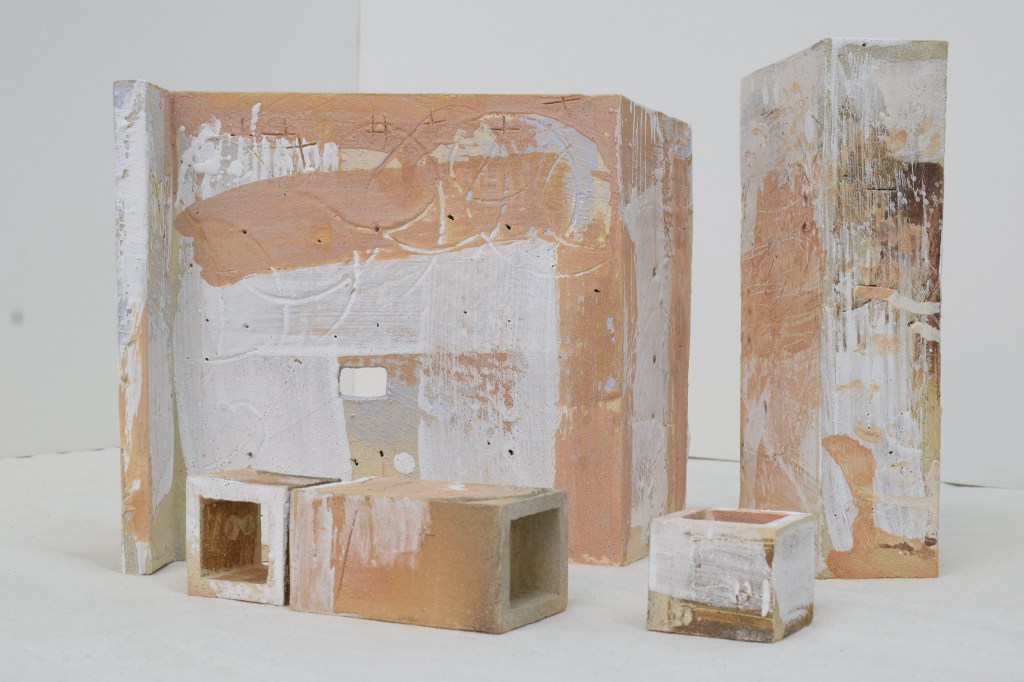


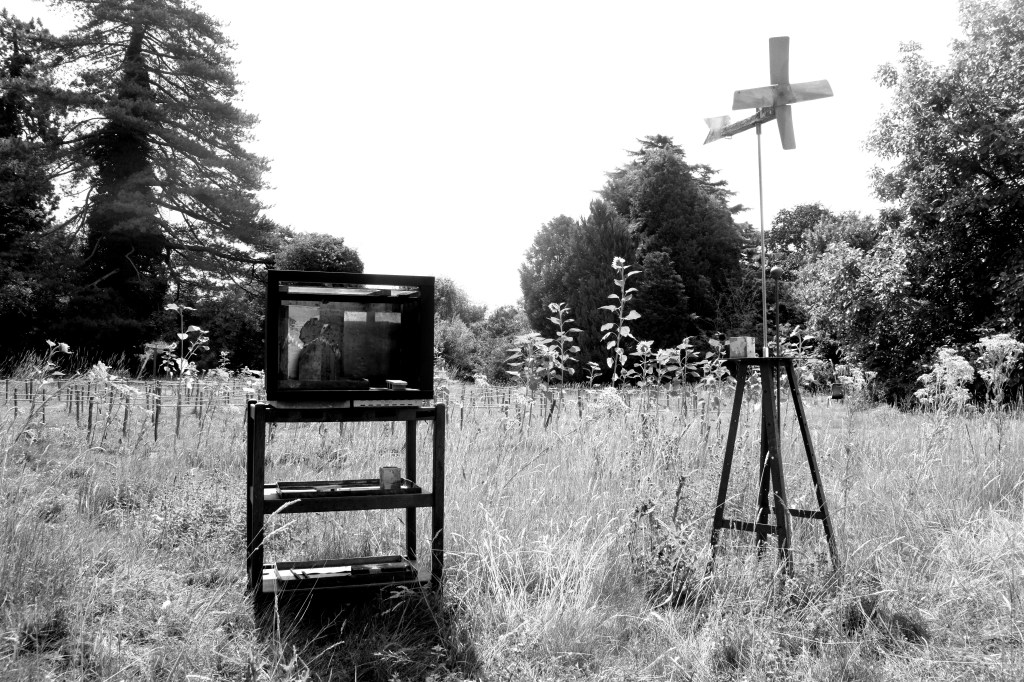


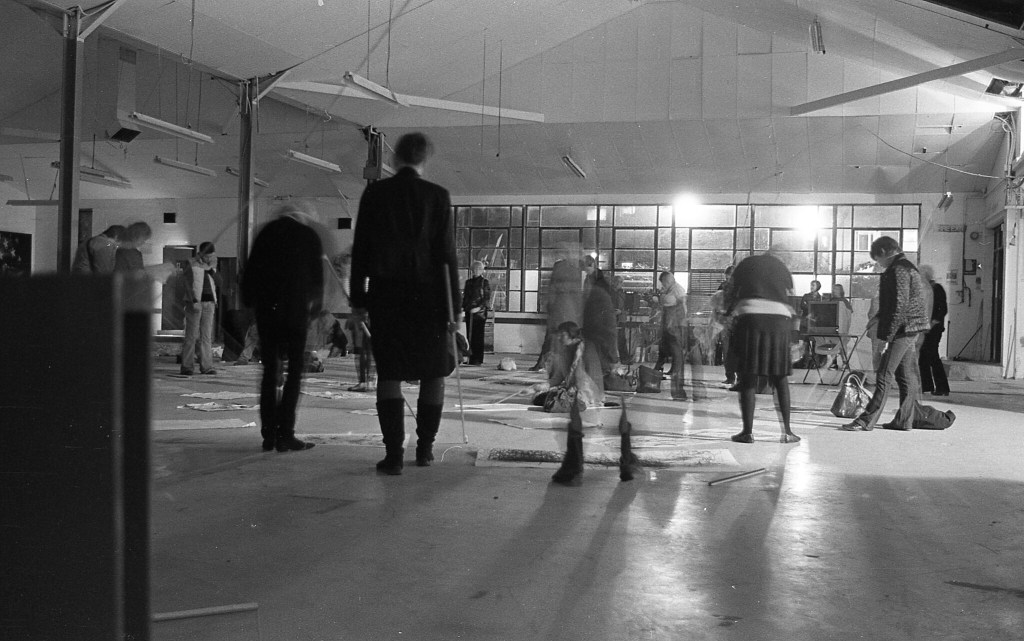


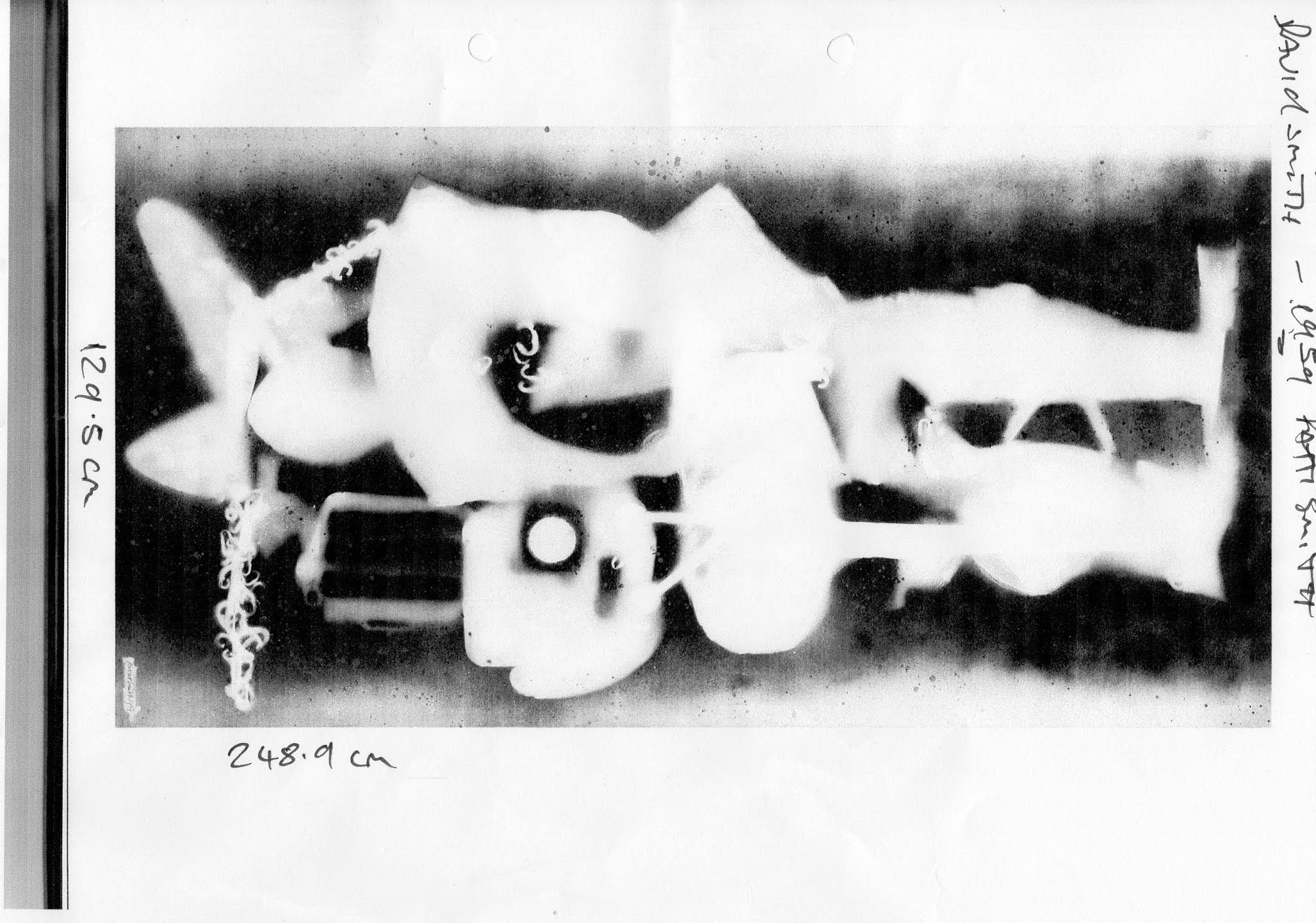


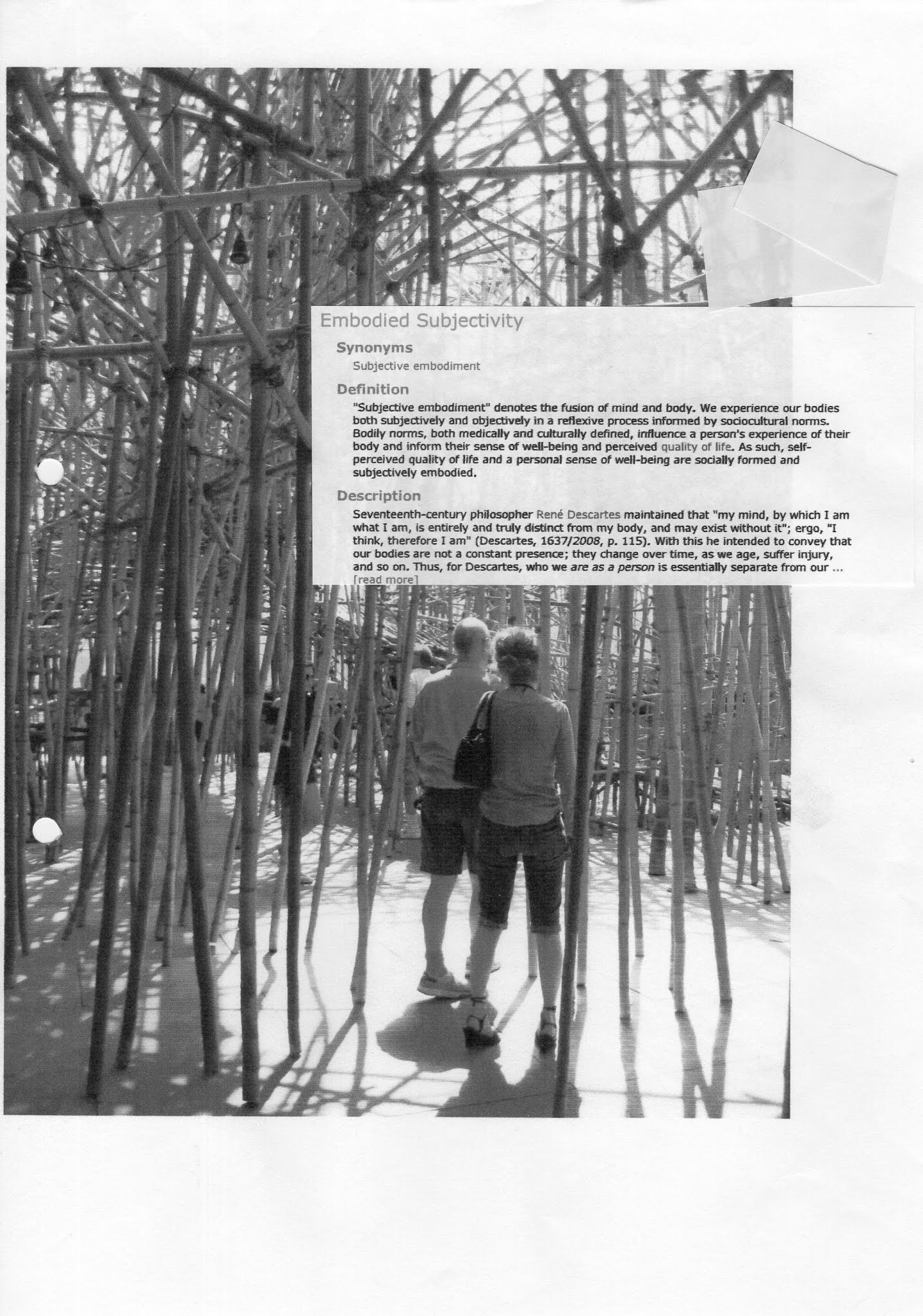
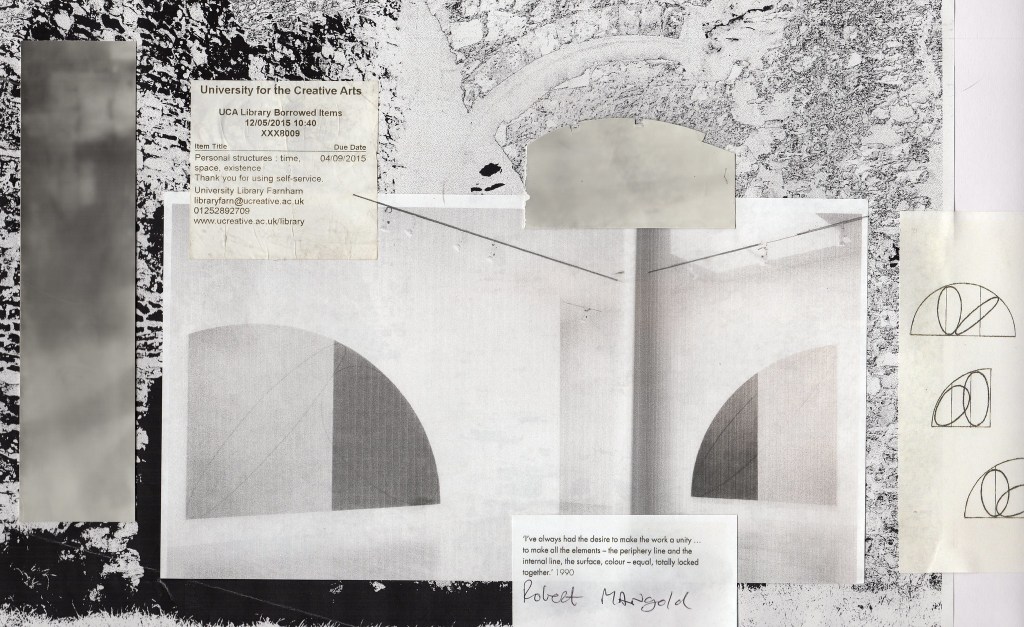


.jpg)
.jpg)

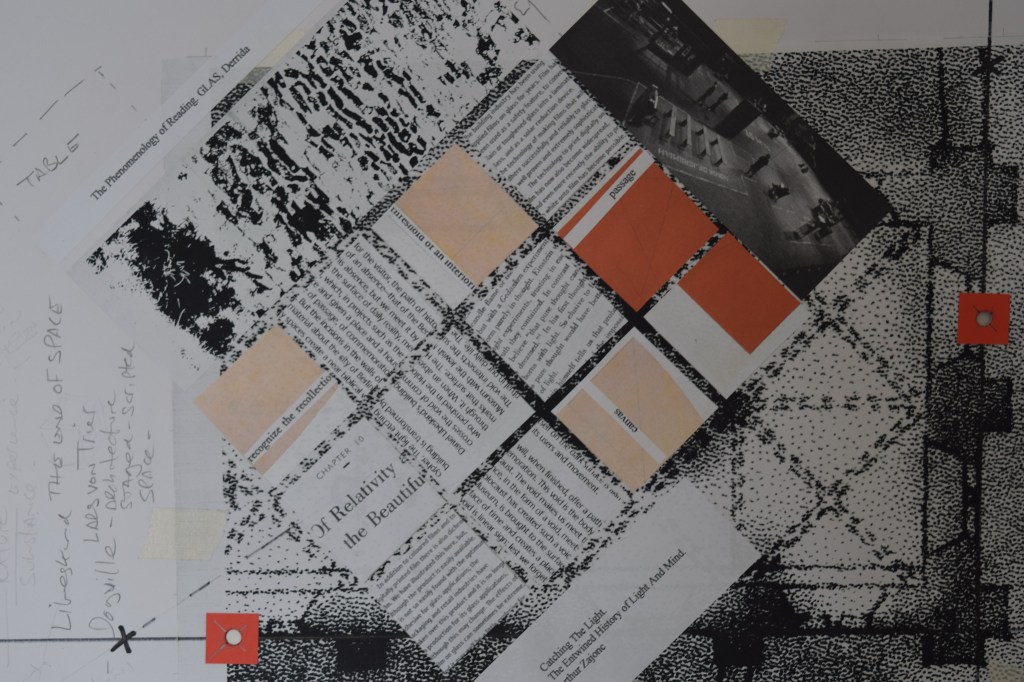
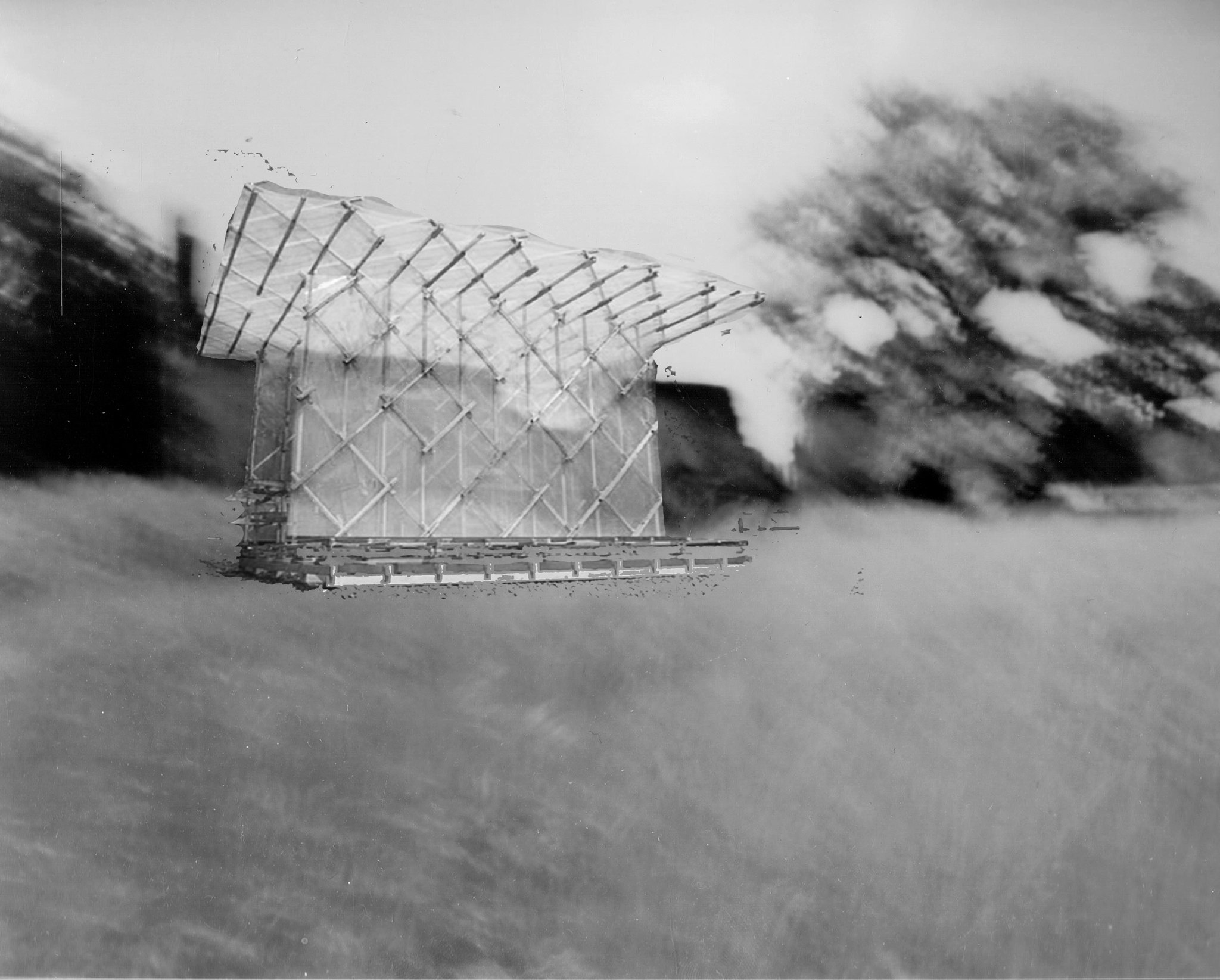
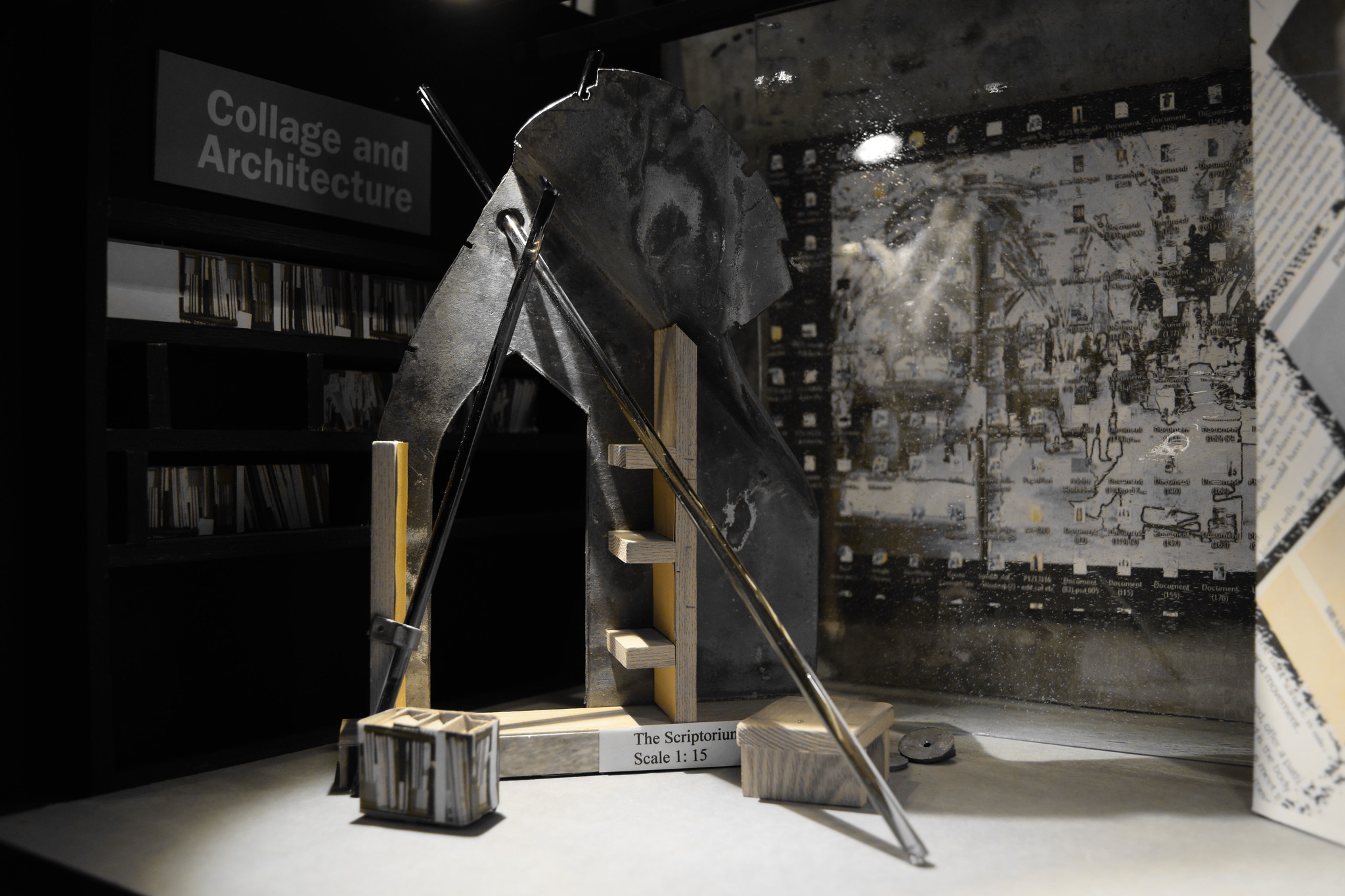
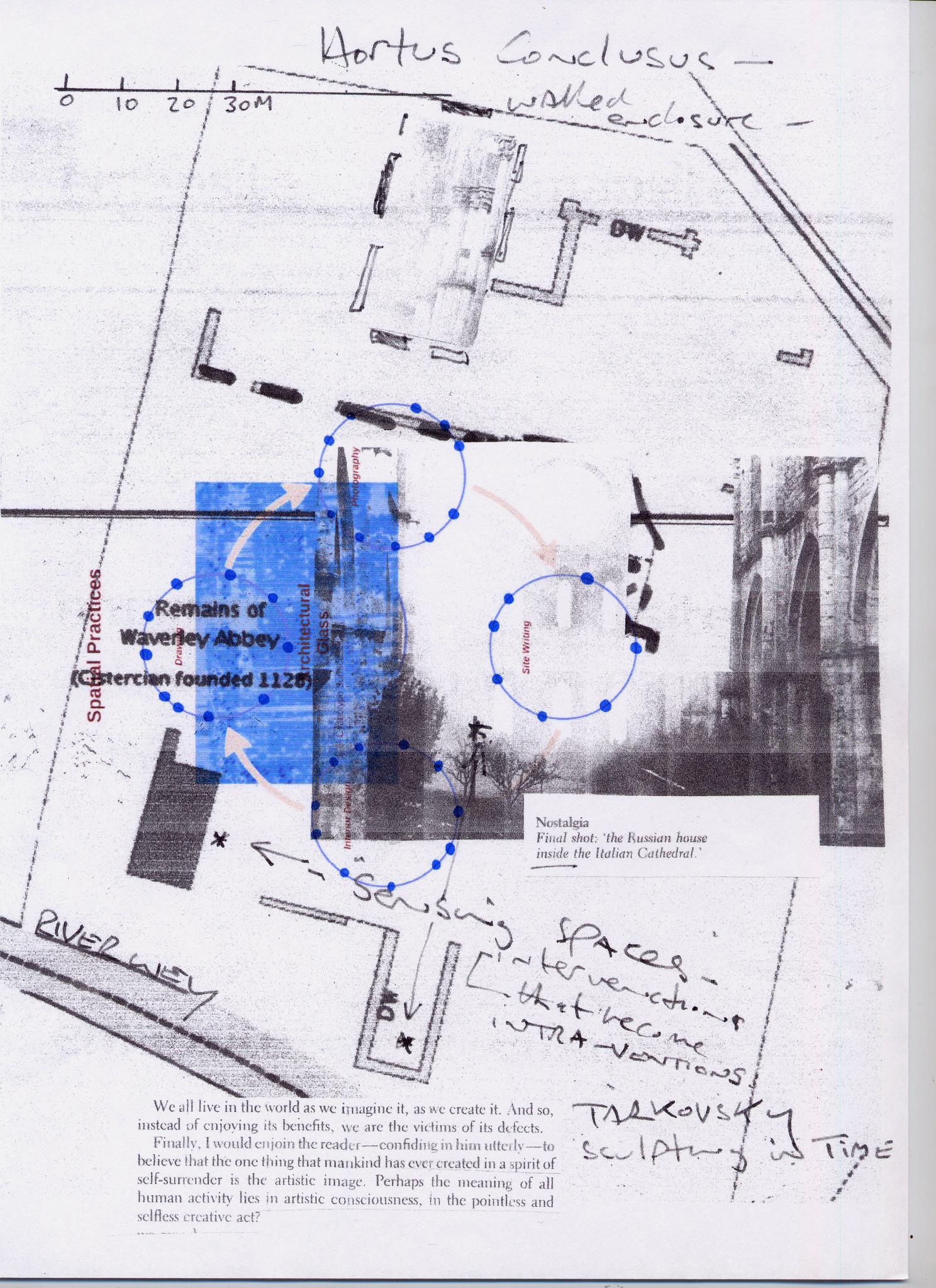
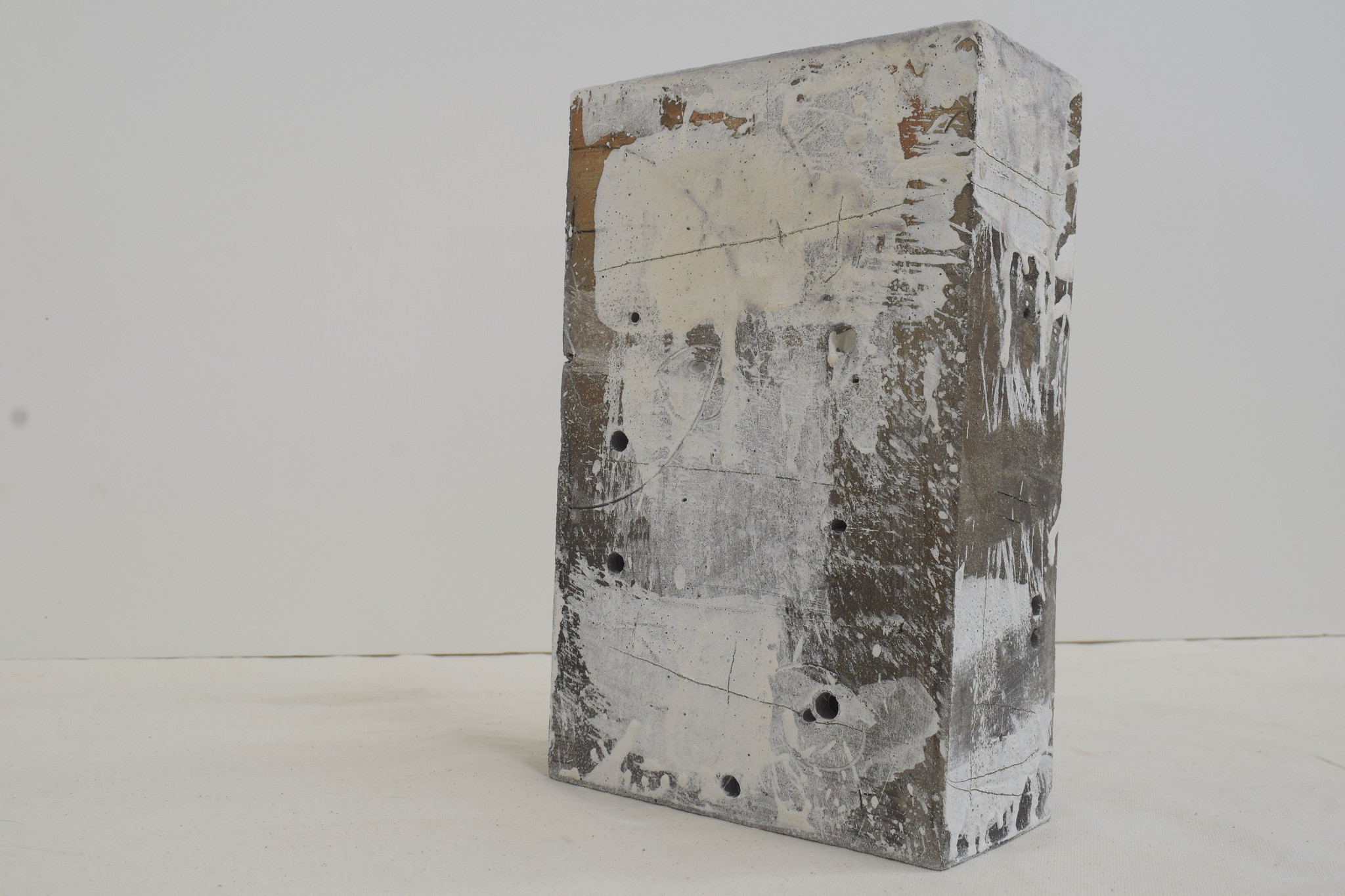

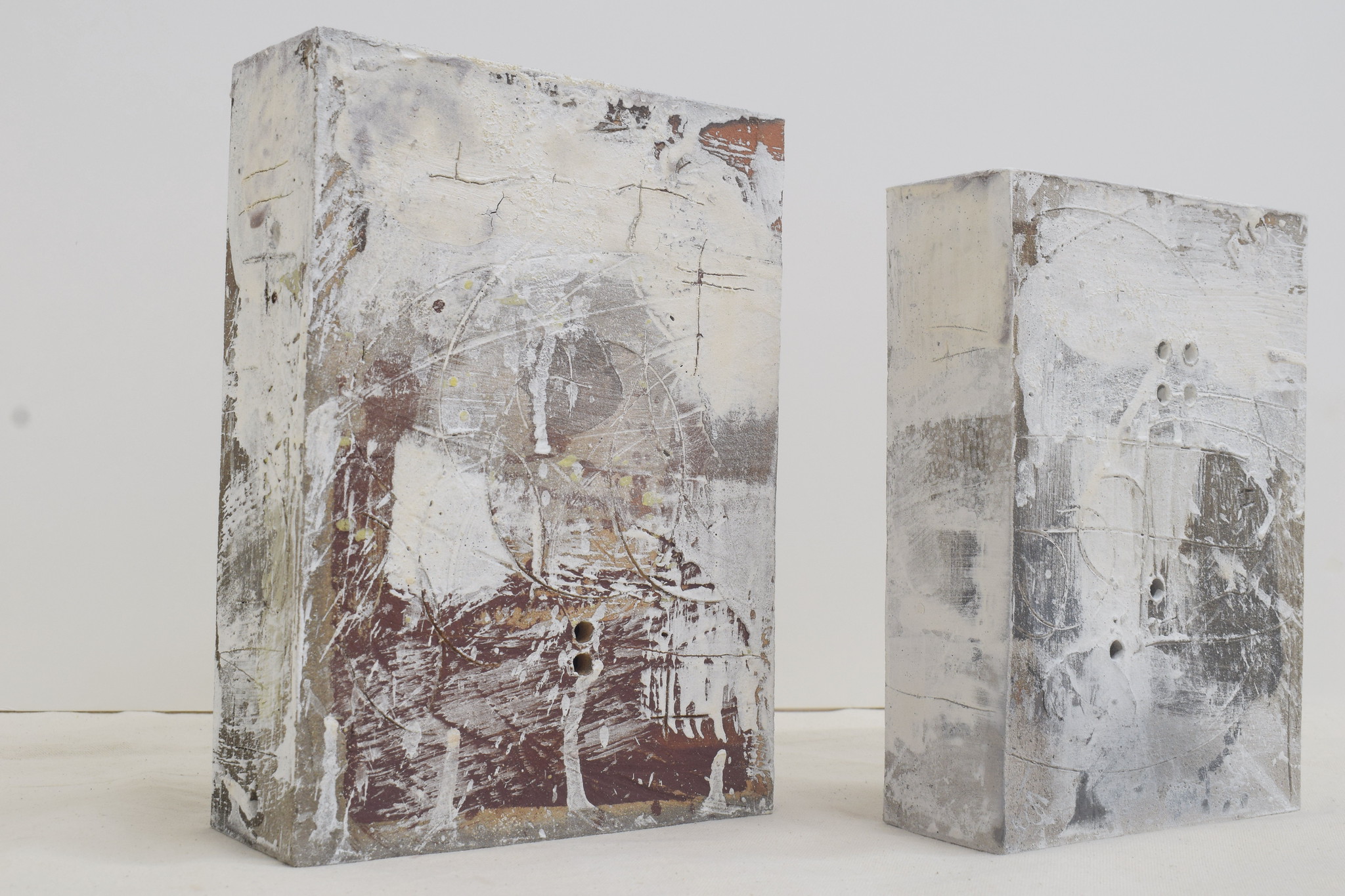
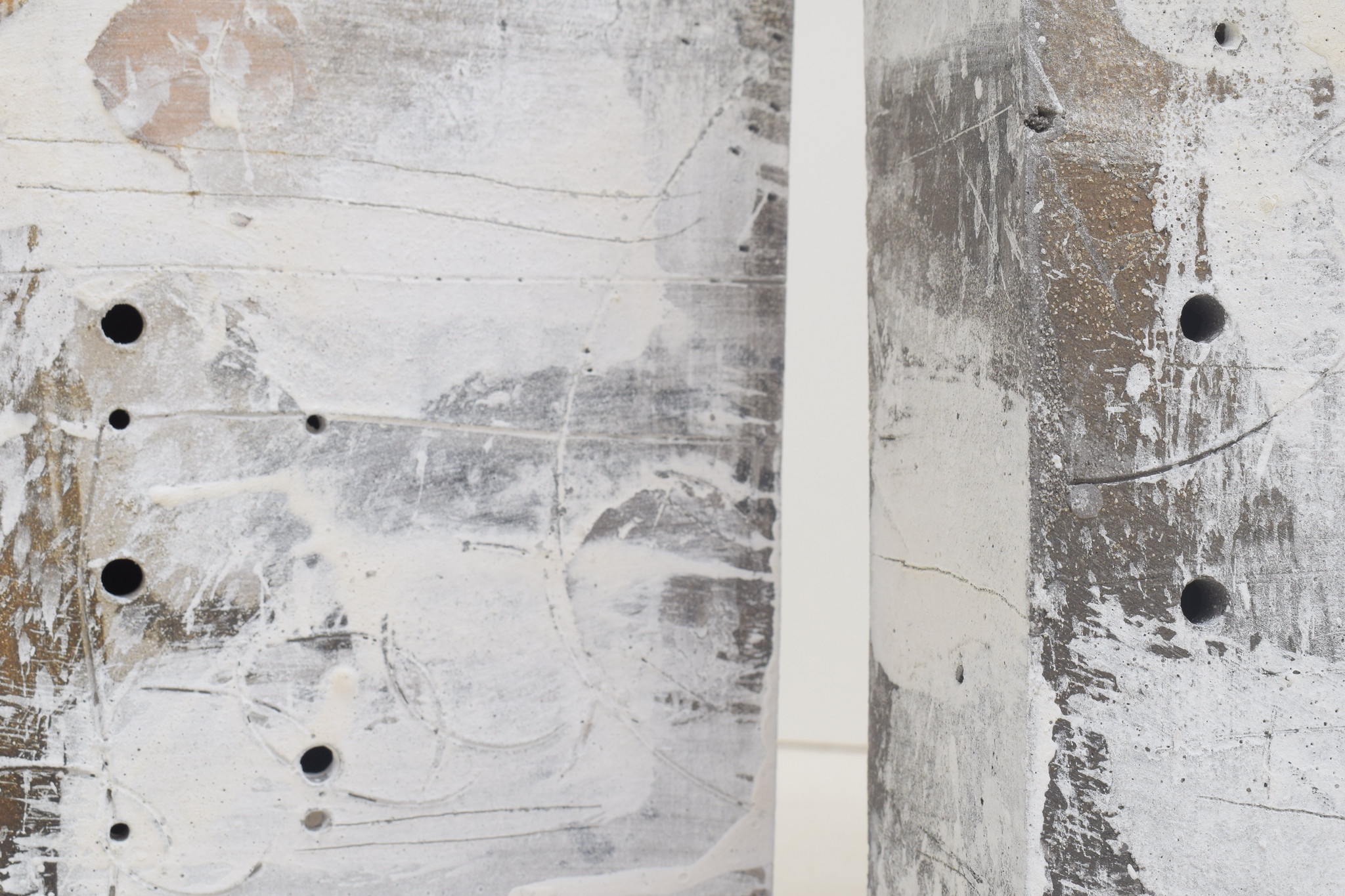
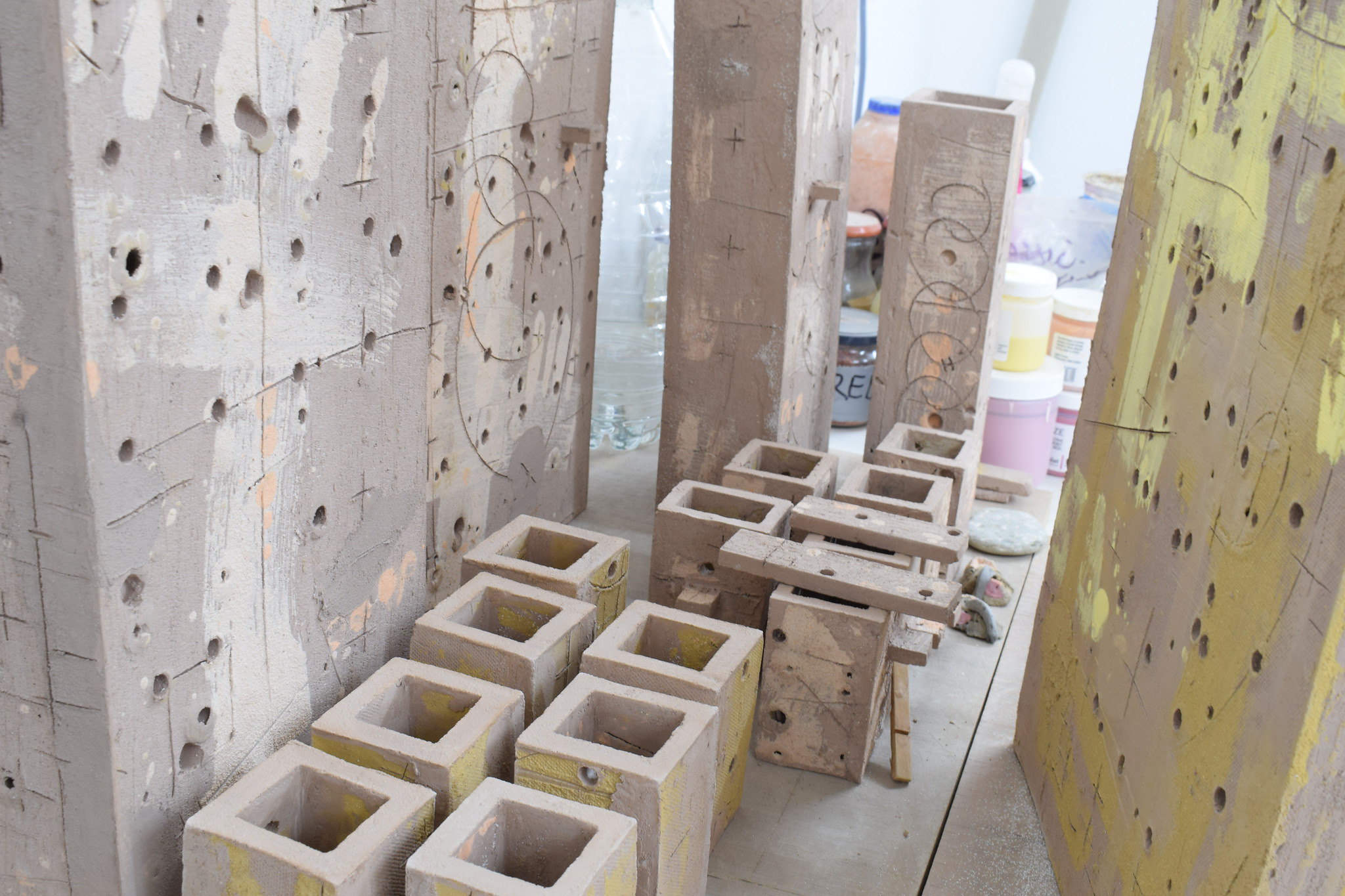
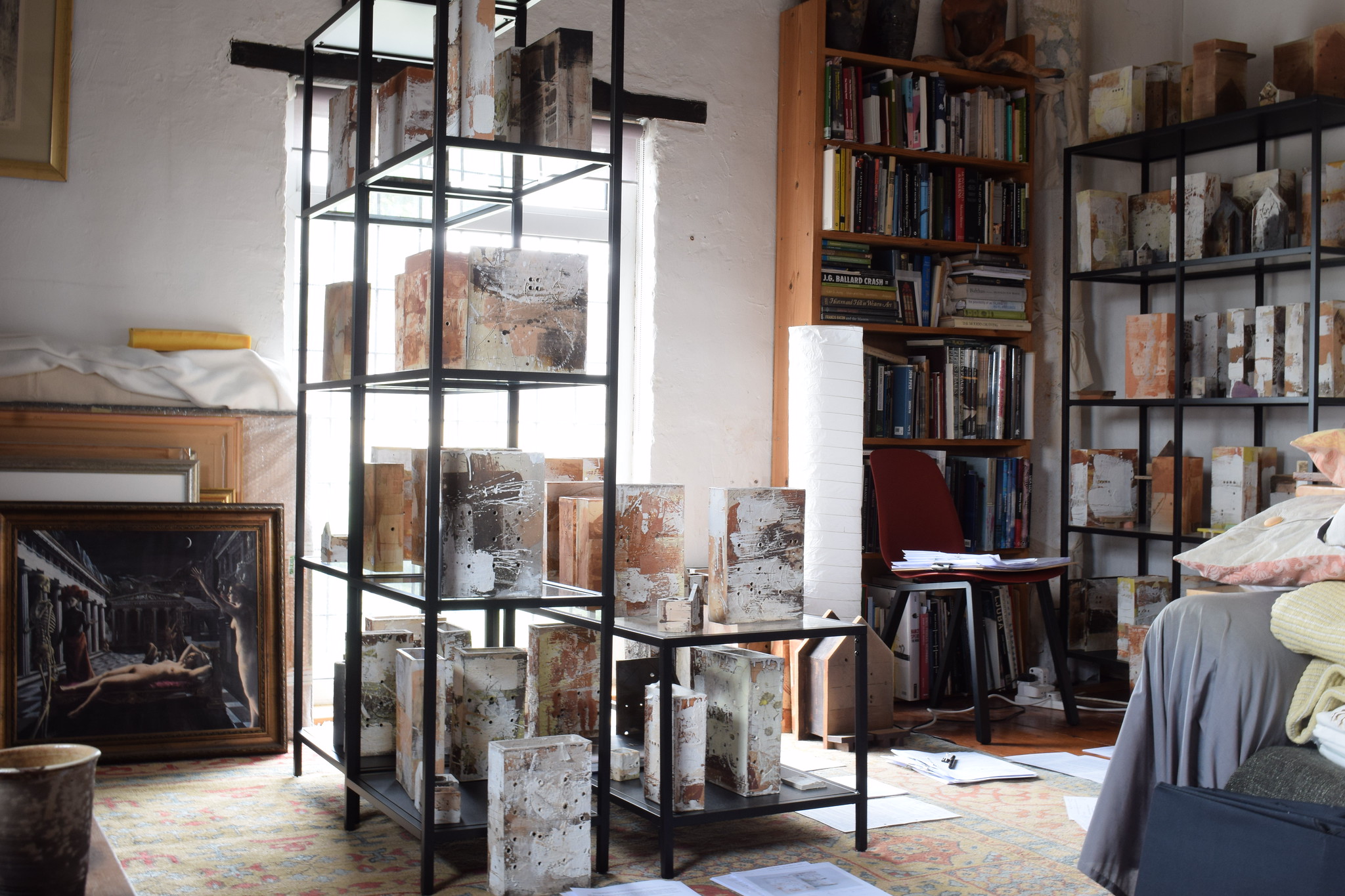
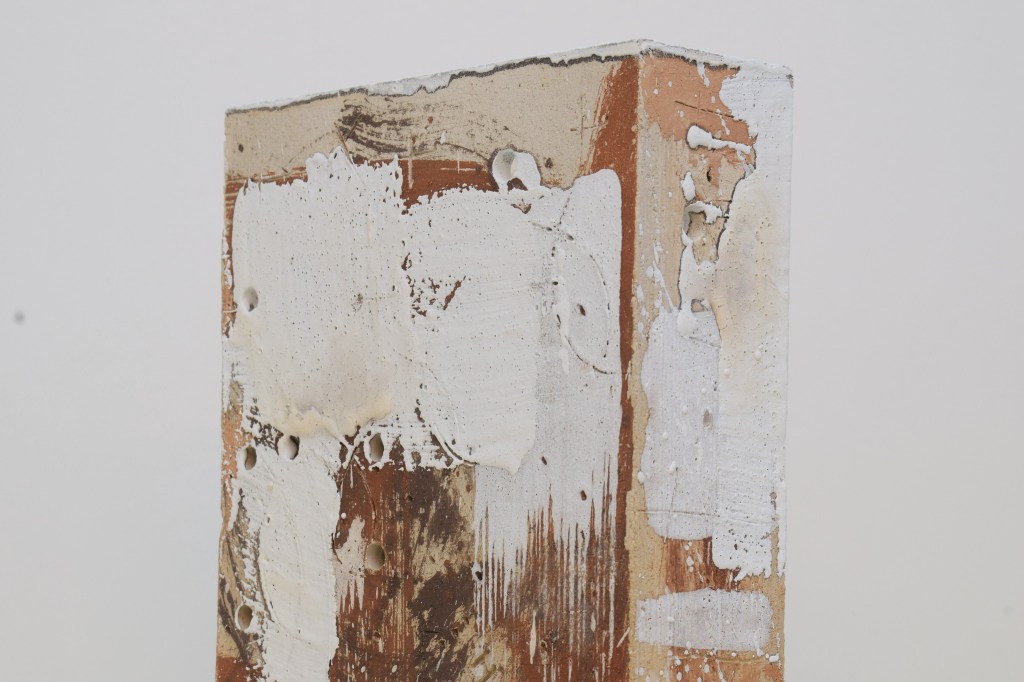
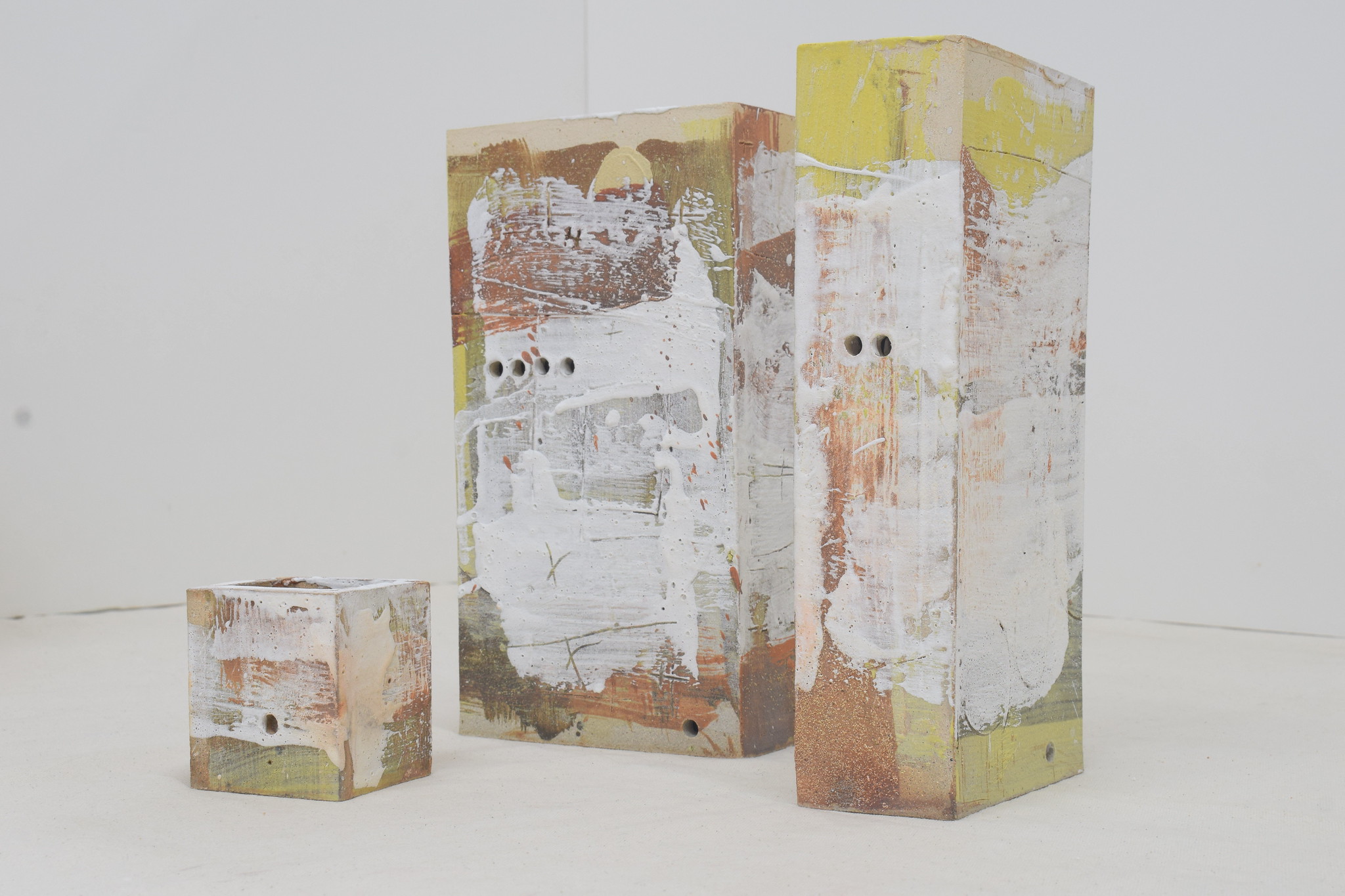
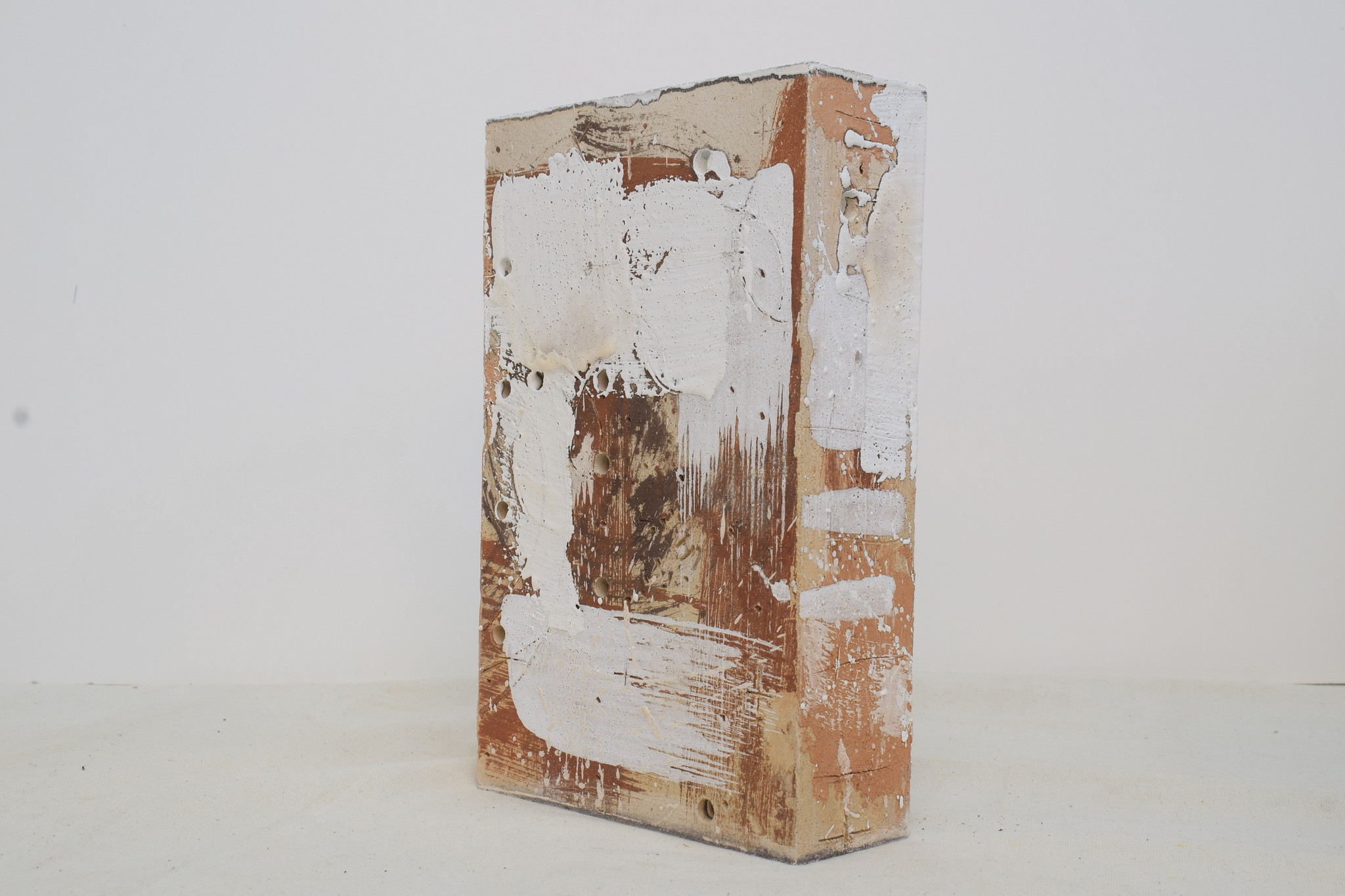
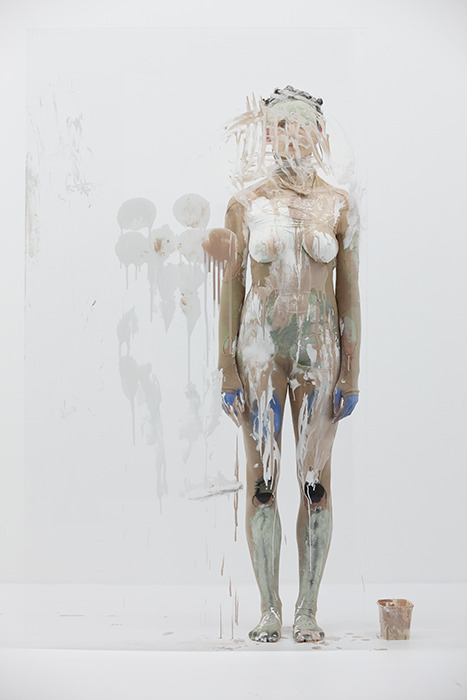
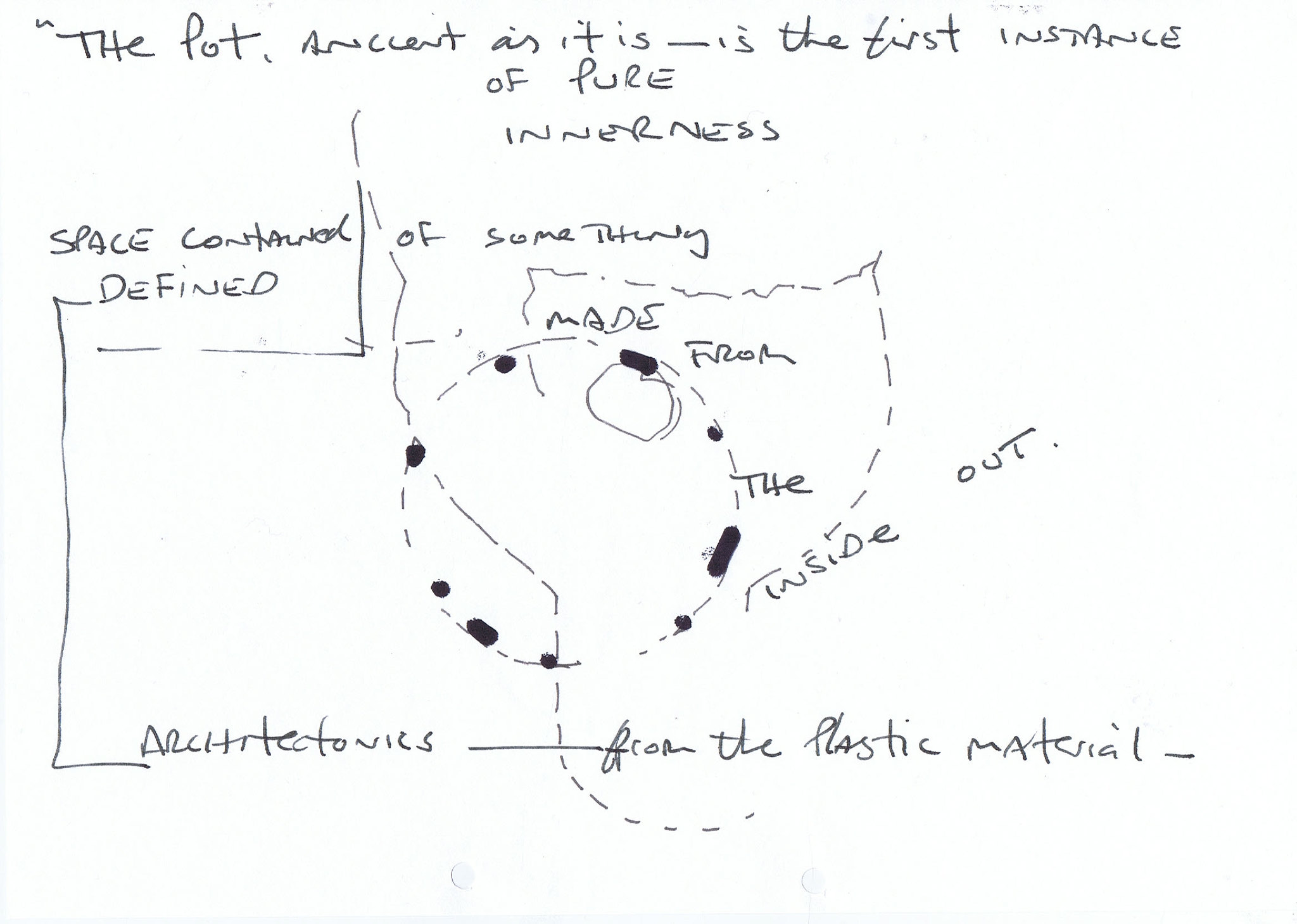
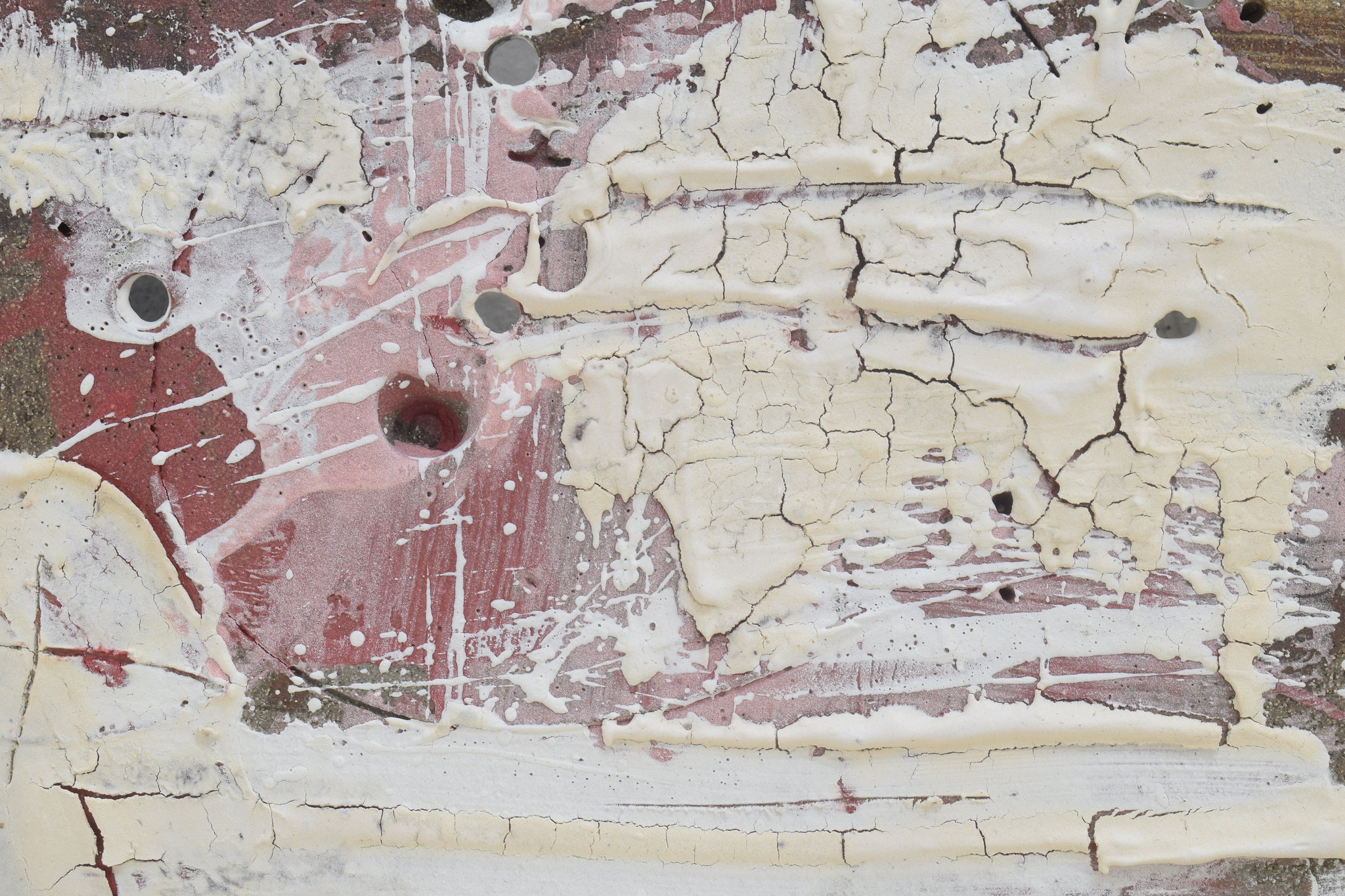
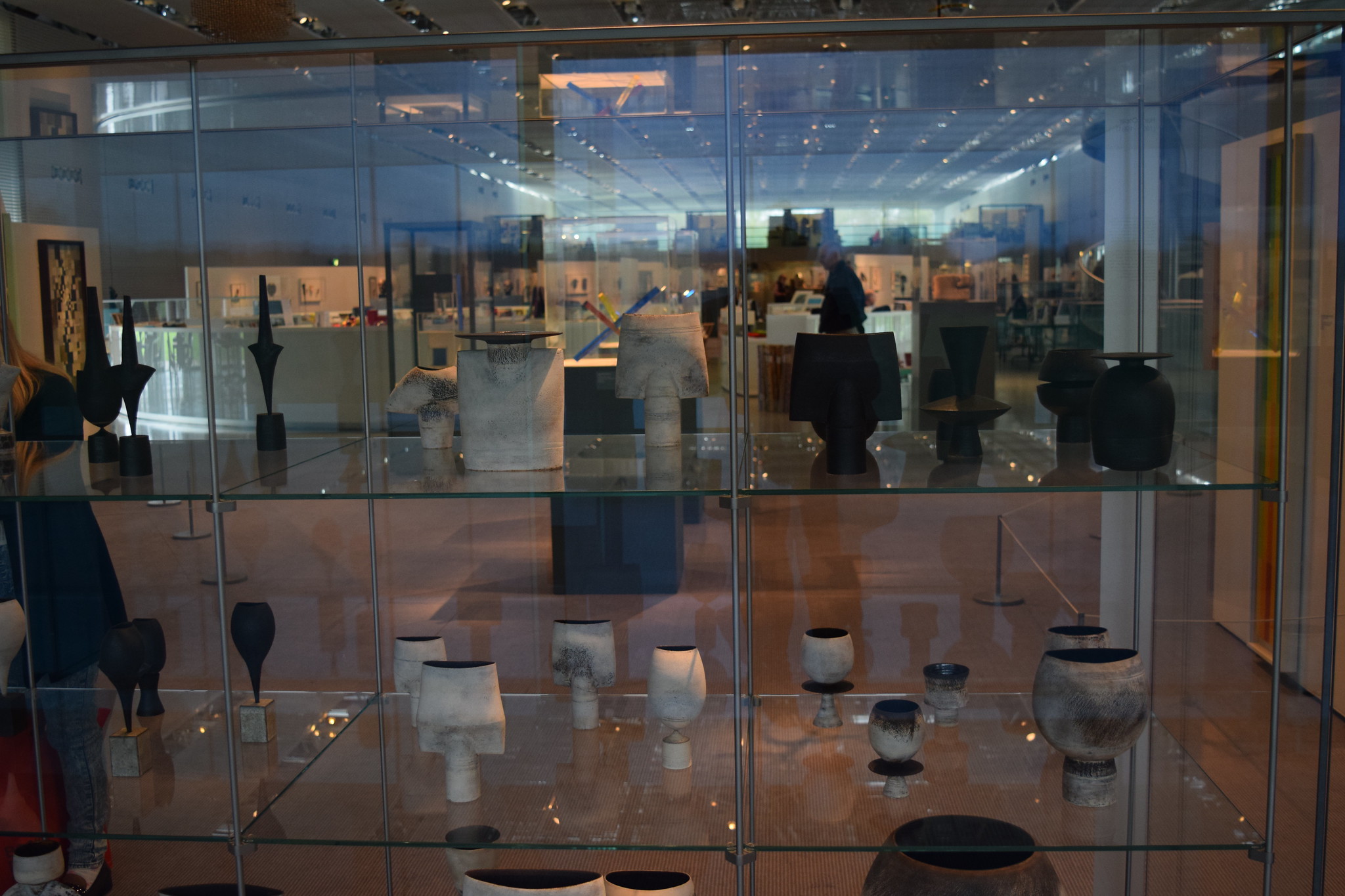
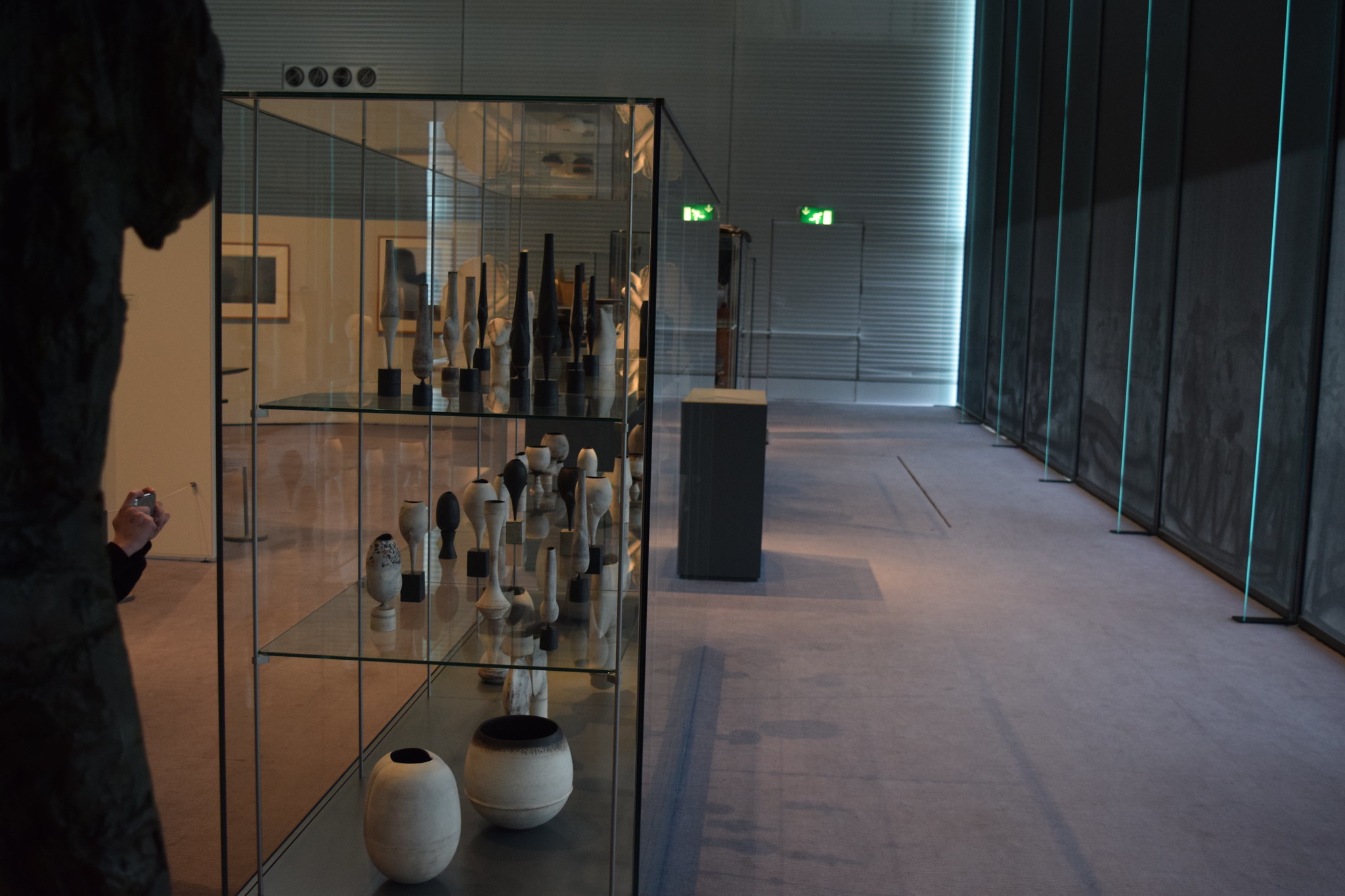
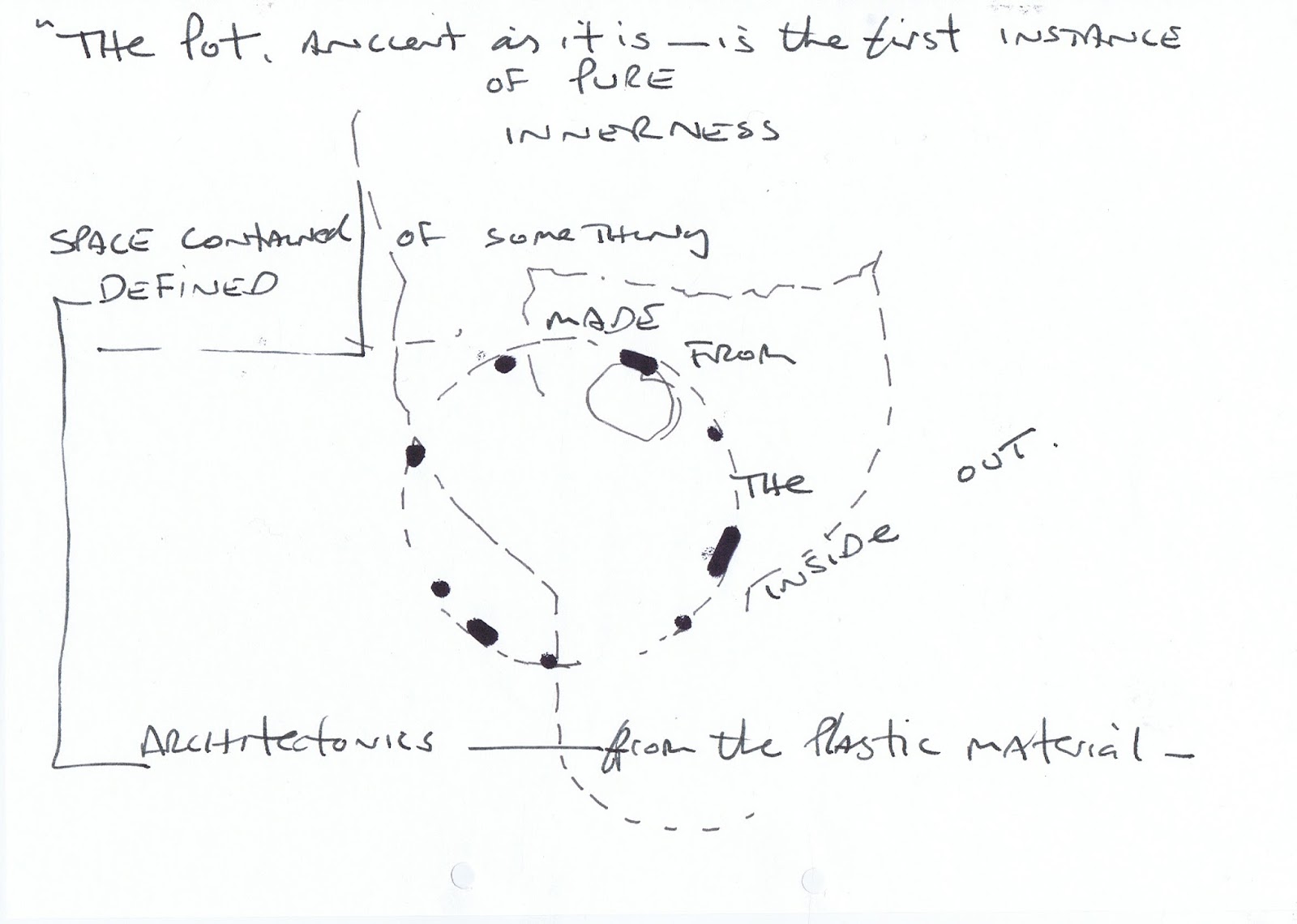

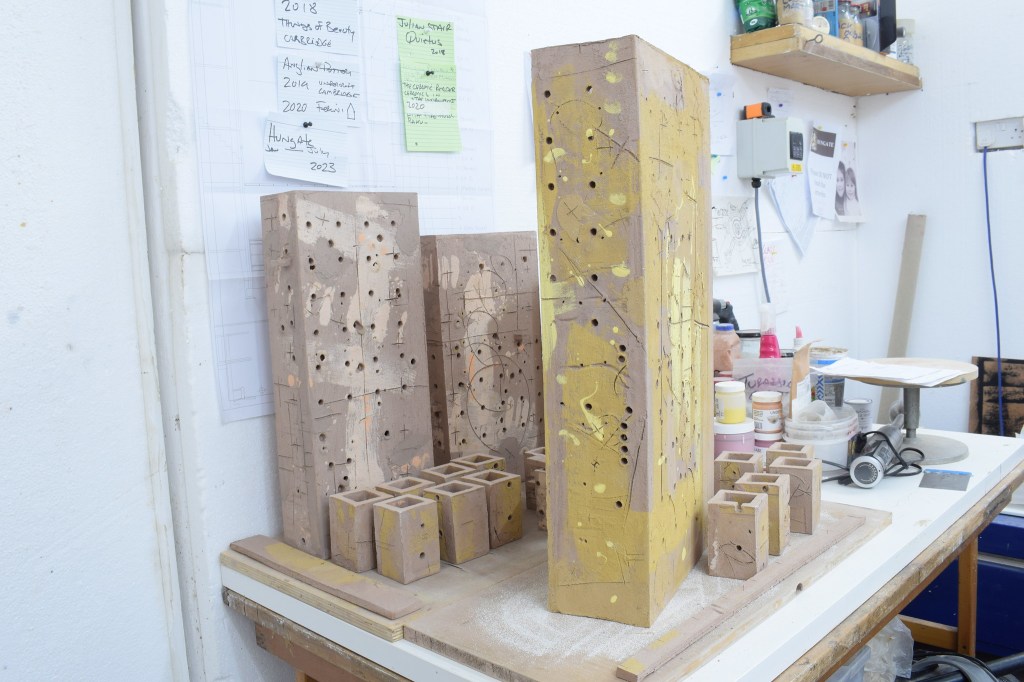

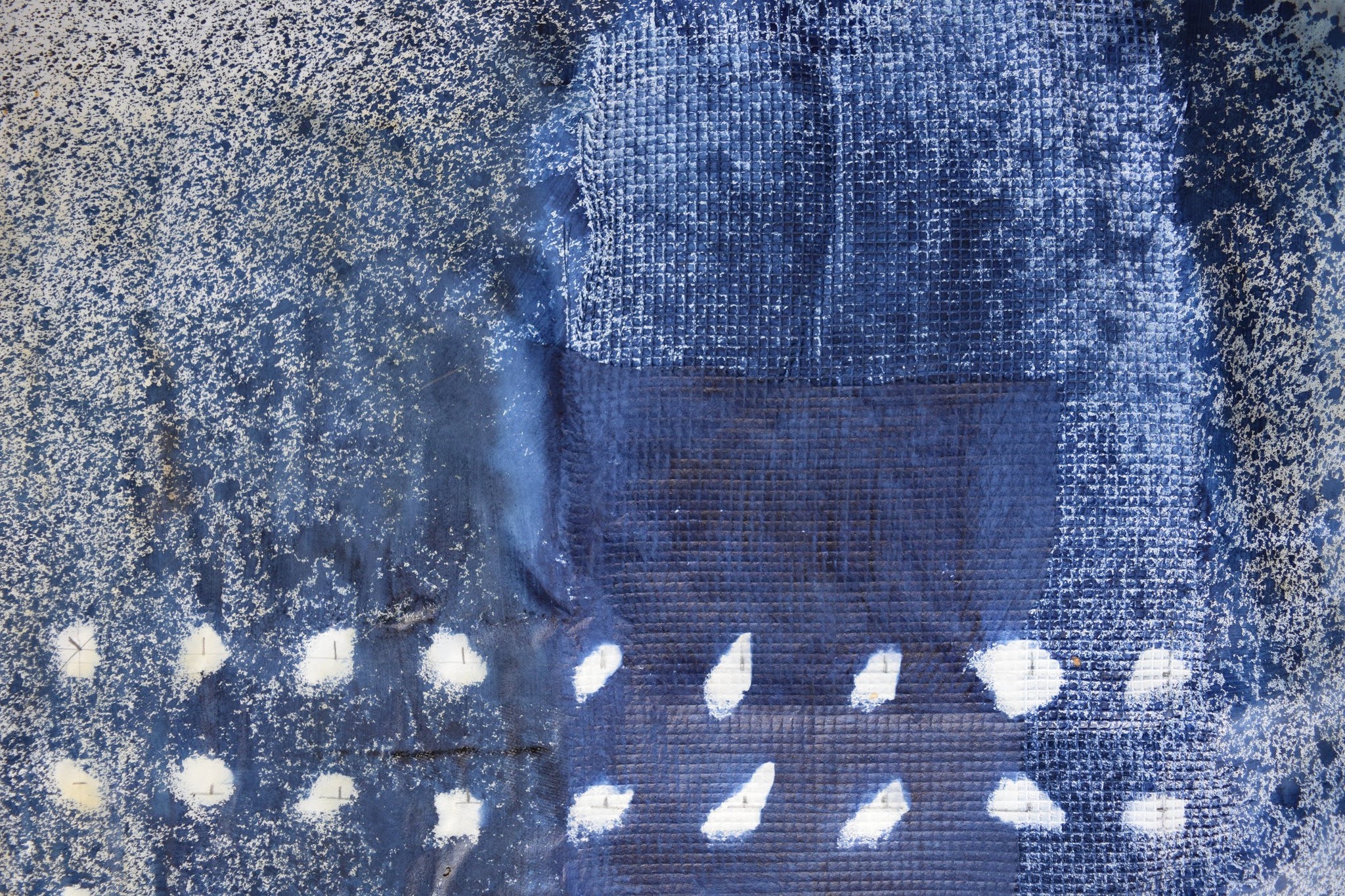
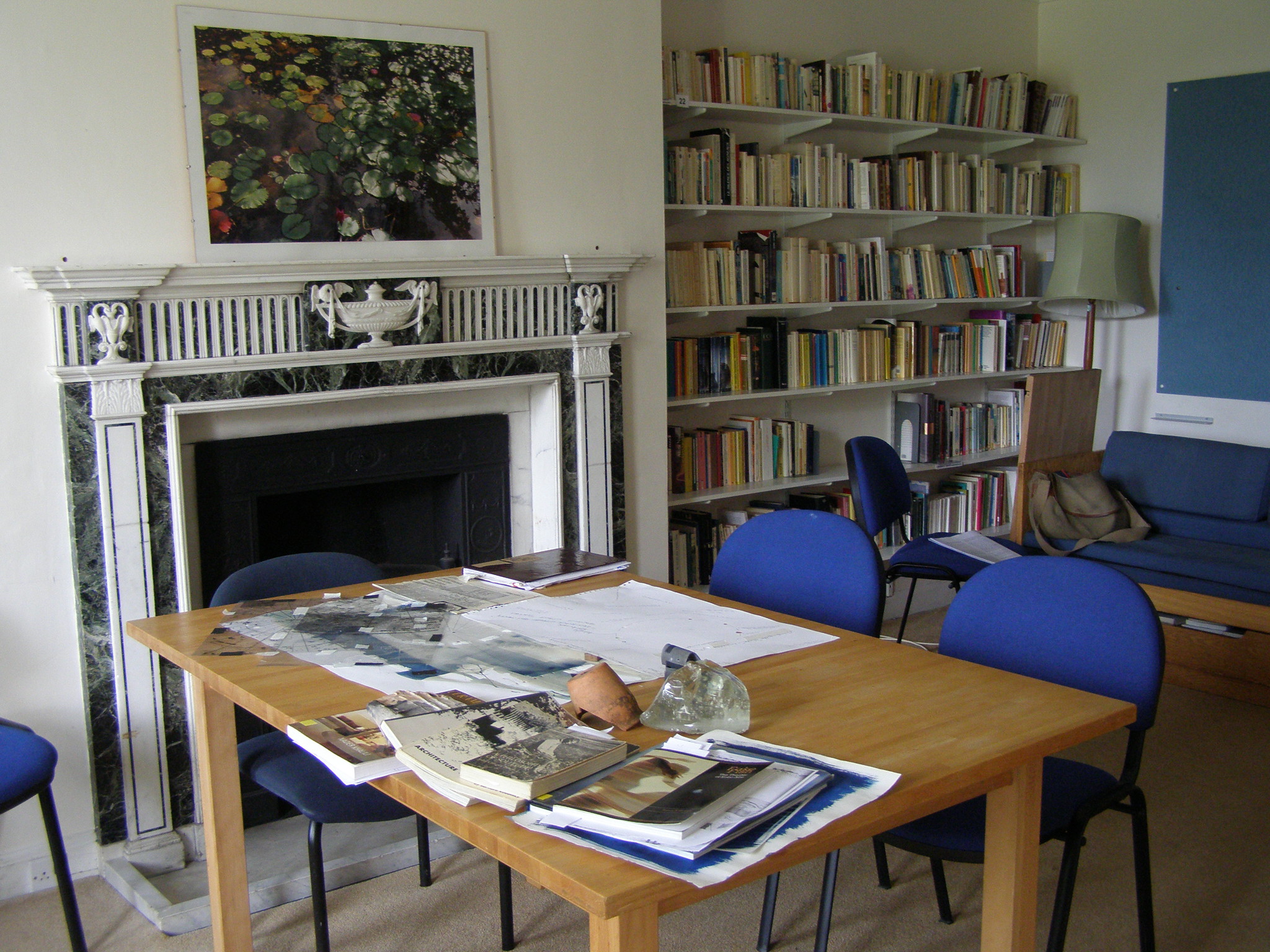
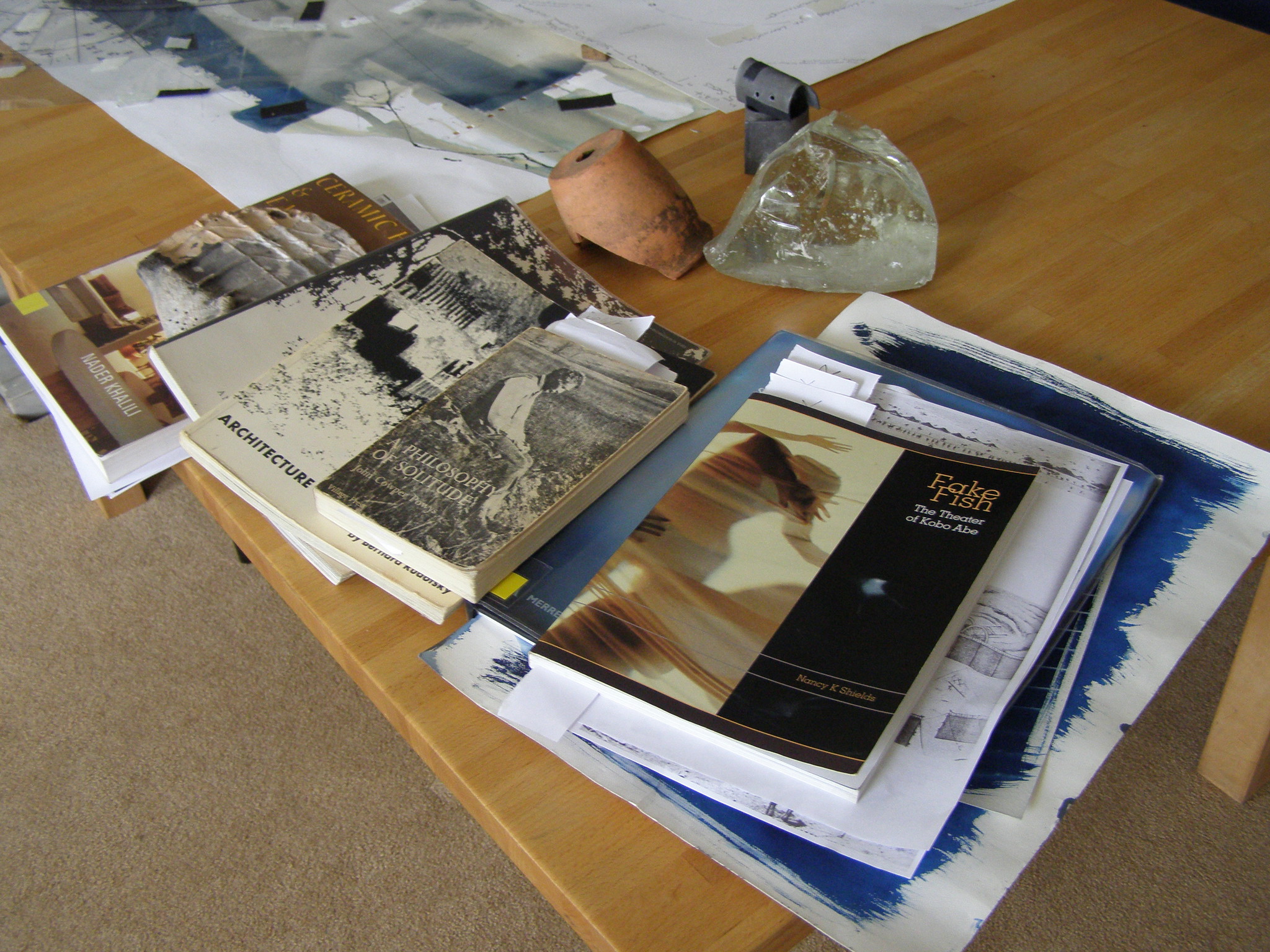
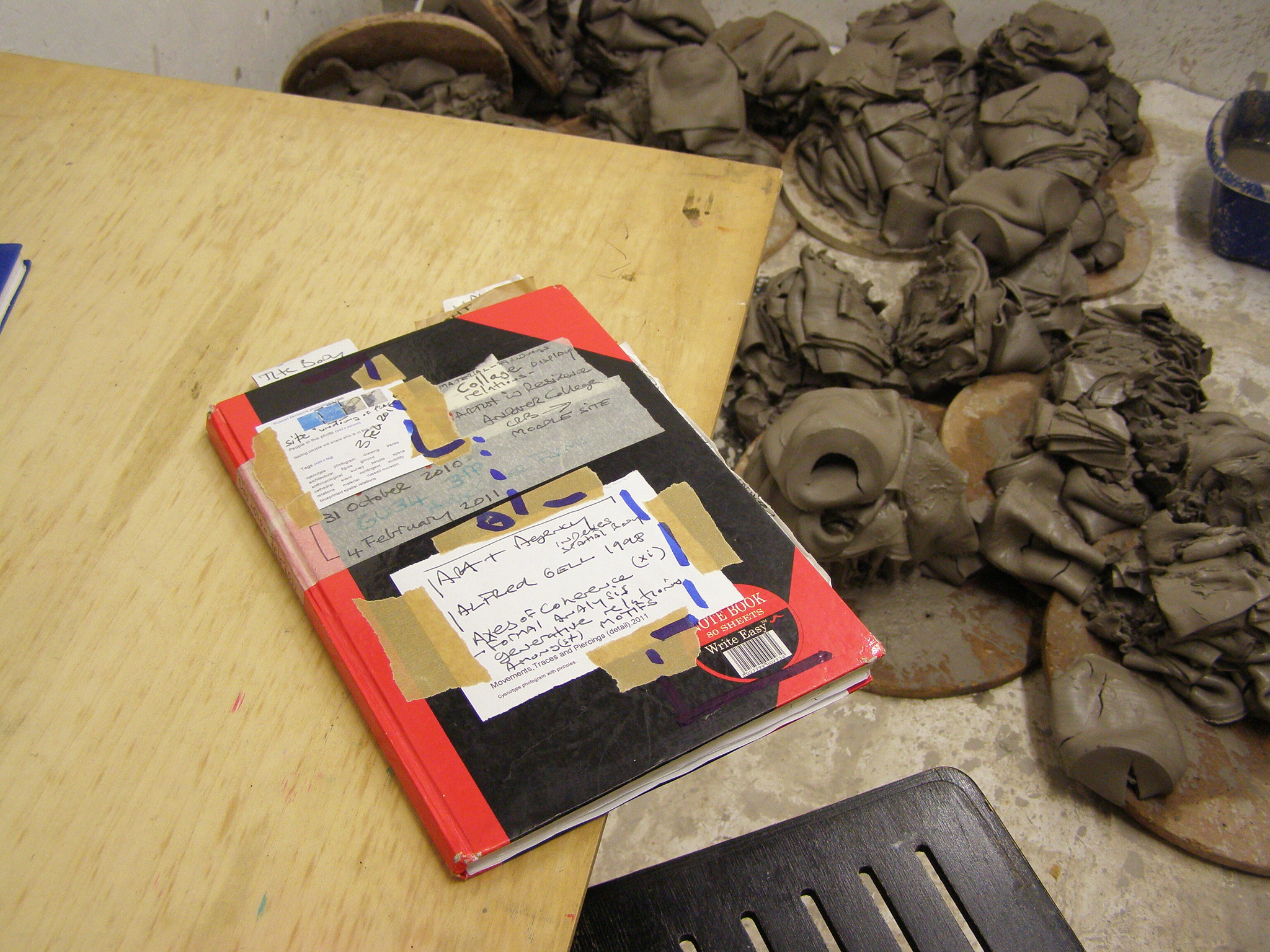

 Russell Moreton : Matter(s) in Correspondence